


We moved from stage to screen to pocket.
From shared halls to living rooms, from living rooms to handheld devices. Stories followed us through every shift. They became more accessible, more portable, more scalable.
But something didn’t follow that shift.
Not fully.
Because while storytelling evolved, not every format evolved in the same direction. Some expanded. Some adapted. And some, like stage plays, stayed rooted in something the modern system has not quite figured out how to replicate.
So the question isn’t just whether stage plays belong to a different industry from film.
It’s whether they represent something that the current system, built on scale and distribution, cannot replace at all.
The Stage Era: Storytelling as Presence
Long before film, before television, before digital platforms, storytelling was physical.
It required gathering.
It required time.
It required presence.
From ancient Greek amphitheatres to Shakespearean stages, theatre was not just entertainment, it was infrastructure. It was where culture was performed, negotiated, and shared in real time.
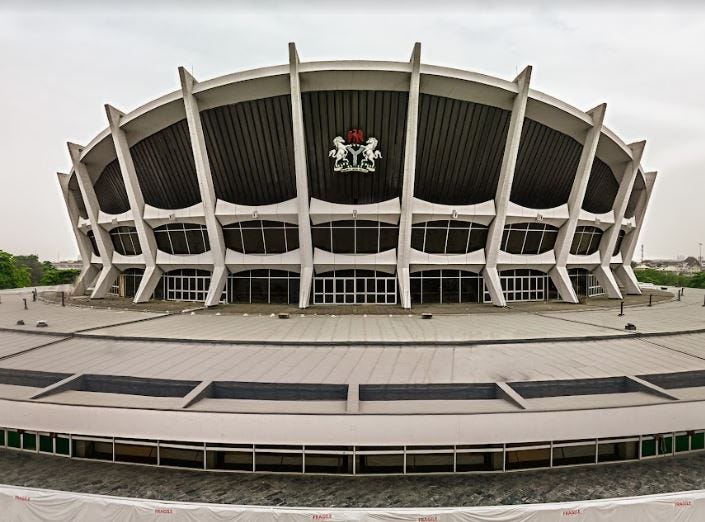
That legacy extended into modern institutions, including spaces like National Theatre Lagos.
Built in 1976 for FESTAC ’77, the National Theatre was more than a venue. It was a statement. A cultural anchor designed to position Nigeria within a global conversation about art, performance, and identity.
At its peak, theatre in Nigeria was not marginal. It was central.
Playwrights, performers, and audiences were part of the same ecosystem. Stories were not consumed passively, they were experienced collectively.
And that distinction matters.
Because in the stage era, storytelling wasn’t designed for scale.
It was designed for impact within a room.
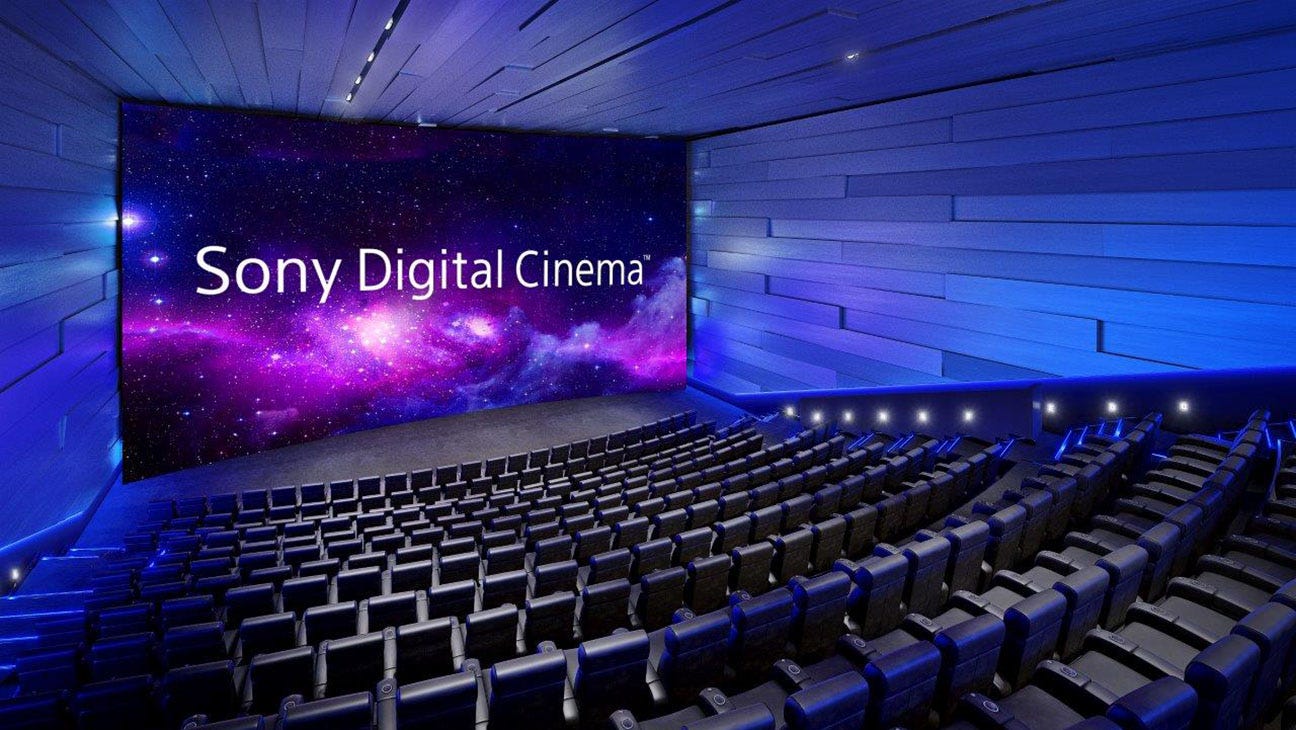
The Rise of Screen Formats: Expanding Distribution
Film changed everything, not because it replaced theatre, but because it introduced something theatre could not offer.
Reproducibility.
For the first time, a story could be recorded once and experienced infinitely. Cinema turned storytelling into a product that could travel, across cities, countries, and eventually continents.
Television pushed that even further.
Stories moved into the home.
Audiences no longer needed to gather.
Consumption became more private, more consistent, more routine.
Then came VHS, DVDs, and digital formats.
Ownership entered the equation.
You could not only watch a story, you could keep it, replay it, control it.
Cinemas, in parallel, evolved into spaces of spectacle.
Blockbuster films were not just watched, they were experienced at scale. Sound, visuals, and shared audience reactions created a different kind of collective energy, one that echoed theatre in some ways, but operated on entirely different economics.
Each shift did one thing consistently:
It expanded distribution.
Stories became:
easier to access
easier to repeat
easier to scale
And in that process, the centre of value began to shift away from presence and toward reach.
The Streaming Shift: Scale Becomes the System
Platforms like Netflix and Amazon Prime Video didn’t just expand distribution, they redefined it.
Stories became:
on-demand
algorithmically recommended
globally accessible in seconds
The economics changed again.
Success was no longer tied only to ticket sales or physical attendance. It became tied to:
watch time
engagement
retention
Discovery itself became a system, shaped by algorithms rather than location or cultural proximity.
In this model, scale is not just an advantage.
It is the foundation.
The more a story can travel, the more valuable it becomes. The more it can be replicated, the more it fits the system.
And this is where stage plays begin to feel like they don’t belong.
Not because they are outdated.
But because they are built on a completely different logic.
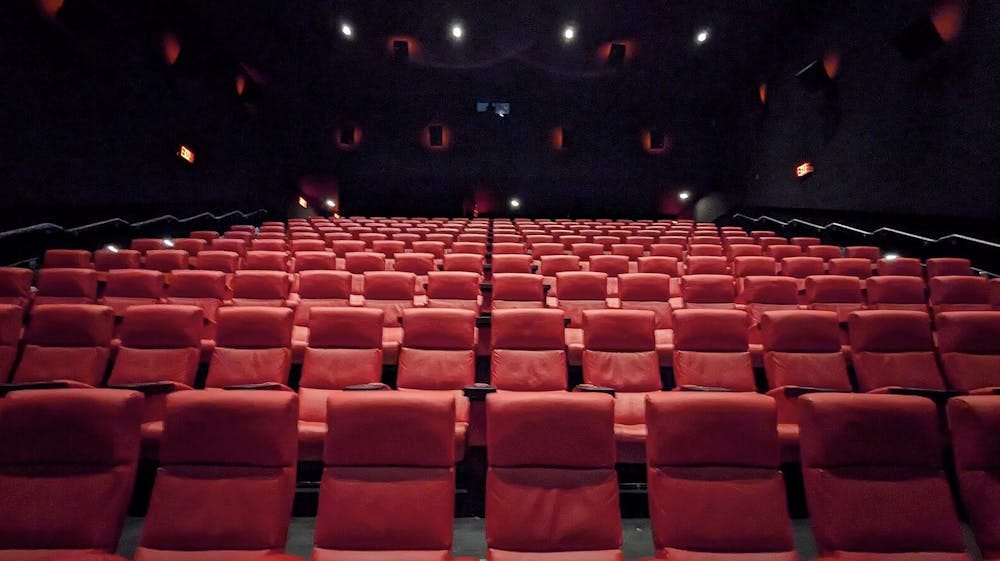
What Streaming Can’t Replace
Flip the narrative for a moment.
Instead of asking whether stage plays are falling behind, ask a different question:
What do they do that no other format can?
You cannot stream presence.
You cannot algorithmically recreate live emotion.
You cannot scale cultural intimacy.
A stage play exists in a specific moment, in a specific room, between specific people. The performance changes with the audience. The energy shifts. The experience is never identical twice.
That is not a limitation.
It is the value.
Take productions like The Lion King musical. While the story exists in film form, the stage version offers something entirely different, a sensory, immersive experience built around live performance, costume, music, and audience interaction.
Even when theatre crosses into film, as seen with Hamilton on Disney+, something shifts.
The reach expands.
The accessibility increases.
But the immediacy changes.
The camera selects what you see.
The audience disappears.
The moment becomes fixed.
What was once alive becomes recorded.
This is the trade-off at the heart of the transition from stage to stream.
Scale increases.
Presence decreases.
Are Stage Plays a Different Industry?
At a surface level, yes.
Film and streaming operate within a distribution-driven economy. Their goal is to maximise reach, repeatability, and monetisation across large audiences.
Stage plays operate within an experience-driven economy.
Their value is not in how far they travel.
It is in how deeply they are felt.
That difference affects everything:
pricing models
audience behaviour
production cycles
revenue structures
Film can be consumed alone, repeatedly, anywhere.
Theatre demands:
time
location
physical presence
So while both belong to the broader creative economy, they are not optimised for the same system.
And that’s why comparing them directly often leads to the wrong conclusions.
Nigeria’s Gap: Not Extinction, But System Failure
This is where the conversation becomes more specific.
In countries like the UK or the US, theatre didn’t survive by resisting change.
It evolved.
Broadway and the West End became:
premium experiences
cultural landmarks
tourism drivers
Institutions expanded into:
filmed theatre
global distribution
education and outreach
The format remained physical, but the system around it diversified.
Nigeria followed a different trajectory.
When you look at National Theatre Lagos today, the issue is not that theatre lost relevance to streaming.
It’s that the system around theatre weakened.
inconsistent funding
poor infrastructure maintenance
lack of institutional continuity
limited distribution models beyond physical attendance
This is not a demand problem.
It’s a systems problem.
Because Nigerians still show up for live experiences.
Comedy shows sell out.
Concerts are packed.
Live events continue to shape culture.
The appetite is still there.
What’s missing is the structure that allows theatre to operate at that same level of consistency and visibility.
In stronger markets, theatre became a multi-format ecosystem.
In Nigeria, it remained largely a single-format experience, and without sustained support, that model became fragile.
What Actually Changed
The evolution from stage to stream did not eliminate theatre.
It changed what the system rewards.
Today’s creative economy prioritises:
scale
speed
accessibility
repeatability
Stage plays offer none of these at scale.
And that is precisely why they matter.
Because they represent a form of storytelling that resists optimisation.
A form that cannot be reduced to metrics alone.
A form that still depends on something fundamentally human.
Closing
So are stage plays a different industry from film?
Yes, in structure.
But more importantly, they are a different kind of value.
Not everything in the creative economy is meant to scale.
Not everything is meant to be streamed.
Not everything is meant to be consumed alone.
And in a world increasingly built around reach and replication, the formats that refuse to scale begin to carry a different kind of weight.
Not because they are more efficient.
But because they are more human.
In a world obsessed with scale, the formats that refuse to scale may be the ones that matter most.

Written by Layo
Lead Editorial Writer, Creative Brief Africa
Outside of her editorial work, she writes Curious Health, a newsletter focused on everyday health questions, explored with clarity and care.
This is a beautiful writeup.
Honestly, it's so sad that the stage plays is not been elevated to the status we would have envisioned, but structure and design thinking for a long term benefit is missing around this.
I do hope one day, the system will be restructured to give more opportunity to stage players and the industry too.
Thank you Layo.