


Cinema screens are returning across major cities. Streaming platforms are expanding African slates. Local films are breaking box office records. Global audiences are actively searching for stories that feel new, grounded, and culturally honest.
Africa is no longer asking for attention. The world is already watching.
But visibility is not the same thing as stability. And momentum, without ownership, rarely lasts.
The uncomfortable truth beneath Africa’s film boom is this, talent alone is no longer enough. The next phase of growth will not be led by filmmakers who only know how to create. It will be led by filmmakers who know how to build.
Africa does not have a creativity problem.
It has a founder gap.
The boom looks real, but it is structurally thin
In 2025, Africa’s film and audiovisual sector contributed over $4 billion to the continent’s economy. Streaming platforms increased local commissioning. Regional cinema attendance rebounded. Sub-Saharan Africa’s entertainment and media market continued growing at nearly 9 percent annually, one of the fastest growth rates globally.
On paper, this looks like a golden moment.
But most of this growth sits at the surface.
Films are being made, but companies are not being built at the same pace. Rights are licensed early. Revenue flows are fragmented. Distribution decisions are reactive. Many projects succeed culturally, yet leave creators with little long-term leverage.
This is what happens when an industry grows through output, not ownership.
Visibility without control is not an industry
African filmmakers are gaining global recognition, but recognition does not automatically translate to power.
When platforms commission content, they control access. When distributors set terms, they control reach. When funding is project-based, creators remain in survival mode.
An industry becomes durable only when creators own systems, not just stories.
That means production companies with slates, not one-off projects.
It means intellectual property that compounds over time.
It means filmmakers who understand contracts, revenue models, and market positioning.
In other words, founders.
Why talent is no longer the differentiator
There was a time when strong storytelling alone could open doors. That era has passed.
Today’s global content market is crowded. Every region is producing more films and series than audiences can reasonably consume. Platforms are cutting budgets, consolidating suppliers, and prioritising projects with clear commercial logic.
In this environment, talent is the baseline.
What separates projects that travel from those that disappear is structure.
Who owns the rights.
Where the film sits in the market.
How revenue is generated beyond the first release.
Without this thinking, even successful films become dead ends rather than foundations.
The filmmaker-founder mindset
A filmmaker-founder understands one core truth, every film is both art and asset.
This mindset changes everything, starting from development.
Instead of asking only what story to tell, the filmmaker-founder asks:
Who is this for?
Where does it live, cinema, streaming, mobile, festival, television?
How does it make money over time?
What rights must be protected now to create value later?
These questions do not dilute creativity. They sharpen it.
When monetisation is considered early, it shapes budget size, casting, language, runtime, marketing, and even narrative rhythm. The film is no longer floating. It is positioned.
Distribution is not a visibility problem, it is a planning problem
UNESCO estimates that fewer than 10 percent of African films secure meaningful international distribution. This is often framed as a lack of exposure.
In reality, it is a lack of preparedness.
Distributors want clarity.
Rights ownership.
Territorial availability.
Licensing windows.
Audience data.
Marketing support.
Too many filmmakers think about distribution after the film is finished. Founders think about it before production begins.
They design projects with pathways, not hopes.
Intellectual property is the real currency
In an industry shaped by piracy, cash pressure, and informal circulation, IP is often treated as negotiable.
This is the most expensive mistake African filmmakers make.
Intellectual property is not a technical detail. It is the foundation of long-term wealth. IP controls syndication, international sales, remakes, adaptations, and licensing. It allows companies to build catalogues, attract investors, and negotiate from strength.
Filmmaker-founders protect IP because they understand compounding value.
One film with retained rights can fund the next.
A catalogue can unlock institutional capital.
Ownership creates leverage.
Without IP, there is no future, only output.
Financing has evolved, discipline must follow
African filmmakers now have more funding options than ever before. Co-productions. Equity investment. Impact funds. Accelerators. Crowdfunding.
But capital has become more selective.
Investors want structure, not passion speeches. They want realistic budgets, clear revenue logic, transparent accounting, and governance systems that reduce risk.
Filmmaker-founders understand this. They pitch feasibility, not dreams. They speak the language of audience, market size, and distribution. They treat funding as a partnership, not a lifeline.
This professionalism does not kill creativity. It protects it.
Film crews already operate like startups
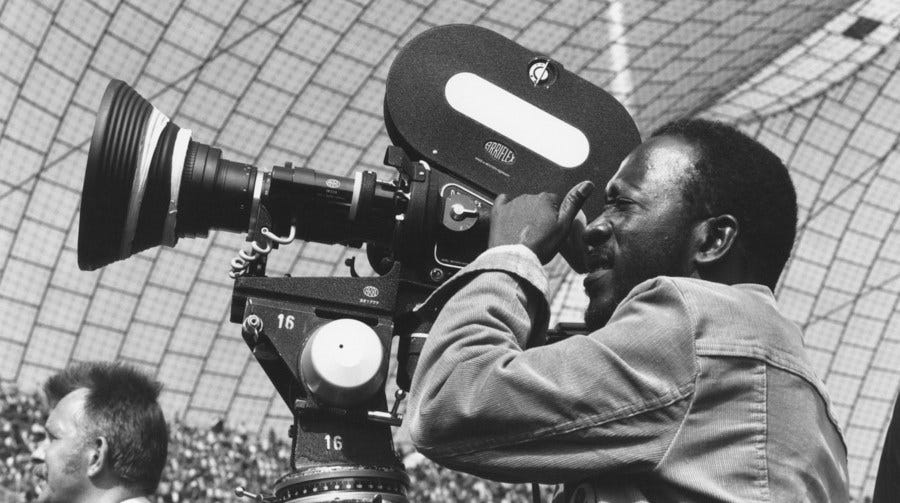
This shift is not unnatural. A film set already mirrors a startup.
There is a founder, a core team, fixed timelines, limited capital, defined roles, and a final product that must perform.
What has been missing is mindset.
Across the continent, film schools and creative institutions are beginning to integrate entrepreneurship, legal literacy, and business strategy into training. Students are learning to build companies, not just careers. To negotiate contracts, not just scripts. To think in slates, not single films.
They are being trained as creative CEOs.
The danger of a stalled boom
Africa has seen this pattern before.
Music gained global attention before artists owned their masters. Fashion gained cultural influence before manufacturing scaled. Design travelled faster than production.
Visibility arrived first. Value followed elsewhere.
Film is at risk of repeating this cycle.
If filmmakers remain dependent on external platforms, short-term commissions, and project-by-project funding, the boom will plateau. Stories will travel. Value will not stay.
From films to companies
The future of African film lies in company-building.
Production houses with long-term vision.
Teams with institutional memory.
Catalogues that grow year after year.
Relationships with financiers built on performance, not desperation.
When filmmakers build companies, they stop being grateful participants and become strategic partners.
That is how industries mature.
The founder era is not optional
Africa’s film moment is real, but it is conditional. Platforms are watching costs. Audiences are fragmented. Competition is global.
The filmmaker who survives this era will not be the most talented alone, but the most prepared.
The founder era is not a rejection of art.
It is its protection.
Because without filmmaker-founders, Africa’s film boom will remain vibrant, visible, and vulnerable.
And with them, it becomes permanent.

A guest post by
A curious mind exploring the crossroads of creativity and insight.