


North Africa is filed under the Middle East because the companies that organise creative work draw their maps around clients and reporting lines, not around the continent. The latest example came when Omnicom announced Omnicom MENA on November 23, bringing its operations across the Middle East and North Africa under one leadership structure. The group has more than 3,500 employees across 14 markets. Its release uses “North Africa” once, inside “the Middle East and North Africa”, and does not mention sub-Saharan Africa. One announcement settles nothing, and it did not create the split. It is a prompt to ask a question Creative Brief Africa takes seriously: who decides what counts as African creativity?
Where does African creativity begin and end?
Not with the people making the work. A designer in Casablanca does not vote on whether she is part of the Middle East or part of Africa. The line is drawn by whoever organises the work: agencies, award bodies, platforms, funders. Each draws a map for its own reasons, and that map then becomes the way a creative economy sees itself.
The effect is easiest to see in who gets grouped with whom. A creative in Cairo can find herself in the same regional room as Riyadh and Dubai. A creative in Nairobi may find himself grouped with Johannesburg. Neither is told it was a choice.
Why is North Africa filed under the Middle East?
There is a fair case for it. Arabic runs through Cairo, Casablanca and Dubai, media and audiences overlap, and many clients buy across all three. Egypt is a very large market in its own right, and a regional group offers scale that a handful of small country offices cannot.
But look at what the filing does to the language. When PHD opened in Cairo in 2018, the agency called Egypt “our largest market in the Middle East to date”. Egypt is in Africa, and the label says Middle East.
The line is also not drawn the same way twice. Omnicom puts North Africa with the Gulf. In June 2025, WPP Media placed South Africa in a sub-region with Southeast Asia, Pakistan and Taiwan. Dentsu has given one leader France and sub-Saharan Africa together. That is three maps: North Africa with the Gulf, South Africa with Southeast Asia, sub-Saharan Africa with France. None of them is Africa’s.
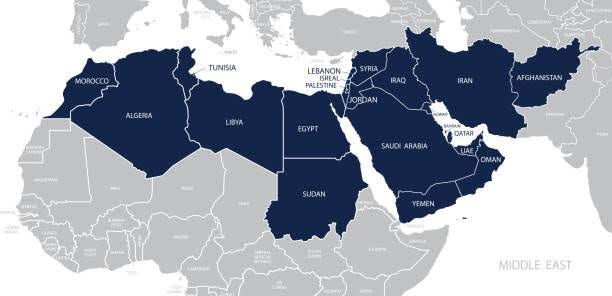
What does the split mean for creatives in Casablanca, Cairo and Tunis?
The risk is that their work gets described as Middle Eastern, and the continent’s conversation about its own creative economy loses them. A Tunis creative director can end up on a career ladder that runs through the Gulf, with her next job, her next client and her next award all measured against that region. Meanwhile, the rest of the continent builds its own references without her.
The upside is real: Gulf budgets, regional scale and rooms that would otherwise be closed. But a creative economy that calls itself African cannot be comfortable with one quarter of its map belonging to somebody else’s chart.
Do audiences care about the Sahara?
They do not, and the evidence is in what they watch. Yoola’s data on Nollywood views on YouTube shows Nigeria at 50 percent of views, Ghana at 10 percent, Kenya at 4 percent and South Africa at 3 percent. Ghana, Kenya and South Africa together are 17 percent. West African films are crossing into East and Southern Africa without any agency drawing the route.
Structures, not audiences, are where the lines sit. Creative Brief Africa made the same point about the Grammys: a category named for a continent can still be filled by one region, because the people who submit and vote decide what counts. Audiences cross borders easily. Institutions are slower to.
Is the split smart business, or a barrier to a continental creative economy?
Both. It is smart for whoever organises by client. It becomes a barrier when the structure turns into the story, and a region’s creative output starts to be described by the chart that holds it.
A continental creative economy needs the Maghreb, the Nile, the Sahel, the Gulf of Guinea, the Great Lakes and the Cape in one conversation. Creative Brief Africa covers all of Africa, North Africa included, and says so.
Culture crossed the desert long before any company drew a line across it. The line is not Africa’s. It is a filing decision, and filing decisions can be changed.

Written by Layo
Lead Editorial Writer, Creative Brief Africa
Outside of her editorial work, she writes Curious Health, a newsletter focused on everyday health questions, explored with clarity and care.