


For decades, the ambition across Africa’s creative economy has been clear.
Build the next Hollywood.
Scale film industries.
Export cinema to the world.
From Nollywood to emerging film sectors across Kenya, Ghana, and South Africa, the model has largely followed one path.
Live-action storytelling.
Theatrical releases.
Streaming distribution.
But what if that ambition is misaligned with where the world is going?
What if Africa does not need to compete in film at all?
What if the real opportunity is to skip the traditional film model entirely and build a global animation industry instead?
A $953 Billion Signal the Industry Cannot Ignore
In Accra, that question is beginning to take shape as strategy.
Following a landmark win at the TAIDO African Animation Awards in Tokyo, Francis Y. Brown, founder of AnimaxFYB Studios, made a case that reframes the entire conversation.
Animation, he argued, is no longer a niche.
It is one of the fastest-growing sectors in the global creative economy.
The numbers are staggering.
The global animation market was valued at over $436 billion in 2024
It is projected to approach $953 billion by 2034
The broader media and entertainment industry is heading toward $3.5 trillion by 2029
Africa’s current share stands at around $15.7 billion, with projections showing it could exceed $30 billion within the next decade.
On paper, this looks like growth.
In reality, it reveals something deeper.
Africa is participating in a rapidly expanding industry.
But it is not yet shaping it.
The Wrong Benchmark: Why Competing in Film May Be Limiting
For years, African creative ambition has been measured against Hollywood.
Bigger budgets.
Better production quality.
Global distribution deals.
But film, especially at the Hollywood level, is one of the most capital-intensive industries in the world.
High production costs.
Expensive logistics.
Complex distribution systems.
Competing at that level requires billions in sustained investment.
And even then, control over distribution often remains external.
This creates a structural disadvantage.
Africa is trying to compete in a system it does not control.
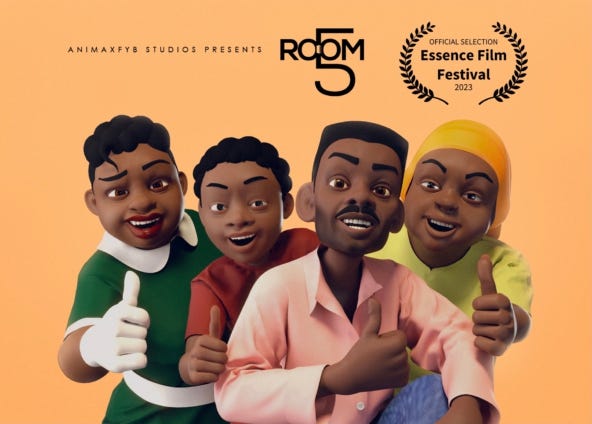
Animation Changes the Equation Completely
Animation operates on a different economic logic.
It does not require physical locations.
It does not depend on large on-ground crews.
It is not constrained by geography.
Instead, it is driven by:
software
talent
intellectual property
This changes everything.
Because while film scales through capital, animation scales through systems.
Cost: The First Structural Advantage
One of the most immediate differences between film and animation is cost structure.
Live-action film production involves:
location scouting
equipment logistics
actor management
set design
travel and accommodation
These costs compound quickly.
Animation, by contrast, is largely digital.
Once infrastructure is in place:
production becomes more predictable
teams can work remotely
costs can be optimized over time
This does not mean animation is cheap.
High-quality animation still requires investment.
But it is more scalable and more controllable than film.
For a continent where capital constraints are real, this matters.
Scalability: Why Animation Wins Long-Term
Film is linear.
You produce one film.
You distribute one film.
You earn from one cycle.
Animation is exponential.
One character can become:
a series
a franchise
a merchandise line
a global IP asset
This is where the real value lies.
Not in production.
But in ownership.
As Francis Y. Brown puts it:
“IP creation is the new gold.”
Global Demand Is Already Shifting
The rise of animation is not theoretical.
It is already happening.
Streaming platforms are increasing demand for animated content.
Gaming is expanding narrative universes.
AI and virtual production are integrating animation into new industries.
And perhaps most importantly, global audiences are changing.
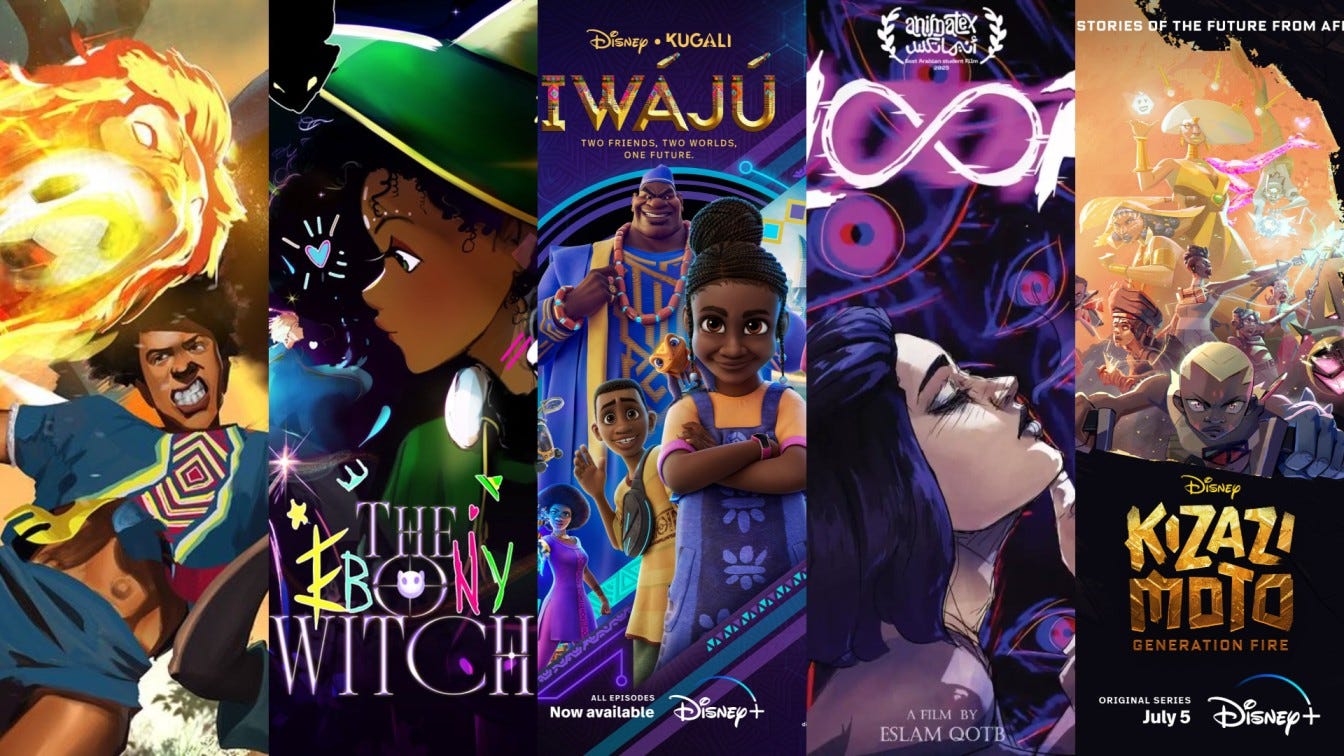
Youth Are Not Waiting for Film
Africa is the youngest continent in the world.
Over 60% of the population is under 25.
This generation consumes content differently.
Short-form video.
Mobile-first storytelling.
Animated content.
Gaming environments.
They are not bound by traditional film culture.
They are growing up in digital ecosystems where animation is native.
This matters.
Because industries follow audiences.
Japan Built an Industry, Not Just Content
If there is one country that demonstrates the power of animation as strategy, it is Japan.
Anime is now worth over $60 billion annually.
But that success did not come from talent alone.
It came from systems.
Japan built:
strong IP frameworks
global distribution networks
export-oriented production models
It turned animation into a national industry.
Not just a creative output.
Africa’s Cultural Advantage Is Already Global
Ironically, African storytelling is already influencing global animation.
As Hiroshi Yoshimoto pointed out, the character Onyankopon in Attack on Titan is derived from a Ghanaian sky god.
This is not an isolated example.
African mythology, aesthetics, and narratives are already embedded in global culture.
But there is a gap.
Africa is contributing to global storytelling.
But it is not always owning the platforms or IP behind it.
AnimaxFYB Studios and the TAIDO Project
The collaboration between Ghana and Japan through the TAIDO Project offers a glimpse into what is possible.
Through partnerships with organizations like Arc & Beyond and the Japan External Trade Organization, African creatives are gaining:
access to global production standards
technical training
international mentorship
exposure to distribution networks
The goal is not just skill development.
It is ecosystem building.
Content emerging from the program blends:
African storytelling
with
Japanese technical expertise
This is the beginning of a new model.
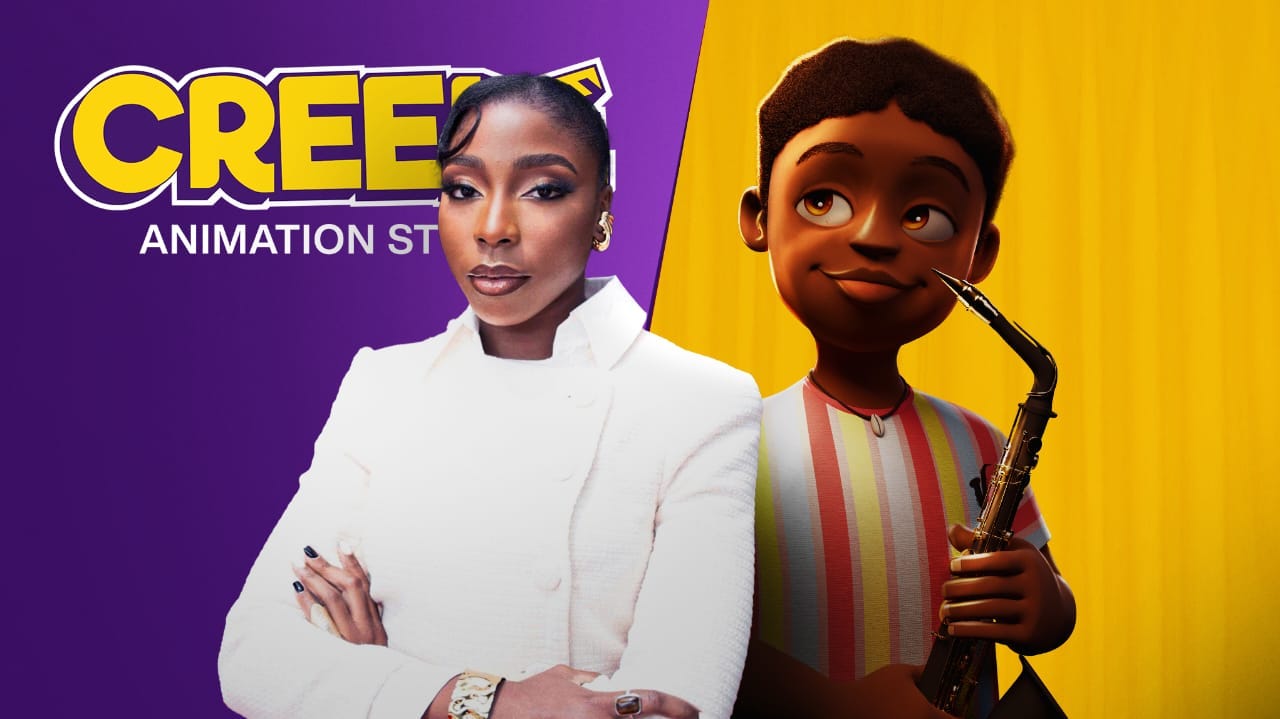
The Real Risk: Repeating the Film Mistake
If Africa approaches animation the same way it approached film, it risks repeating the same outcome.
Strong content.
Global recognition.
Limited ownership.
As Brown notes, a significant portion of Africa’s animation revenue still flows back to producers outside the continent.
This is the core issue.
Not participation.
But value capture.
The Missing Layer: Systems
For animation to become a true industry in Africa, several systems must be built.
Production Systems
Studios capable of consistent, high-quality output.
Training Pipelines
Education from primary school to professional level, as emphasized by Gideon Aryeequaye.
IP Frameworks
Strong protection and monetization structures.
Distribution Platforms
Local and global channels for content delivery.
Financing Models
Public-private partnerships and investment incentives.
Without these, animation remains fragmented.
Why Ghana Is Positioning Early
Ghana’s ambition to become an animation hub in West Africa is not accidental.
It is strategic.
The country is leveraging:
political stability
cultural depth
international partnerships
a growing digital economy
But more importantly, it is recognizing timing.
The global animation industry is expanding rapidly.
And there is still space to build.
Skipping Film Is Not About Abandoning It
This is not an argument against film.
Film will continue to grow.
Nollywood will continue to expand.
But the question is about focus.
Where should Africa place its biggest bet?
Film is competitive and capital-intensive.
Animation is scalable and still open.
A Different Kind of Industry
Animation is not just about entertainment.
It connects to:
gaming
education
advertising
virtual reality
artificial intelligence
It sits at the intersection of creativity and technology.
This makes it more than a creative sector.
It makes it a strategic industry.
The Window Is Still Open
The most important insight is this.
Africa is not late.
The global animation industry is still expanding.
Demand is still increasing.
New platforms are still emerging.
But the window will not stay open forever.
Conclusion: The Leapfrog Opportunity
Africa does not need to replicate Hollywood.
It does not need to compete on the same terms.
It can choose a different path.
One that is:
more scalable
more exportable
more aligned with global trends
Animation offers that path.
It allows Africa to leapfrog.
From:
fragmented industries
tostructured ecosystems
From:
content creation
toIP ownership
From:
participation
toeconomic control
The question is no longer whether Africa can tell stories.
It already does.
The real question is whether it will build the industry that owns them.
And in a market heading toward $953 billion, that decision will define the future of Africa’s creative economy.

A guest post by
A curious mind exploring the crossroads of creativity and insight.