


It started with skits.
Not the polished kind. The kind where a creator held their phone upright, hit record, and posted something funny before anyone had a framework for what to call it. TikTok built the format into an infrastructure. Then Facebook copied it. Then Instagram launched Reels. Then YouTube added Shorts, the last major platform to adopt what the others had already proven worked.
Vertical video. Portrait orientation. Built for the screen already in your hand.
The format moved fast because it fit the phone perfectly, and the phone was already where everyone was. No landscape rotation required. No buffering wait. No sit-down commitment. Just content that started before you decided to watch it and ended before you thought to leave.
What nobody fully anticipated was where it would go next.
The Format Grew Up
Skits became series.
Someone figured out that if you ended a 90-second vertical video on a cliffhanger, viewers came back. Then someone figured out that if you released a new episode every few hours, viewers stayed. Then someone built a platform around that behaviour, charged for episode unlocks, and discovered that people would pay.
That is the microdrama. Serialised storytelling in vertical format, designed for phone screens, paced like a soap opera on adrenaline. Episodes run between 60 and 90 seconds. A season can have 60 to 100 episodes. Production happens fast, on low budgets, in high volume. The stories are emotionally heightened. Betrayal. Romance. Revenge. Secrets. Every episode ends at the point of maximum tension.
China built the first industrial version of this. The Duanju format, as they call it domestically, grew from a content experiment into a $7 billion domestic market by end of 2024, with 662 million viewers. ReelShort and DramaBox, the two platforms that exported it globally, entered the US market in 2022 and 2023. By 2025, the US had become the single largest non-China microdrama market, generating approximately $1.3 billion for the full year.
DramaBox averaged 44 million monthly active users in the first half of 2025, beating Hulu and Paramount+ in that metric. ReelShort surpassed 370 million downloads and crossed $700 million in cumulative revenue. In Q1 2026 alone, both platforms approached $140 million each in in-app purchase revenue.
The global microdrama market hit $11 billion in 2025. It is projected to reach $14 billion in 2026 and $26 billion by 2030.
FOX Entertainment entered the format in 2026, partnering with content creator Dhar Mann to produce 40 original microdrama series. Netflix adopted a vertical mobile feed in 2025. Holywater raised $22 million in January 2026 to expand its microdrama business in the United States. The format is no longer a Chinese experiment or a niche platform play.
It is a new industry sitting directly alongside film and television.
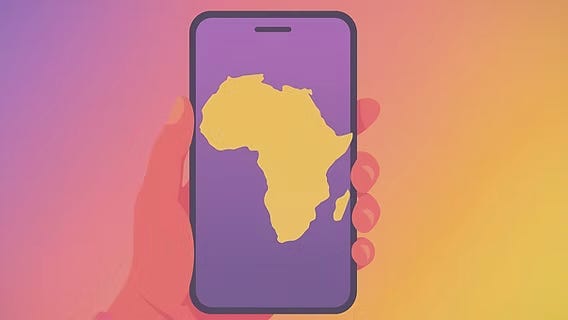
Where Africa Is Not
Almost none of the content on ReelShort, DramaBox, or ShortMax is African.
This is the number that matters more than the $26 billion projection. The global microdrama market is structurally open, the top platforms capture just over half the market between them, leaving meaningful revenue for other entrants, and yet Africa, with its production volume, its serialisation instinct, and its audience familiarity with emotionally heightened storytelling, has barely entered the room.
Ifeoma Areh, co-founder of the Digital Creator Africa Academy for Microdrama, put it plainly in an interview earlier this year: “The number that stopped us in our tracks was not the $26 billion. It was the absence of Africa inside it.”
That absence is not a talent problem.
African storytelling has the emotional intensity, the moral complexity, and the community-rooted drama that microdrama as a format was literally built to deliver. Fast production cycles, dialogue-driven plots, heightened emotion, cliffhanger structures, and audience-first storytelling have long defined industries like Nollywood. What has been missing is the structural framework for translating those instincts into the specific discipline the format demands.

The Infrastructure Starting to Form
The industry has noticed the gap and has begun, cautiously, to close it.
The Digital Creator Africa Academy for Microdrama launched in Lagos in January 2026, co-founded by Areh and media executive Elijah Affi. Its mandate is to train 300 experienced African filmmakers, writers, videographers, and actors in the specific craft of vertical microdrama production. The curriculum adapts African storytelling to the 90-second episode format, drawing faculty from China’s Duanju model, India, and Western streaming sectors. In May 2026, DCAA partnered with Singapore-based AI video company Video Rebirth to launch what it described as the continent’s first industrial AI filmmaking programme, integrating AI-assisted production into the training from the start.
The economics forming around the format are already more attractive than much of what Nollywood’s traditional infrastructure offers. African writers commissioned through DCAA to write microdrama scripts for global platforms are earning as much as $1,500 per script, more, according to Areh, than their counterparts earn in Nollywood.
Production budgets for African microdramas are forming around sub-$20,000 per production. That figure is the format’s structural advantage made concrete: a microdrama can be produced at a cost that a Nollywood theatrical release cannot approach, while targeting a revenue model, per-episode unlocks on global platforms, that does not depend on cinema screens, Netflix commissions, or advertising budgets.
EbonyLife Group, one of Nollywood’s most internationally active studios, announced its entry into the microdrama market in March 2026 with Love Me Twice, a vertical short starring Tobi Bakare and directed by Kayode Kasum, releasing on EbonyLife ON Plus. Toribox, positioning itself as Africa’s first dedicated microdrama platform, was in active promotion ahead of a planned launch later in 2026.
The Gauteng Film Commission in South Africa partnered with DCAA and Sukuma Media to make microdrama training available to South African creators, marking the format’s reach beyond Nigeria into the continent’s other major production hub.

Why the Format Suits Africa
This is not a format Africa needs to learn from scratch.
The Nollywood direct-to-video era of the 1990s and 2000s was built on exactly the logic microdrama now operates on: low cost, high volume, emotionally intense, serialised across formats, and audience-first in a way that prioritised what people actually wanted to watch over what critics thought they should. Kannywood in northern Nigeria produces an average of 50 films per month. The production velocity is already there.
The serialisation instinct is there. Nigerian skit-makers have been building episodic audiences on YouTube and Instagram for years. The audience habit of returning for the next episode, of staying inside a creator’s world across multiple releases, is already built into how African digital content operates.
The emotional register is there. The storytelling traditions across the continent, the moral complexity, the community stakes, the intergenerational tension, the specific texture of African romantic drama, are not a disadvantage in a format built around heightened emotion and unresolved tension.
What microdrama requires as a discipline, the 90-second episode structure, the cliffhanger pacing, the high-volume production workflow, the platform-specific optimisation for monetisation, is learnable. It is closer to a translation problem than a capability problem.
The Opportunity and What Could Close It
The vertical drama market is not closed.
More than 200 platforms exist globally. DramaBox, ReelShort, and NetShort together capture just over half of total market revenue, leaving a meaningful portion of a $14 billion market in 2026 for other entrants. The format is still in its early expansion phase outside China and the United States. Africa has not missed the window. The window is open.
But windows close.
China moved first and built the dominant platforms. The United States moved second and built the largest non-China revenue base. India is moving now. If African studios and creators wait for the format to fully mature before entering, they will enter a market where the content categories, the audience expectations, and the platform relationships are already defined by other markets.
Africa has the production instinct, the storytelling depth, and, through DCAA and the early moves by EbonyLife and Toribox, the beginnings of a structural framework to compete. The writers are already earning from it. The training infrastructure is forming. The first productions are being made.
The $26 billion is not a ceiling. It is a projection for a format that is still expanding into markets that have barely discovered it yet.
Africa is one of those markets.
The question is whether its studios move now, while the format rewards early entrants, or wait until it becomes another industry where the infrastructure was built elsewhere and the continent participates on terms someone else set.

Written by Layo
Lead Editorial Writer, Creative Brief Africa
Outside of her editorial work, she writes Curious Health, a newsletter focused on everyday health questions, explored with clarity and care.