


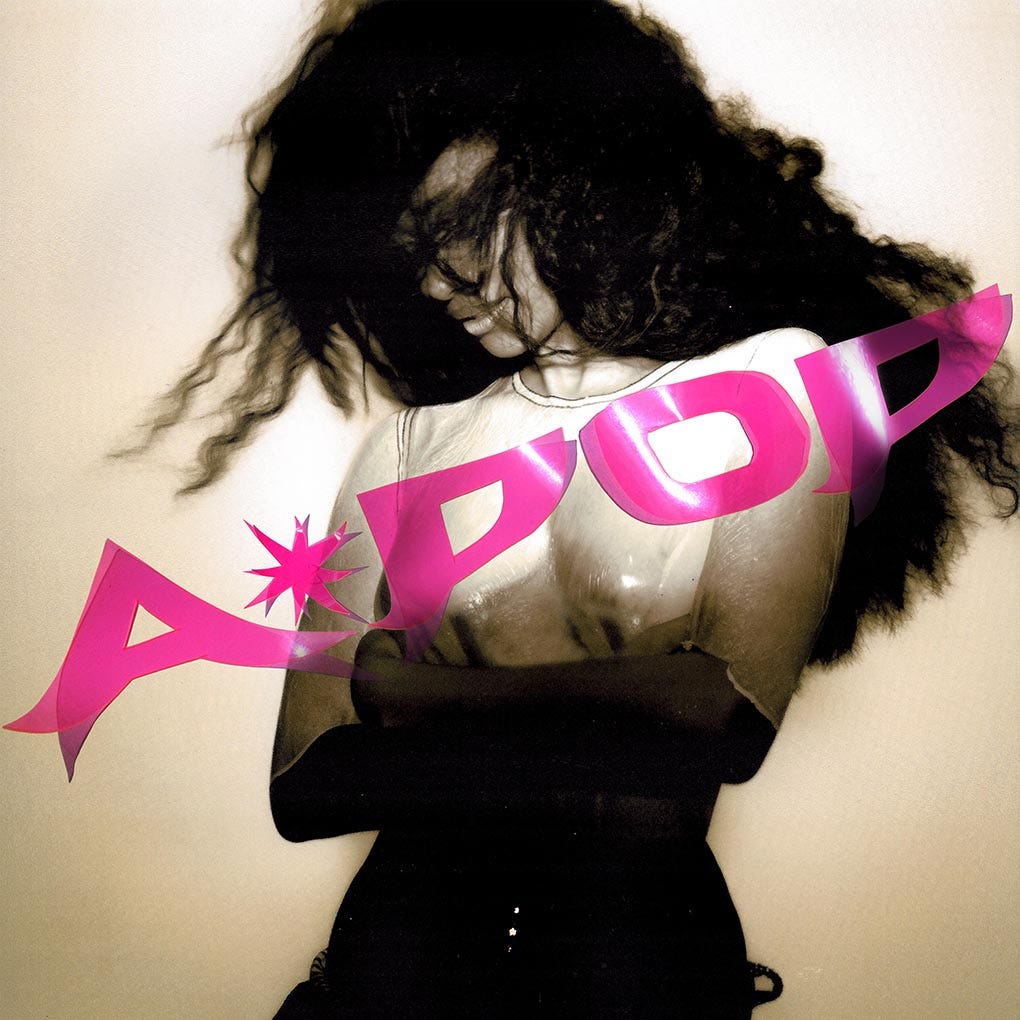
On one side of Tyla’s A*POP campaign, TikTok built an entire promotional infrastructure around her album.
On the other, one of the continent’s most important music markets disappeared from her tour schedule within four days of its announcement.
Both things happened in the same week.
And together, they expose a contradiction that the African music industry has not yet resolved.
African music is crossing borders faster than the business of African music can follow.
What Actually Happened
On July 27, Tyla announced the A*POP World Tour.
34 dates. Paris on October 12, through Europe, the UK, and North America, ending with Lagos on December 22 and two South African homecoming shows in Cape Town and Johannesburg in January 2027.
Lagos was her only Nigerian stop. The first African date on the tour.
Within days, a petition circulating across Nigerian social media called for a boycott. The title was explicit: “Ban Tyla from entering Nigeria until xenophobic attacks stop in South Africa.” It gathered thousands of signatures, fuelled by mounting anger over reported attacks on Nigerian nationals in South Africa, including the death of Nigerian citizen Chika Ibeh in Cape Town.
Prominent Nigerian voices backed the campaign. VeryDarkMan threatened to mobilise his Ratel Movement to physically prevent the concert. OAP Dotun publicly urged fans not to attend. Solomon Buchi called on his followers to boycott.
By Friday, the Lagos date had been quietly removed from Tyla’s official tour schedule. Cape Town and Johannesburg remained listed. Lagos was gone.
Neither Tyla nor her management has issued a statement explaining the removal.
That last detail matters.
What we know is that Lagos disappeared after a sustained, high-visibility, highly organised boycott campaign driven by documented anger over xenophobic attacks on Nigerians in South Africa. The sequence is the story even without a formal confirmation of causation.
Lagos Is Not Just Another Tour Stop
To understand what the removal actually costs, you have to understand what Lagos in December is.
Detty December 2025 generated ₦396.5 billion in 55 days.
3.6 million people participated. More than 70% of attendees were Gen Z and Millennial travellers. Diaspora visitors made up just 11% of attendance but contributed 55% of total consumer spending. The United States overtook the United Kingdom as the largest source of diaspora visitors for the first time. Hospitality and accommodation alone accounted for ₦175.4 billion. Entertainment and nightlife generated ₦129.55 billion. Lagos’ broader nightlife economy reached ₦2.9 trillion across 2025, nearly doubling from the ₦1.49 trillion recorded the year before.
This is not a festive season. It is an economic system.
Ticket prices at headline Detty December concerts now run from ₦75,000 to ₦150,000 for regular admission, with VIP tables reaching ₦5 million. A headline concert by an artist of Tyla’s profile during this period could generate several hundred million naira to well above one billion naira in gross ticket revenue before sponsorships, hospitality packages, and merchandise are factored in.
Promoters who commit resources months before an announcement were exposed by the removal. Production logistics, venue bookings, marketing spend, ticketing infrastructure. None of that gets recovered easily when a date disappears without a statement.
The Lagos cancellation is not a cultural footnote.
It is a measurable commercial event in one of Africa’s most important live-music economies.
The Nigeria-South Africa Music Corridor
Here is what makes the cancellation genuinely complicated rather than straightforwardly political.
Tyla has not been a stranger to the Nigerian music ecosystem.
She collaborated with Ayra Starr on Girl Next Door in 2023. She featured Tems on No and worked with DJ Spinall and Omah Lay on One Call. She did not build the global career she has by ignoring Nigerian audiences or Nigerian artists. The creative relationship between Nigeria and South Africa in music is close, commercially important, and built over years of collaboration.
Afrobeats and Amapiano are not isolated ecosystems. They share audiences, share streaming playlists, and share stages. Nigerian artists perform in South Africa. South African artists perform in Nigeria. Songs move between both markets and then outward to the world.
Cross-border touring between the two countries has grown consistently in recent years. South Africa’s Minister of Justice disclosed in June 2026 that several South African artists had already had concerts cancelled across Africa because of growing resentment over South Africa’s immigration policies and xenophobic incidents. Tyla’s situation was the most visible instance of a pattern that had been building for months.
In 2019, Burna Boy issued a public warning after South Africa’s xenophobic violence erupted, urging Africans not to pretend it was unreal and calling for continental solidarity. Seven years later, the same tension is playing out in the same space, in a year when both countries’ creative output has never been more commercially powerful or more globally visible.
The music travels.
The business does not travel with the same ease.
Why can Tyla collaborate with Nigerian artists, build Nigerian audiences, and stream across Nigerian platforms, but a Lagos concert can become entangled in a diplomatic and social conflict between two governments?
That is the question the African music industry needs to ask.
The Fan Is Now a Market Actor
The Tyla boycott is not just a social media story.
It is evidence that something structural has changed in how African music markets operate.
African fan communities have always been vocal. What is different now is that they have tools, reach, and demonstrated ability to coordinate fast enough to affect commercial decisions. A petition gathered thousands of signatures in days. Prominent influencers amplified it to millions of followers. The pressure reached a scale that someone, somewhere, decided to act on.
Whether the decision to remove Lagos was made by Tyla’s management, her promoter, or the venue is not publicly confirmed. What is confirmed is that the audience moved faster than the industry could absorb.
That changes the risk calculation for any artist touring the continent.
The South African social media response illustrated how quickly the dynamic can escalate in both directions. Posts called for all Nigerian artists to be banned from performing in South Africa. Others called for the removal of Nigerian nationals from the country entirely. An artistic and commercial relationship built over years was being weaponised inside a political dispute that neither the artists nor their audiences created.
This is new market risk. And the African live music industry does not yet have frameworks for managing it.
Then There Is TikTok
Now is where the contrast becomes a CBA question.
While the physical African market proved politically complicated, a global platform moved in the opposite direction entirely.
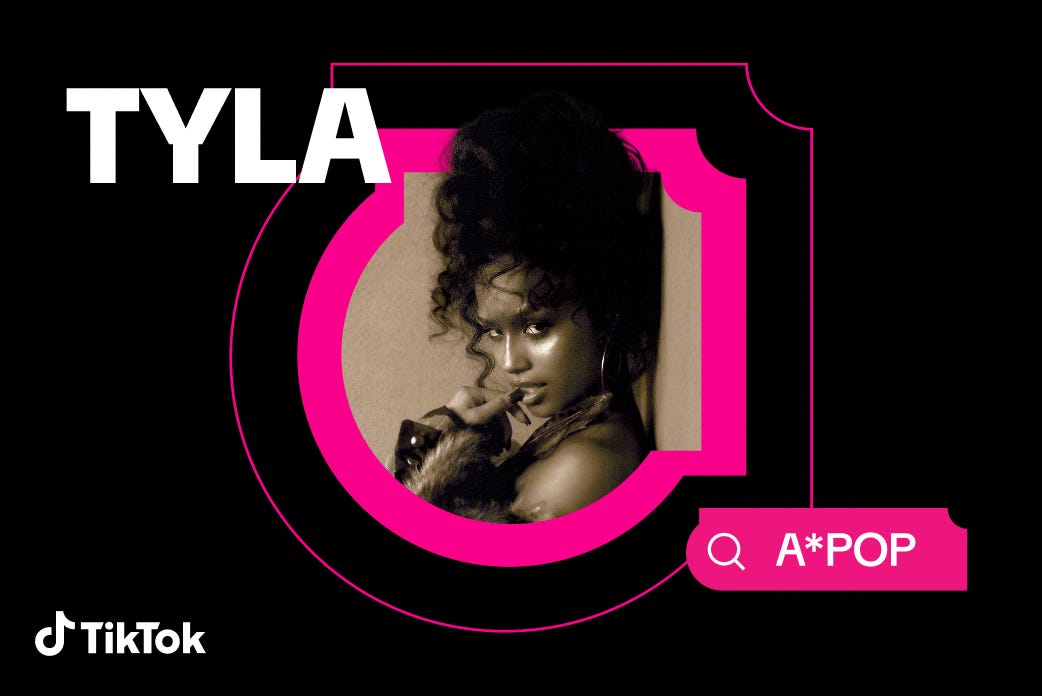
TikTok built Tyla a dedicated search hub so fans could find every piece of A*POP content in one place. It launched profile frame challenges allowing fans to personalise their accounts around the album. It created a fan spotlight experience that surfaced user-generated content tied to the release and amplified it across the platform.
This is not promotion. It is infrastructure. The kind of platform investment that embeds an album release into the architecture of the app and builds sustained engagement rather than a one-week spike.
TikTok did this because Tyla’s global numbers justify it.
That last sentence is the most important one.
Now ask a different question.
African artists with comparable continental audience sizes, comparable engagement rates, and comparable cultural influence across multiple African markets do not receive this level of platform investment. Not because the music is less powerful. Because the commercial metrics that justify platform infrastructure investment are measured in global CPM rates and Western market valuations, not in continental reach.
TikTok’s Creator Rewards Program covers zero African countries. The platform’s primary mechanism for converting content performance into creator income does not include a single African market, despite an African user base of over 150 million people. Nigerian sounds travel through TikTok to audiences in Brazil, South Korea, and Germany. The platform captures the cultural energy and returns the commercial infrastructure only to the markets it has decided are worth investing in.
So here is the contradiction sitting at the centre of Tyla’s A*POP week.
A global platform could build sophisticated promotional infrastructure around her album faster and more effectively than African markets could build the diplomatic and commercial infrastructure to receive her tour.
That gap is not primarily about Tyla.
It is about what Africa’s music markets are still missing.
The Underlying Question
African music has become global.
Afrobeats fills arenas in London, Paris, and New York. Amapiano has built audiences across Europe and the Americas. Artists from Nigeria, South Africa, Ghana, and Kenya appear on international charts, win international awards, and collaborate with the world’s biggest names.
But Africa itself is not yet a fully functioning commercial market for African music.
A tour cannot move freely between its two largest music economies without factoring in a geopolitical relationship that can shift within days. Platform monetisation infrastructure does not reach the continent’s creators proportionally to the content they produce. The music crosses borders. The business has not caught up.
Detty December generated ₦396.5 billion in 55 days. Lagos is one of the world’s genuinely significant live music economies. The appetite is not in question.
What is in question is whether the systems around that appetite, the legal frameworks, the cross-border touring infrastructure, the platform monetisation pathways, the diplomatic buffer that protects creative commerce from political disruption, can be built fast enough to match what the music has already achieved.
Tyla’s Lagos date disappeared from a schedule without a statement.
That silence is its own kind of data.

Written by Layo
Lead Editorial Writer, Creative Brief Africa
Outside of her editorial work, she writes Curious Health, a newsletter focused on everyday health questions, explored with clarity and care.