


On September 28, 2026, Maxhosa Africa opened Paris Fashion Week.
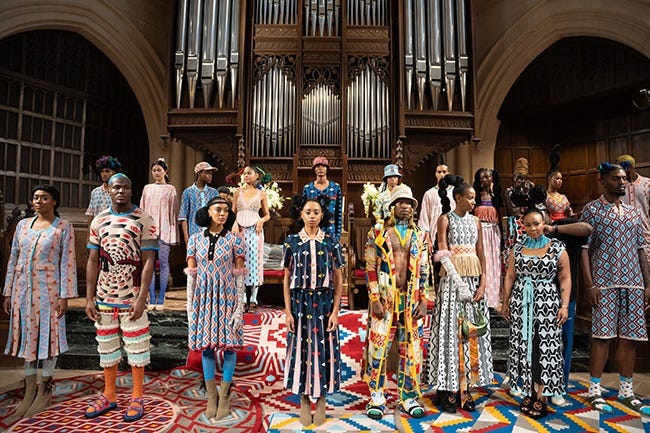
Not as a presentation. As the first South African brand to stage a full runway show on the official Paris Fashion Week calendar, decided by France’s Haute Couture and Fashion Federation. Fifty-four looks. Knitted tassels bearing the names of African countries. A wool dress featuring a recalibrated map of Africa on the UN’s re-scaled projection. Xhosa motifs carried onto the world’s most prestigious fashion stage by Laduma Ngxokolo, who had been fighting to sit at this table for sixteen years.
“I feel honoured to be represented,” he told AFP afterwards. “I’ve been fighting to sit at the table for 16 years now.”
He had been planning to bring other African designers to Paris with him. He said he did not have the resources.
Both of those sentences matter equally. And the distance between them is the central question that this season’s African fashion calendar, from Abuja to Addis Ababa, from Accra to Cape Town, is forcing the industry to answer.
What Fashion Weeks Are Built to Do
Before asking what African fashion weeks produce, it is worth establishing what the format was designed to produce.
New York Fashion Week generates nearly $900 million annually, with approximately $547 million attributed to direct visitor spending. London Fashion Week generates between £269 million and £365 million per edition, including over £100 million in wholesale orders placed by more than 5,000 attending buyers and press. Paris Fashion Week is the commercial centre of the global calendar, the event where the orders that shape retail for entire seasons are placed by the buyers whose decisions determine whether a designer’s collection reaches international stores.
Seoul Fashion Week offers a useful comparison from outside the Western fashion establishment. The Seoul Metropolitan Government published trade-show consultation values of $6.13 million for the 2025 Spring-Summer season, $6.71 million for 2025 Fall-Winter, and $7.45 million for 2026 Spring-Summer. These are traceable, publicly reported commercial outcomes. The government publishes them because they justify the public investment in the event.
That model asks an uncomfortable question that African fashion weeks have not yet been asked loudly enough to answer.
A Continent of Fashion Weeks
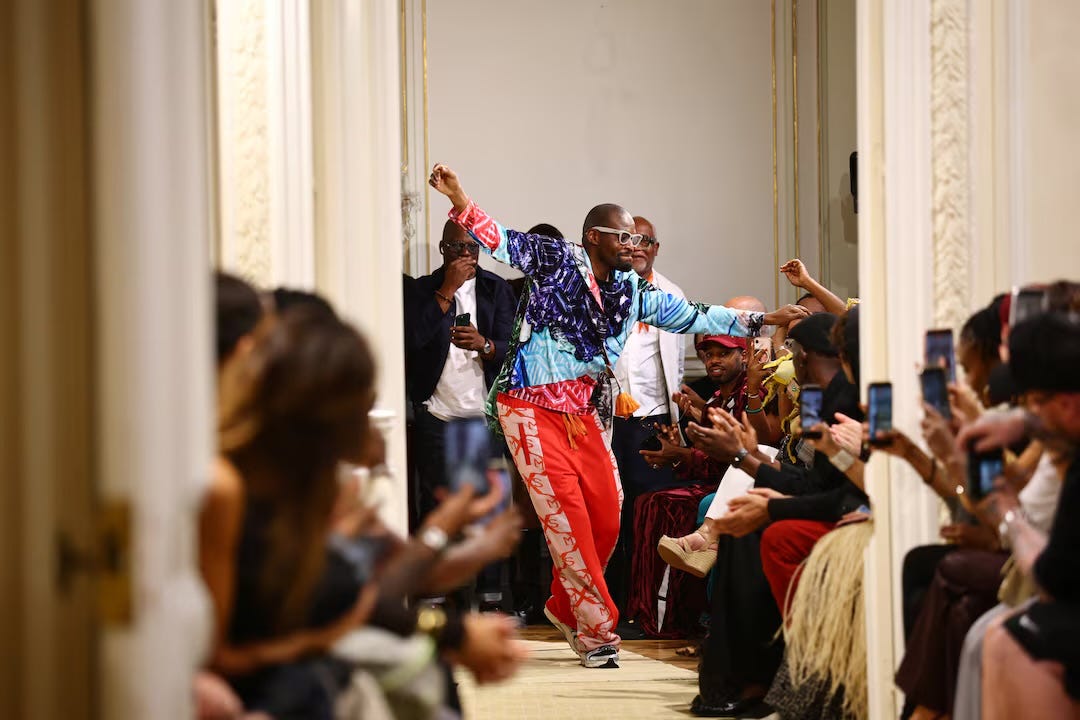
Africa’s fashion calendar has expanded dramatically. The runway is no longer only in Lagos and Cape Town.
In Addis Ababa, the Hub of Africa Fashion Week held its 15th edition in January 2026 at the Hyatt Regency with four days of programming that its organisers deliberately described as prioritising infrastructure over spectacle. For the first time, it hosted a cross-border sourcing roundtable, bringing Ethiopian manufacturers into conversation with international buyers seeking supply chain alternatives to Asia. The context matters: Ethiopia’s garment manufacturing sector has attracted investment from major global fashion brands drawn to its preferential trade access, and the fashion week is positioning itself explicitly as a bridge between Ethiopian production capacity and international commercial demand.
In Kampala, Uganda International Fashion Week announced in 2026 that it would partner with the World Fashion Exhibition to host the “World Fashion Week Africa Preview,” explicitly positioning Kampala as a continental fashion hub with trade and export facilitation as stated objectives. Designers from South Africa, Kenya, Tanzania, and Nigeria have participated in recent editions.
In Nairobi, the East Africa Textile and Leather Week concluded its fifth edition in 2026 with 4,110 visitors from 58 countries over three days at the Sarit Expo Centre, making it one of the most commercially structured fashion-adjacent trade events on the continent. The visitor profile is explicitly buyer and sourcing-oriented.
In Accra, FashionGHANA announced that the 2026 edition of Accra Fashion Week, its tenth anniversary, would not simply produce another runway edition. The intention was to restructure the event entirely around a more centralised model, developing a buyers’ system more responsive to the realities of African fashion commerce, and positioning Ghana to accommodate greater levels of fashion exports and international investment. Ghana announced three garment factories in 2026 targeting 27,000 jobs, and the fashion week wants to be the commercial layer that connects design output to that manufacturing ambition. Meanwhile, Accra-based collective Free The Youth secured not one but two Jordan Brand collaborations in 2026, conceived, produced, and launched entirely from Ghana without a fashion week as the vehicle.
In Cape Town, Allfashion Sourcing Cape Town returned to the CTICC from July 14 to 16, 2026, hosted by Messe Frankfurt South Africa in partnership with the City of Cape Town, the Department of Trade, Industry and Competition, and the Industrial Development Corporation. The event combines runway showcases with an explicit business matchmaking programme facilitating pre-arranged one-on-one meetings between buyers, retailers, manufacturers, and suppliers. Separate from the fashion week circuit, Cape Town’s Wesgro-led Made in the Cape initiative in 2026 connected 34 international buyers from 17 countries with over 230 Western Cape exporters, resulting in 13 signed trade deals since 2023 with a projected value of R50.7 million over five years and over 400 structured B2B meetings.
That last set of numbers matters more than most runway coverage would suggest. Thirteen signed trade deals. A projected commercial value. A buyer list and a country list. This is what accountability for commercial outcomes looks like in a fashion event infrastructure.
And in Nigeria, this season’s runway activity is split between Lagos Fashion Week running October 28 to November 1 as its fifteenth edition, and Nigeria Fashion Week which made its first-ever move to Abuja in October 2026 after 24 years in Lagos. Nigeria Fashion Week’s Abuja edition was structured deliberately around export pipeline development, partnering with New York-based Bizness Group to help Nigerian designers understand and meet international retail requirements. It brought retail buyers from North America, Europe, Asia, and the Caribbean alongside a B2B trade and technology expo. Lagos Fashion Week’s own documented figures show 68% of brands attending have secured new funding or distribution deals post-event, and Moda Operandi sent buyers to Lagos Fashion Week for the first time in 2024, a market signal that international buyers are beginning to take the event seriously as a purchasing destination.
The Bias the Format Creates
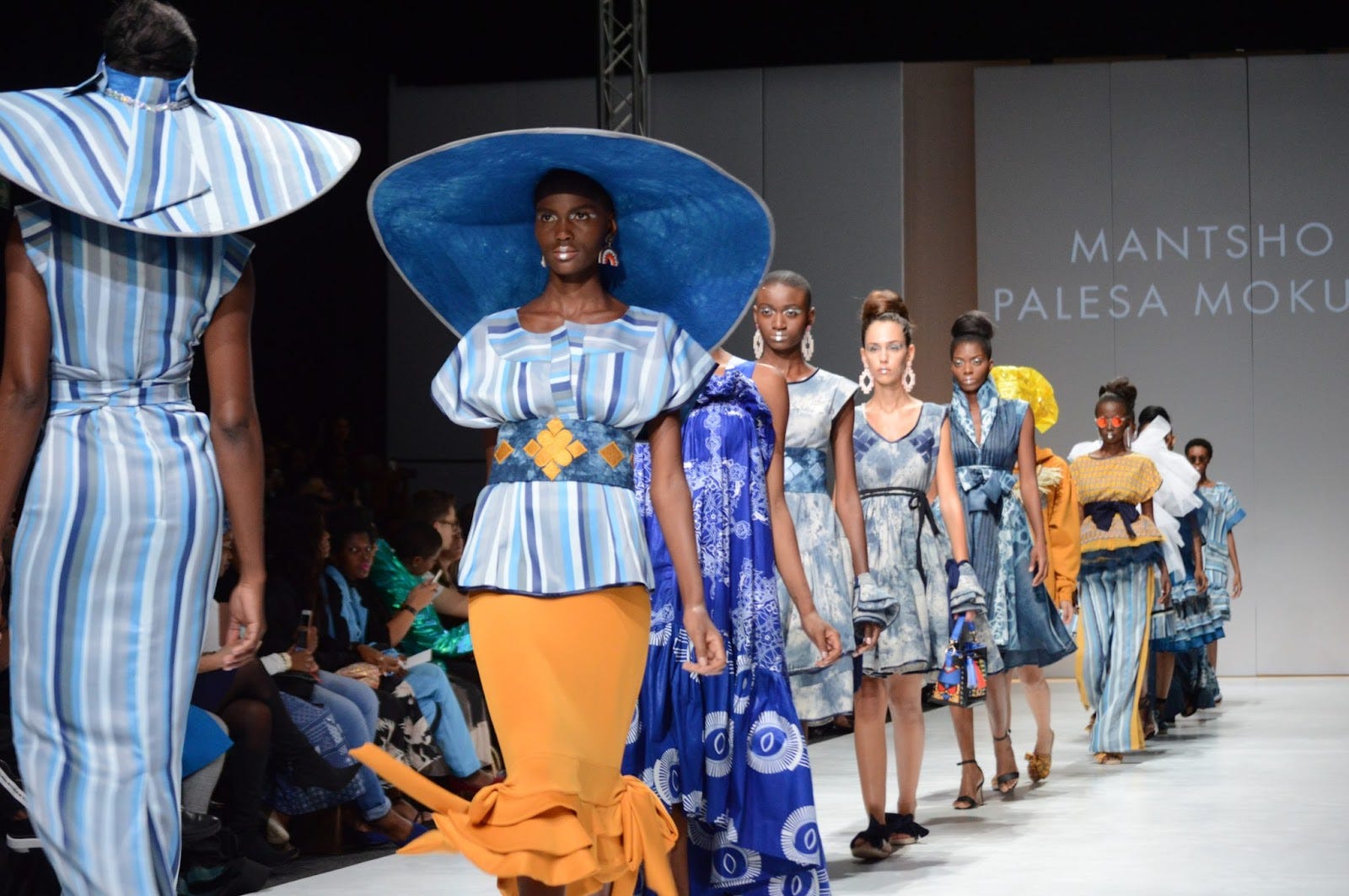
Fashion weeks, wherever they run, create a structural bias.
The runway format rewards scale. Production values. The visual spectacle that generates press coverage and content. A compelling runway show costs money that most independent African designers, operating in markets where less than 5% of fashion businesses can access commercial credit, do not have. The designers who benefit most from fashion week visibility are disproportionately the ones with the commercial foundation to produce a show in the first place.
This is not unique to Africa. The British Fashion Council runs its NEWGEN initiative specifically to fund emerging designers who would otherwise be priced out of showing at London Fashion Week. The difference is that the ecosystem around Western fashion weeks, the showrooms, buyer networks, press infrastructure, and financing pathways, has been built over decades. In most African markets, that ecosystem is still in construction.
Lagos Fashion Week’s Green Access programme addresses this directly. Now in its eighth edition under the theme “Crafted in Practice,” it connects emerging designers with artisans, manufacturers, and creative partners across the value chain and has the participants show collections at the main event. Hub of Africa Fashion Week in Addis Ababa took a different approach in 2026 by centering its programming around manufacturer relationships rather than runway spectacle. Accra Fashion Week is redesigning itself entirely around a buyers’ system for its tenth year. These are structural corrections to the visibility-without-viability problem that fashion weeks create when left to their own commercial logic.
The question for every event this season is not how good the collections are. It is whether the infrastructure around the runway is converting visibility into something the designers can take to the bank.
Maxhosa in Paris: What the World Watching Actually Costs
Back to Laduma Ngxokolo and Paris Fashion Week.
Maxhosa Africa employs approximately 300 people, runs eight stores, and produces all of its knitwear from two factories in Johannesburg and East London. It has been called “the Missoni of Africa.” It has shown in New York and Paris for several seasons. Michelle Obama and Beyoncé have worn it. Ngxokolo stated his vision clearly to WWD after the Fall 2026 Paris show: “The collection is about validating ourselves as African, that it is time for us to quantify our influence culturally in monetary value.”
That sentence is the right argument.
The runway cannot answer what happens to monetary value when the world is watching.
In 2018, Zara reproduced the pattern from Maxhosa’s Khanyisa Cardigan, a design launched at Mercedes-Benz Fashion Week Johannesburg in 2014, in a men’s sock range sold internationally across UK, New York, and South African outlets. The similarity was not subtle. Ngxokolo described it to Eyewitness News: “The first thought was that it lacked integrity as they did not even modify the patterns, they had copied straight from patterns I had used for my collections.” Maxhosa engaged legal counsel, sent a cease and desist to Inditex, and Zara removed the socks. No public settlement figure was ever disclosed.
The South African Clothing and Textile Workers Union described the episode as “the worst form of fashion colonialism” and made the structural point clearly: the damage was not only reputational. Once Zara produced a version of Maxhosa’s patterns at mass-market prices, those patterns would be further copied by every retailer that mirrors Zara’s product. The damage compounds exponentially. The original brand has limited legal recourse and no capacity to pursue infringement at global scale.
Now, in 2026, Maxhosa has a full Paris Fashion Week runway show photographed and distributed globally. Every pattern on that runway is now visible to every design team at every fast-fashion company with the budget to produce a version within weeks. The 2018 Zara incident was a preview of what global visibility invites. The 2026 Paris show offers exposure at a categorically larger scale.
The IP framework that would protect Maxhosa in this context is the same framework that the Lagos Fashion Week Blueprint for a Regenerative Fashion Future has identified as a critical gap for the continent. Most African fashion businesses, including established ones like Maxhosa, find IP registration expensive and enforcement practically difficult. Even when rights are registered, enforcement infrastructure in many jurisdictions lacks trained IP officers, efficient courts, or the international reach to pursue infringement across multiple markets simultaneously. The Fashion Law Africa Summit was founded specifically to address this gap. In Kenya and Nigeria, Maasai and Yoruba groups have begun filing collective IP claims to protect traditional textiles from being co-opted by global brands that neither involve nor compensate them.
The problem is continental. The infrastructure to address it is not yet continental in scale.
The Content Economy vs The Order Economy
African fashion weeks have become exceptionally good at generating content.
Runway photography. Social media reach. International press coverage. The cultural moment of watching African designers occupy stages they were previously excluded from. These outcomes are real and valuable. They build the narrative of African fashion as a global force, which sustains the investment and attention the industry needs to grow.
But content and orders are different things.
South Korea understood this. Seoul Fashion Week publishes its commercial consultation outcomes publicly. Australia built an International Trade and Buyer Engagement Programme into Australian Fashion Week 2026 funded by a national body, brought 14 international delegates from priority markets, and the framework produces traceable pathways between designers and global decision-makers. These models treat the runway as a vehicle for commercial outcomes rather than the outcome itself.
The African fashion events moving in this direction are the ones worth watching most closely. Allfashion Sourcing Cape Town built an entire B2B matching infrastructure alongside its runway programme. Hub of Africa Fashion Week in Addis Ababa ran a cross-border sourcing roundtable. Uganda International Fashion Week explicitly listed trade and export facilitation as objectives. Nigeria Fashion Week built an export pipeline partnership into its Abuja debut.
The Ghana kente market offers perhaps the clearest evidence of what demand looks like when it is mobilised properly. Authenticated kente commands between $300 and $2,000 or more per outfit. The V&A, Tate Modern, and the Smithsonian all report increased demand for culturally authentic African fashion. The Ghana apparel market is projected to grow at 7.5% CAGR through 2032. The demand exists. The fashion event infrastructure that connects designers to the buyers willing to pay for authenticity is what is still catching up.
What This Season Needs to Prove
A fashion calendar running from Addis Ababa to Accra, from Cape Town to Lagos, from Abuja to Kampala, represents the most active and geographically distributed African fashion season yet. The continent is not waiting for permission from Paris or Milan to build its own industry infrastructure.
Maxhosa’s Paris debut is the most visible individual moment of that ambition. But visibility and protection are not the same thing. The sixteen years Ngxokolo spent fighting to sit at the table were years in which Zara had already copied his work and faced minimal consequences.
The runway question this season is not whether African fashion can produce collections good enough for global stages. The collections are good enough. They have been good enough for years.
The question is whether the commercial and legal infrastructure around those collections, the buyers, the orders, the IP protection, the export pipelines, the measurement of what each event actually produces in commercial terms, is being built at the same pace as the ambition on the runway.
In some places it is. In most, it is still catching up.
The gap between the collection and the purchase order. Between the Paris moment and the legal protection for what Paris now knows a designer’s patterns look like. Between a fashion calendar that generates content and one that generates business.
That gap is where the work of this decade in African fashion actually lives.

Written by Layo
Lead Editorial Writer, Creative Brief Africa
Outside of her editorial work, she writes Curious Health, a newsletter focused on everyday health questions, explored with clarity and care.