


A radio producer in Lagos records a morning show.
An hour later, she is clipping highlights for TikTok.
By lunchtime, she is writing newsletter copy.
Before the day ends, she is analysing audience retention data, scheduling content across platforms, and responding to comments from listeners who have become a community rather than an audience.
Twenty years ago, those responsibilities would have belonged to five different people.
Today, they increasingly belong to one.
Much of the conversation around the creator economy focuses on platforms. We talk about TikTok, YouTube, Instagram, podcasts, Substack, and whatever platform appears next.
But beneath the platform conversation lies something far more consequential.
The creator economy is quietly reshaping labour itself.
It is changing what creative work looks like, what skills are valuable, how careers are built, and who gets hired.
The real story is not simply that more people are creating content.
It is that the definition of a creative professional is being rewritten.
The Creator Economy Is Producing Hybrid Workers
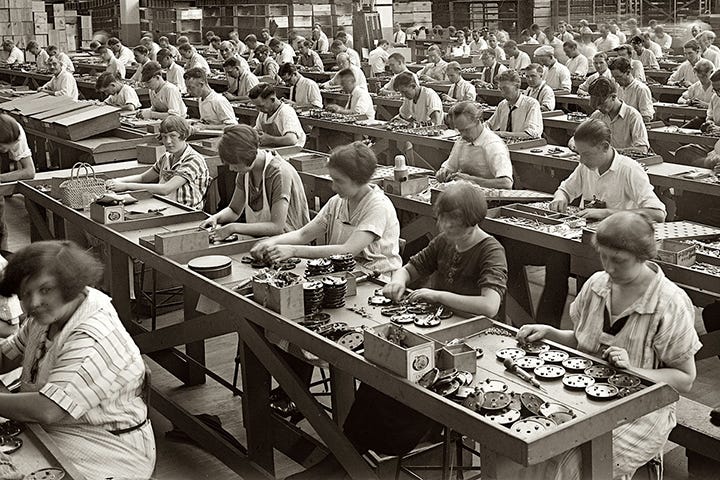
For most of the twentieth century, creative industries were built around specialisation.
Newsrooms had reporters, editors, photographers, graphic designers, producers, distribution teams and advertising departments.
Film productions separated directing, editing, cinematography, sound, production design and marketing.
Music industries divided responsibilities between artists, managers, marketers, distributors, publicists and promoters.
The system worked because distribution was relatively stable.
A newspaper reached readers through newspaper stands.
A television programme reached viewers through broadcast schedules.
A musician reached audiences through radio, record labels and physical distribution networks.
Creative work and distribution were largely separate functions.
That separation is collapsing.
Today, a fashion photographer may also be a content strategist.
A journalist may also run a newsletter business.
A filmmaker may spend as much time thinking about audience acquisition as production.
A musician may function simultaneously as artist, marketer, community manager and media company.
The most valuable creative workers increasingly operate across disciplines rather than within them.
This shift is visible everywhere.
Independent journalists are building media businesses on newsletter platforms.
YouTubers are launching merchandise brands.
Podcast hosts are creating live events.
Photographers are developing educational products.
Designers are becoming creators.
Creators are becoming entrepreneurs.
Entrepreneurs are becoming publishers.
The boundaries separating creative professions are becoming increasingly difficult to identify.
The result is a workforce that looks fundamentally different from the one traditional media institutions were designed to support.
Every Creative Job Is Becoming A Distribution Job
For decades, creative industries treated distribution as something that happened after production.
The work was creating the content.
Getting it to audiences was someone else’s responsibility.
That distinction no longer exists.
Today, distribution has become part of the creative process itself.
A video editor must understand how retention works on TikTok.
A writer must understand newsletter growth.
A podcaster must understand platform discovery.
A musician must understand algorithmic recommendation systems.
A filmmaker must understand audience behaviour across social platforms.
Creating something good is no longer sufficient.
People must also understand how it travels.
This represents one of the biggest shifts in creative labour over the past decade.
The most successful creators are not necessarily those producing the highest volume of content.
They are often those who understand audience pathways.
They understand where people discover content.
How they consume it.
What keeps attention.
What encourages sharing.
What creates loyalty.
What drives return visits.
In other words, distribution knowledge has become a creative skill.
This is particularly significant in Africa, where digital platforms have dramatically reduced barriers to entry.
A filmmaker in Nairobi can distribute work globally.
A podcaster in Accra can build an international audience.
A fashion creator in Kigali can reach consumers across continents.
But access alone does not guarantee visibility.
The challenge has shifted from publishing to discovery.
And discovery increasingly depends on understanding distribution systems.
The creative professional of the future must understand both.
The Rise Of Jobs That Barely Existed A Decade Ago
One of the most overlooked aspects of the creator economy is how many entirely new roles it has created.
Many of today’s fastest-growing creative careers would have been difficult to explain ten years ago.
Consider the creator manager.
This role now sits at the centre of influencer marketing, talent development and digital entrepreneurship.
Creator managers negotiate partnerships, oversee commercial relationships, coordinate production schedules, manage brand reputation and support long-term growth strategies.
Then there are community strategists.
As audiences increasingly organise around digital communities, someone must manage relationships between creators and their audiences.
These professionals design engagement systems, moderate discussions, develop loyalty programmes and help transform audiences into communities.
Newsletter operators represent another emerging profession.
What began as a publishing format has evolved into a business model.
Many newsletter professionals now oversee content strategy, audience acquisition, sponsorship sales, analytics and subscriber retention.
Podcast producers have undergone a similar transformation.
The role increasingly extends beyond recording audio.
It includes audience growth, platform optimisation, distribution planning, video adaptation and community development.
Other emerging professions include:
Audience growth strategists
Creator partnerships managers
Rights management specialists
Metadata managers
Digital asset coordinators
Creator operations managers
Monetisation strategists
Platform partnerships specialists
Content intelligence analysts
These jobs exist because creative industries are becoming more complex rather than less.
As audiences fragment across platforms, someone must coordinate the systems that connect creativity to visibility and revenue.
The creator economy is not simply generating more content.
It is generating entirely new categories of work.
The Hidden Profession: Managing Information
One of the least visible but increasingly important roles emerging across creative industries involves information itself.
As digital content expands exponentially, metadata is becoming infrastructure.
Metadata determines how songs are credited.
How royalties are distributed.
How videos are discovered.
How creators are identified.
How rights are tracked.
How payments flow.
Without accurate metadata, creators risk losing both visibility and income.
This is particularly relevant across Africa, where rights management systems remain fragmented and many creative industries continue to struggle with attribution challenges.
As music catalogues expand, streaming grows, and digital distribution becomes more sophisticated, metadata specialists may become some of the most important workers in the creative economy.
The future creative workforce will not consist solely of artists and performers.
It will increasingly include people managing the information systems that support creative commerce.
AI Is Not Eliminating Creative Work. It Is Reorganising It
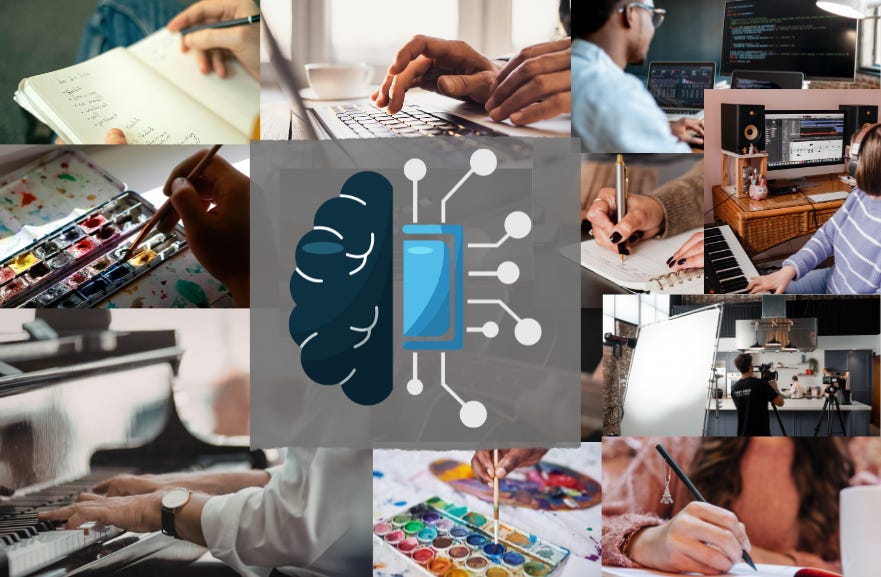
No conversation about creative labour can avoid artificial intelligence.
Much of the public debate focuses on replacement.
Will AI replace writers?
Will AI replace designers?
Will AI replace filmmakers?
Will AI replace musicians?
These questions dominate headlines because they are dramatic.
But they may also be the wrong questions.
The more useful question is this:
What becomes valuable when content becomes easier to produce?
Historically, scarcity created value.
Producing a video required expensive equipment.
Publishing required institutional access.
Distribution required infrastructure.
Today, technology is reducing many of those barriers.
Generative AI accelerates that process further.
The consequence is not necessarily fewer creative jobs.
It is a reordering of which skills matter most.
When content production becomes easier, attention becomes harder.
When outputs become abundant, judgment becomes scarce.
When anybody can generate content, selecting the right content becomes increasingly valuable.
This elevates a different set of human capabilities.
Taste.
Editorial judgment.
Cultural fluency.
Narrative thinking.
Audience understanding.
Strategic decision-making.
Context.
These qualities are difficult to automate because they rely on interpretation rather than generation.
A generative model can produce images.
It cannot easily determine which image best captures a cultural moment.
A tool can generate text.
It cannot easily understand the emotional dynamics of a community.
Technology can create options.
Humans increasingly create meaning.
The future creative professional may spend less time producing and more time directing, curating, interpreting and orchestrating.
That distinction matters.
Because it suggests AI is changing creative labour far more than it is eliminating it.
Africa’s Education Systems Are Not Fully Prepared
This transformation creates a challenge that receives far less attention than technology itself.
Most educational institutions continue to train students for industries that are rapidly evolving.
Journalism programmes teach journalism.
Film schools teach filmmaking.
Marketing departments teach marketing.
Design schools teach design.
The creator economy increasingly rewards people who understand how all of these systems interact.
A creator launching a podcast may need:
storytelling skills
audio production knowledge
audience analytics
platform strategy
sponsorship sales understanding
community management capability
These competencies often sit across multiple disciplines.
Yet most educational systems continue to treat them separately.
This creates a growing mismatch between training structures and labour market realities.
The issue is not that traditional disciplines have become irrelevant.
Far from it.
Strong foundations remain essential.
The challenge is that foundations alone are no longer enough.
Future creative professionals increasingly require systems thinking.
They must understand not only how content is made but how value moves around content.
How audiences behave.
How platforms operate.
How monetisation works.
How intellectual property functions.
How communities form.
How technologies evolve.
The future workforce requires a broader understanding of creative ecosystems rather than isolated creative functions.
The New African Creative Worker
For years, conversations about Africa’s creative economy focused on sectors.
Music.
Film.
Fashion.
Publishing.
Advertising.
Media.
Those sectors remain important.
But the more significant shift may be happening at the level of labour.
A new category of worker is emerging.
Not defined by industry.
Not defined by platform.
Not defined by job title.
Defined instead by adaptability.
These professionals move fluidly between disciplines.
They create across formats.
They understand audiences.
They navigate platforms.
They combine creativity with technology and business understanding.
Their careers look less like ladders and more like networks.
Less linear.
More interconnected.
This may ultimately become one of the creator economy’s most enduring contributions to Africa’s economic future.
Not simply new content.
Not simply new platforms.
But a new workforce.
One built for an environment where creativity, technology, media, entrepreneurship and community increasingly overlap.
The creator economy is often described as a platform revolution.
TikTok.
YouTube.
Instagram.
Substack.
Spotify.
But platforms will rise and fall.
The deeper transformation is happening elsewhere.
It is happening in the labour market.
And the future creative professional will not be defined by a single craft.
They will be defined by their ability to connect multiple crafts together.
In the next decade, the most valuable creative workers in Africa may not have one job title.
They may have five.

Written by Layo
Lead Editorial Writer, Creative Brief Africa
Outside of her editorial work, she writes Curious Health, a newsletter focused on everyday health questions, explored with clarity and care.