


For years, the relationship seemed straightforward.
Creators were the disruption.
News organisations were the institutions being disrupted.
Creators were agile.
Media companies were bureaucratic.
Creators understood the internet.
Newsrooms were still adapting to it.
Creators built audiences on YouTube, Instagram, TikTok, newsletters, and podcasts. Meanwhile, traditional publishers spent years trying to figure out how to survive declining print revenues, collapsing advertising models, and shifting audience behaviour.
The assumption was that creators represented the future while traditional media represented the past.
But something interesting is happening.
The longer the creator economy matures, the more it begins to resemble the very industry it was supposedly replacing.
And the longer news organisations evolve, the more they begin to behave like creators.
The gap between the two is narrowing.
Fast.
Today, both creators and publishers are confronting remarkably similar problems:
fragmented attention,
platform dependence,
AI disruption,
trust deficits,
distribution uncertainty,
and rapidly changing monetisation models.
The distinction between a media company and a creator business is becoming increasingly difficult to identify.
Which raises an important question for Africa’s creative economy:
What happens when everyone becomes a publisher?
The Creator Economy Was Never Just About Content
The popular narrative around the creator economy often focuses on individual success stories.
A YouTuber builds a million subscribers.
A TikTok creator lands brand partnerships.
A newsletter writer grows a paying audience.
A podcaster develops a loyal community.
The conversation usually centres on content creation.
But mature creator businesses are increasingly doing something else.
They are building media companies.
The most successful creators no longer simply create content.
They build distribution systems.
Audience relationships.
Advertising businesses.
Membership products.
Events.
Merchandise lines.
Digital products.
Communities.
Multiple revenue streams.
In other words, they are solving many of the same problems traditional media organisations have always needed to solve.
The difference is that they often do so with smaller teams and more flexible structures.
The creator economy is becoming less about content creation and more about audience ownership.
And audience ownership has always been the core business of media.

News Organisations Are Becoming Creator Businesses
At the same time, traditional news organisations are moving in the opposite direction.
Consider what major publishers are doing today.
They are investing heavily in:
short-form video,
social-first content,
podcasts,
newsletters,
live events,
creator partnerships,
audio products,
streaming platforms,
and personality-driven journalism.
These strategies increasingly resemble creator playbooks.
Take CNN as an example.
The company now operates across television, digital platforms, social media, newsletters, streaming services, connected TVs, audio products, and live events.
Its Global Perspectives events series brings together policymakers, business leaders, creators, and cultural figures for conversations that extend far beyond traditional journalism.
This is not simply news production.
It is audience ecosystem building.
And that is precisely what creators have spent the last decade mastering.
The modern media company increasingly behaves like a creator business.
Not because it wants to.
Because audience behaviour demands it.
Attention Is More Fragmented Than Ever
One reason this convergence is happening is because attention itself has changed.
Historically, media companies controlled distribution.
Television networks controlled programming.
Newspapers controlled information.
Radio stations controlled discovery.
Audiences had relatively limited choices.
Today, attention exists in thousands of simultaneous streams.
A consumer might move between:
TikTok,
Instagram,
YouTube,
WhatsApp,
X,
Substack,
Spotify,
Netflix,
podcasts,
streaming platforms,
and traditional news websites within a single hour.
No single institution controls audience attention anymore.
Everyone is competing simultaneously.
A journalist competes with a TikTok creator.
A newspaper competes with a YouTube channel.
A broadcaster competes with a podcast.
A media company competes with a newsletter.
The competition is no longer industry-specific.
It is attention-specific.
And everybody is fighting for the same finite resource.
Newsletters Have Become Media Companies
Perhaps nowhere is this convergence more visible than in the rise of newsletters.
A decade ago, newsletters were largely distribution tools.
Today, they have become businesses.
Platforms like Substack have enabled writers, analysts, journalists, researchers, and creators to build direct relationships with audiences.
Many newsletter operators now function like miniature media companies.
They publish regularly.
Sell subscriptions.
Host events.
Launch podcasts.
Build communities.
Create premium content products.
Some individual writers now generate revenues that rival or exceed those of small media organisations.
This changes the economics of publishing entirely.
Instead of building a publication first and then finding an audience, creators increasingly build audiences first and then create publications around them.
The sequence has reversed.
And that reversal has implications far beyond journalism.
Journalists Are Becoming Creator Brands
The same transformation is affecting journalism itself.
Historically, journalists built credibility through institutions.
A publication provided authority.
A newsroom provided reach.
A media brand provided distribution.
Today, journalists increasingly build personal audiences alongside institutional ones.
Readers follow individual reporters.
Listeners subscribe to individual hosts.
Viewers trust specific personalities.
The relationship is becoming more direct.
This does not mean institutions no longer matter.
It means trust is increasingly being shared between institutions and individuals.
Many journalists now operate similarly to creators:
building personal brands,
growing newsletter audiences,
hosting podcasts,
developing social media communities,
and monetising expertise independently.
The creator economy has not replaced journalism.
It has changed how journalism is distributed.
Podcasts Are Competing With Newsrooms
Another area where boundaries are disappearing is audio.
Podcasts began as an alternative medium.
Today they are increasingly functioning as primary media channels.
Many audiences now receive news, analysis, education, and commentary through podcasts rather than traditional news outlets.
The appeal is obvious.
Podcasts create intimacy.
They build trust.
They encourage longer engagement.
They create stronger audience relationships.
In some cases, a podcast host may command more influence than an entire publication.
For creators, podcasts offer an opportunity to become media brands.
For publishers, podcasts have become essential audience products.
Again, both groups are solving the same problem from different directions.
How do you build durable audience relationships in a fragmented media environment?
AI Is Creating a New Shared Challenge
If audience fragmentation brought creators and publishers closer together, artificial intelligence may accelerate that convergence even further.
Both groups now face a similar threat.
Content production is becoming cheaper.
Faster.
More abundant.
AI can generate:
articles,
videos,
images,
audio,
translations,
summaries,
graphics,
and social content at scale.
The result is not a shortage of content.
It is a surplus.
And when content becomes abundant, attention becomes more valuable.
But something else becomes valuable too.
Trust.
In a world where anyone can generate content, audiences increasingly care about where information comes from.
Who produced it?
Why should it be believed?
What expertise supports it?
This challenge affects creators and publishers equally.
Both now operate in an environment where credibility becomes a competitive advantage.
The Real Asset Is No Longer Content
This may be the most important shift of all.
For years, media businesses focused on content.
Today, content alone is rarely enough.
The true assets are becoming:
trust,
audience relationships,
distribution networks,
community,
and reputation.
Content is increasingly the entry point.
Not the business itself.
This explains why creators are launching memberships.
Why media companies are hosting events.
Why newsletters are building communities.
Why podcasts are creating subscription products.
Why audiences increasingly pay for access rather than information alone.
The economics of media are moving away from content scarcity and toward relationship value.
And that affects everyone.
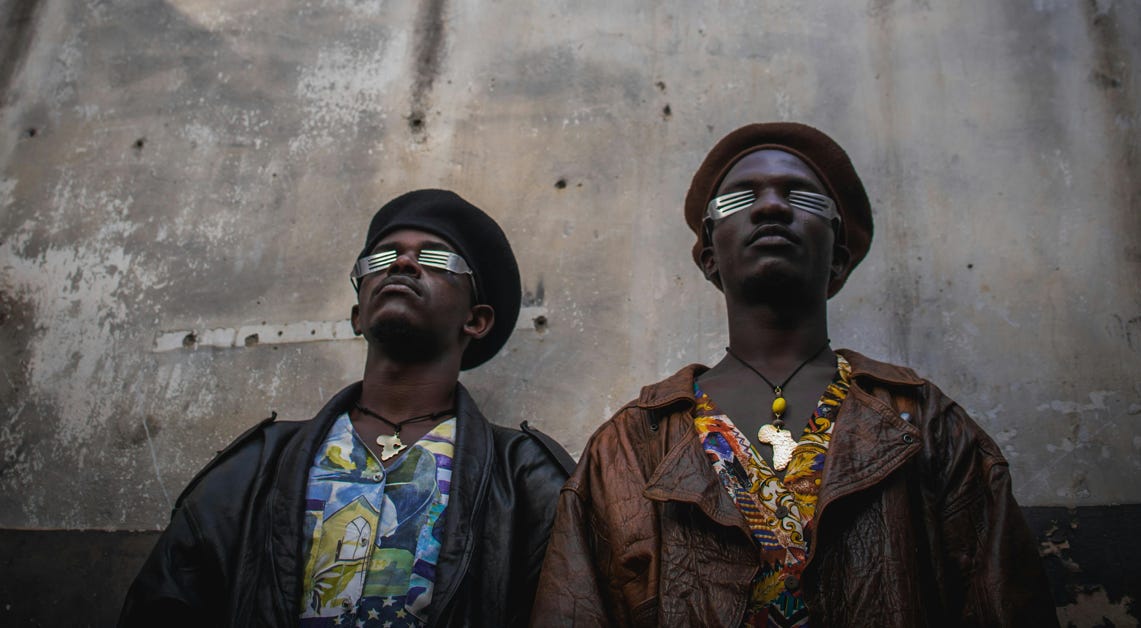
What This Means for Africa’s Creative Economy
For African creators, this convergence presents both opportunities and challenges.
The opportunity is obvious.
Creators can now build businesses that previously required large media organisations.
A single creator can reach global audiences.
Launch products.
Build communities.
Sell subscriptions.
Host events.
And operate across multiple platforms.
The barriers to entry have fallen dramatically.
But the challenge is equally significant.
The creator economy is becoming more competitive.
More crowded.
More dependent on trust.
More dependent on audience loyalty.
And more dependent on building sustainable businesses rather than simply creating content.
Success increasingly requires media thinking.
Not just creative thinking.
The creators who thrive in the next decade may not necessarily be the most talented content producers.
They may be the best audience builders.
The best community builders.
The best operators.
The best publishers.
The Future May Belong to Hybrid Media Businesses
The creator economy and the news industry are no longer moving in opposite directions.
They are converging.
Creators are becoming publishers.
Publishers are becoming creator businesses.
Journalists are becoming brands.
Brands are becoming media companies.
Media companies are becoming community platforms.
Everyone is experimenting with the same challenge:
how to build trust, attention, and revenue in an increasingly fragmented digital environment.
What emerges next may not look like traditional media.
Nor will it look like the creator economy we know today.
Instead, we may be entering an era of hybrid media businesses.
Part creator.
Part publisher.
Part community.
Part platform.
And for Africa’s creative economy, understanding that shift may become one of the most important competitive advantages of all.
Because in a world where everyone can publish, the real challenge is no longer creating content.
It is building something people choose to return to.

Written by Layo
Lead Editorial Writer, Creative Brief Africa
Outside of her editorial work, she writes Curious Health, a newsletter focused on everyday health questions, explored with clarity and care.