


On Christmas Eve 2025, Colours of Fire opened in Nigerian cinemas.
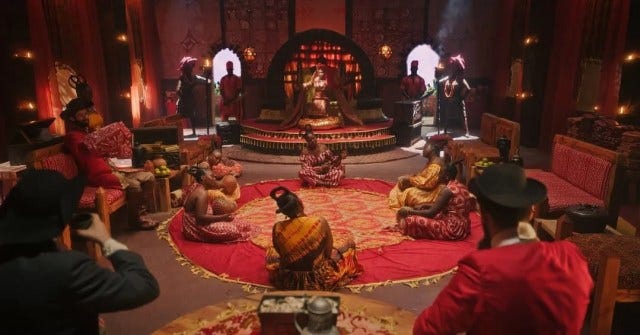
It was ambitious by any measure. Directed by Niyi Akinmolayan, produced by Anthill Studios, FilmOne Studios, and Busayo Olayiwola, it carried an ensemble cast, advanced visual effects, and a pan-African aesthetic its director called the birth of Afrofusion cinema. It entered one of the most competitive holiday release windows in recent memory and posted about ₦148.2 million at the Nigerian box office in two weeks across 85 screens.
Relative to its scale and ambition, that number was underwhelming.
On August 7, 2026, Colours of Fire arrived on Netflix across Africa.
That arc, cinema disappointment to streaming acquisition, is not the exception anymore. It is increasingly the shape of a business model. And the conditions under which it operates are worth examining carefully, because they determine who can play and who cannot.
The Pattern Nobody Has Officially Named
Industry sources suggest Netflix now prefers Nigerian films to complete a cinema or other commercial release before it considers a licensing deal. Netflix has not confirmed this as a formal policy. But the pattern is visible in every title it has added in 2026.
Colours of Fire was the fifth Nigerian post-theatrical license Netflix acquired this year, following Behind the Scenes, Gingerrr, King of Thieves, and King of Thieves 2. That run of five titles in the first eight months of 2026 already matches the full volume of its Nigerian licensing in 2025, and a licensed film has landed on the platform nearly every month since March.
Each of those titles arrived on Netflix after completing a cinema run. Each of them had box office data, audience response data, and demonstrated commercial viability before Netflix made an offer. None of them were commissions. None of them came to Netflix before proving themselves somewhere else first.
The implication, even without a formal policy statement, is clear. The cinema run is no longer just a revenue event. It is the audition.
What Netflix Is Actually Buying
Look at the five titles and the pattern becomes specific.
Behind the Scenes, produced by Funke Akindele, grossed ₦2.76 billion at the Nigerian box office, the highest-grossing Nollywood film in history at the time of its release. Gingerrr grossed ₦522.9 million, making it the highest-grossing September release in Nollywood history. King of Thieves 2 took an unconventional route, earning approximately ₦425 million through a community cinema distribution model rather than a traditional nationwide theatrical run, reaching audiences in local areas that major multiplexes do not serve. King of Thieves, the original, was a 2022 catalogue title that Netflix added strategically ahead of the sequel’s arrival, completing a four-year distribution cycle from theatrical to Prime Video to Netflix.
What these films share is not a genre or a budget level. They share stars, known producers, ensemble casts, and demonstrated audience demand.
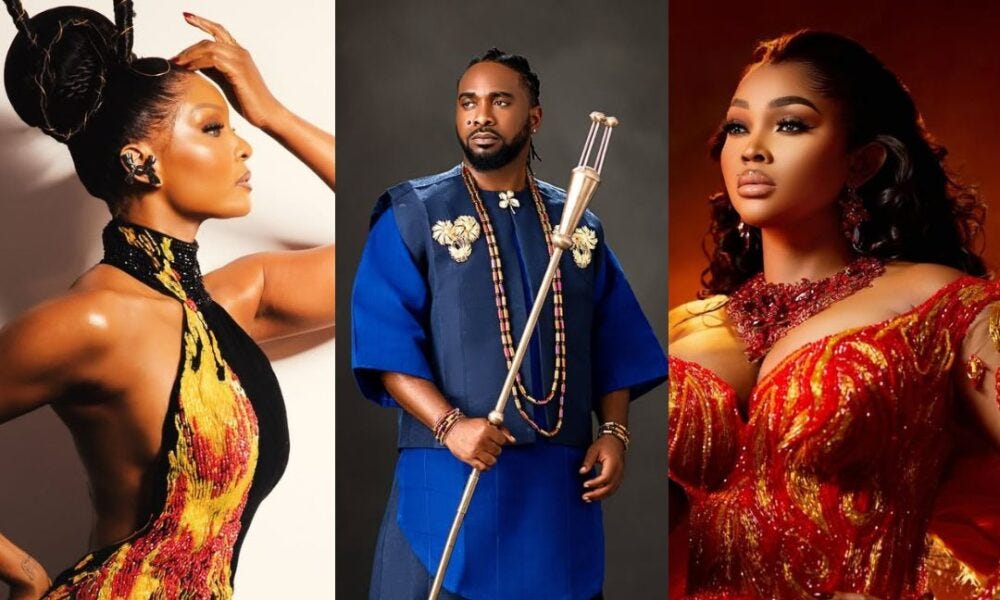
Behind the Scenes is a Funke Akindele film. Gingerrr has KieKie, Bisola Aiyeola, and Wumi Toriola. King of Thieves built its brand over four years with Femi Adebayo at its centre. Colours of Fire has Uzor Arukwe, Osas Ighodaro, Gabriel Afolayan, Mercy Aigbe, Ibrahim Chatta, and Femi Branch. These are not films that needed a streaming platform to discover them. They were already known quantities when Netflix made the call.
Netflix is not in the discovery business in Nigeria right now. It is in the validation business. It is buying films the audience has already bought tickets for.
The Trade-Offs Nobody Is Advertising
That strategy comes with conditions that are worth reading carefully.
Territorial availability for licensed Nigerian titles in 2026 is mostly limited to African markets. Distribution outside the continent is increasingly handled through Kava and Circuits. A Nigerian film that lands on Netflix in this arrangement reaches African audiences but does not travel with Netflix’s full global recommendation infrastructure behind it.
Marketing support is thinner than it was during the commissioning era. Netflix promoted its Nigerian originals, Jagun Jagun, Blood Sisters, King of Boys: The Return of the King, through its global editorial machine. Licensed titles get the catalogue treatment.
The licensing fees themselves are undisclosed in every recent deal. A 2023 TechCabal analysis placed the historical range for Netflix licensing of Nigerian films at roughly $10,000 to $90,000 per film. At approximately ₦1,320 to the dollar, that translates to roughly ₦13 million to ₦119 million at the high end. That 2023 figure may not reflect current deals, and Netflix has not confirmed any figures for 2026 acquisitions, so it should be treated as illustrative context rather than current data.
The question the illustrative range raises is a real one. Colours of Fire spent two weeks in 85 cinemas across Nigeria. The costs of theatrical distribution, marketing, prints, exhibitor splits, and the production budget that preceded all of it are not public. Whether the eventual Netflix licensing fee covers those costs is unknown. Whether it was designed to is also unknown.
What is known is that Netflix’s licensing money arrives only after a film has already succeeded commercially. It does not help producers get films made in the first place.
How the Money Actually Moves
The box office numbers that get reported are gross figures. Cinemas and distributors take their share before a naira reaches the producer.
Nigerian cinemas typically give a film about three weeks to hit a performance threshold before screen allocations start shrinking. The exhibitor split varies, but producers generally take between 40% and 50% of the box office gross after the distributor and cinema chain take their cuts. On a ₦148.2 million total gross, the production company sees significantly less than that number suggests.
For films that do not reach the numbers that attract Netflix’s attention, the distribution path continues elsewhere. Prime Video has been consistent with established names. It took three consecutive Funke Akindele releases before Behind the Scenes. Many Nollywood films move to YouTube, where production budgets of ₦2 million to ₦10 million mean that modest advertising revenue can still make the economics work over time, even if the payout per view is significantly lower than Western CPM equivalents.
The back-end for most Nollywood films is therefore a cascade. Cinemas first. Streaming platforms next, ranked by the size of offer they make. YouTube for long-term catalogue revenue. Each stage is contingent on performance at the previous one.
Netflix now sits at the top of that cascade, offering the most prestigious placement, but only to the films that have already navigated the stages below it successfully.
The Question Nobody Is Asking Loudly Enough
A strong cinema run requires real capital. Marketing budgets, screen commitments, cast fees, distribution infrastructure, and the production quality that attracts the stars that attract the audiences that attract Netflix’s attention in the first place.
Behind the Scenes grossed ₦2.76 billion because Funke Akindele has built an audience over decades and spent significantly on marketing. Gingerrr grossed ₦522.9 million because COTS Productions, run by Ope Ajayi, combined a bankable cast with a theatrical release strategy that included positioning it for the highest-grossing September slot in Nollywood history. King of Thieves 2 reached ₦425 million through a community cinema model that required its own infrastructure and distribution creativity.
These are not accidents. They are the product of producer credibility, established audience relationships, and the kind of capital access that allows a production to absorb the cost of a theatrical run while waiting for the streaming deal to arrive.
What does this model mean for the independent producer without star power, without an established audience, and without the working capital to fund a cinema run on the off-chance that Netflix will license it afterwards?
The honest answer is that it means the path to Netflix runs through a gate that not everyone can afford to open.
What the Rest of Nollywood Does
The cinema-first pattern concentrates streaming acquisition around a small group of producers with the resources to run theatrical releases at commercial scale. That group is not tiny, and Nollywood has proven repeatedly that it can produce commercially ambitious films across budget ranges. But it is not the whole industry.
There are thousands of Nollywood productions every year, many of them made for YouTube, for direct-to-digital release, or for the informal distribution networks that still move physical content through markets and mobile devices across Nigeria and West Africa. Those films are not competing for Netflix licensing under the current model. They are competing for a different audience through different channels.
The question that matters for Nollywood’s long-term creative economy is whether the streaming acquisition market concentrates entirely around the established producers or whether it develops pathways for the films that do not have the capital to audition through cinema first.
One version of this story is that the cinema run discipline is good for the industry. It creates a market signal for quality and commercial viability. It rewards producers who build audience relationships over time. It forces a productive standard.
Another version is that it shrinks the pool of producers who can access the most commercially significant streaming platform, concentrating value in the hands of the people who already have it.
Both versions are probably simultaneously true.
And the industry has not yet decided which one it wants to build around.

Written by Layo
Lead Editorial Writer, Creative Brief Africa
Outside of her editorial work, she writes Curious Health, a newsletter focused on everyday health questions, explored with clarity and care.