


Lagos Fashion Week 2026 opens on October 28 and runs through November 1 in Lagos. This year’s edition carries more weight than the runway alone.
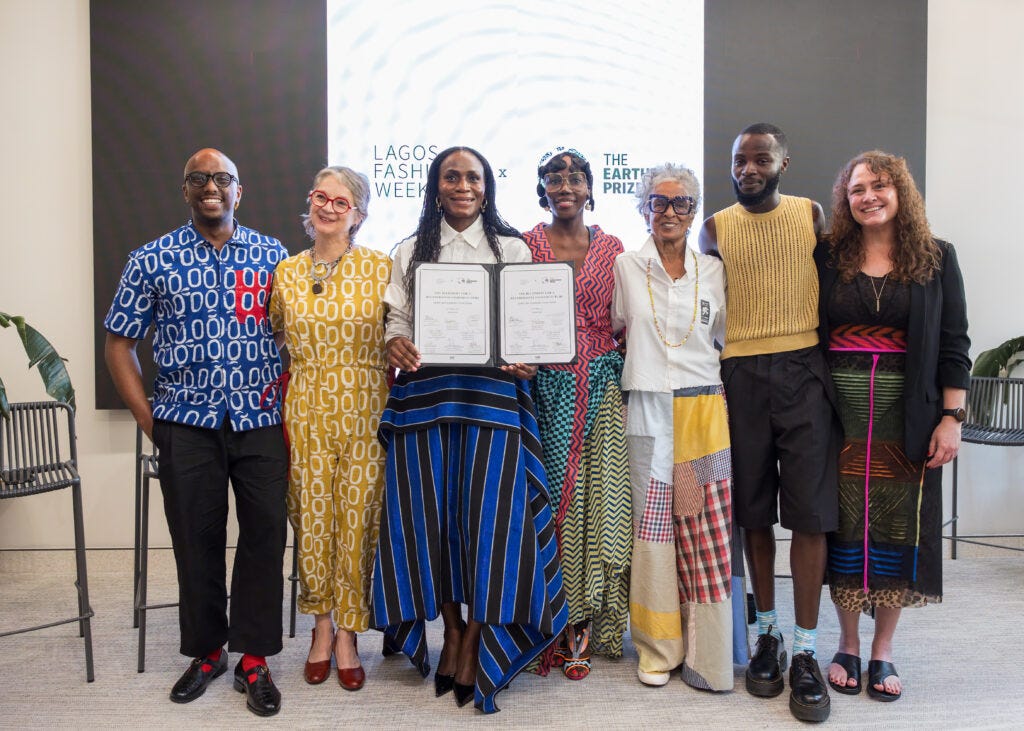
On June 22, 2026, at The Mills Fabrica in London, during Climate Action Week, Lagos Fashion Week and the African Fashion Coalition launched a manifesto. They called it The Blueprint for a Regenerative Fashion Future. And when the shows open next month, that Blueprint will be the animating framework behind everything on that runway, a document that positions Africa not as a supplier of creative raw material for global fashion but as the originator of a different model entirely.
Ten pillars. Cultural heritage. Circularity. Inclusive prosperity. Intellectual property protection. Waste justice. Local manufacturing. Regenerative innovation. Market access. Infrastructure development. Conscious consumption. One argument underneath all of them: Africa did not discover sustainability. Africa practiced it, then watched the world rename it, commodify it, and sell it back at a premium.
“If we all come together to define that DNA and share it with the world,” said Omoyemi Akerele, founder and executive director of Lagos Fashion Week, “we can reveal more of who we are and show that the African approach to designing, creating and producing fashion is inherently regenerative because it begins with culture.”
The manifesto is serious, carefully constructed, and grounded in something real. It is also arriving into a supply chain that does not yet belong to the people the manifesto is designed to protect.
That gap is the most important story in African fashion right now. Not the runway. Not the international recognition. Not the Earthshot Prize that Lagos Fashion Week won in 2025. The gap between what the Blueprint envisions and who actually owns the chain through which African fashion flows from field to fibre to finished garment is the gap that will determine whether this manifesto becomes economic reality or aspirational decoration.
What the Manifesto Actually Says
The Blueprint is not a sustainability report dressed up in African aesthetics. It is a sovereignty argument.
At its core, the manifesto calls for retaining the entirety of intellectual, material, artisanal, and logistical value on African soil. It challenges an industry structure that has historically extracted African raw materials, cultural references, craft traditions, and design intelligence, processed and monetised them elsewhere, and occasionally sold the finished products back to African consumers at prices that bear no relationship to what African labour and knowledge contributed to them.
The regenerative framework it proposes is deliberately rooted in African realities rather than imported sustainability models. Instead of measuring success only by recycled fibres or reduced carbon emissions, the Blueprint asks whether fashion strengthens indigenous craftsmanship, whether it keeps value within African economies, and whether it gives communities greater control over the production chains they are embedded in.
“Regenerative fashion is asking, how do we create good?” Akerele said. Not just how do we do less harm. How do we actively restore.
That is a more ambitious question than most sustainability frameworks in global fashion are asking. And it is a question that the economic structure of African fashion’s supply chain is not currently built to answer.
Where the Cotton Goes
Africa produces approximately 10% of the world’s cotton. Thirty-seven of the continent’s 54 countries grow it. The continent’s cotton belt stretches across Mali, Burkina Faso, Tanzania, Uganda, and beyond, giving producers cost-advantaged access to the raw material that is the foundation of the global textile industry.
And then Africa ships almost all of it to Asia.
The continent exports 90% of its raw cotton to Asian processing markets, primarily China and India. African manufacturers import back only 7% of cotton yarn and 6% of cotton fabric from elsewhere on the continent. The cotton leaves as a raw commodity. It returns, when it returns at all, as finished fabric or finished garment, with the spinning, weaving, dyeing, finishing, and manufacturing value added elsewhere, by other economies, captured by other balance sheets.
The International Trade Centre estimates that Africa could export approximately €5.8 billion in finished cotton garments by 2026. The continent’s actual garment and textile exports are a fraction of that potential. Only 15% of what Africa could export in cotton garments is expected to be traded within Africa itself.
The African Trade Report 2026 confirmed the structural pattern bluntly: across agriculture, textiles, energy, and mineral processing, Africa continues to export raw materials to external markets and import finished goods. The merchandise trade balance posted a deficit of $96.3 billion in 2025.
For African fashion to be regenerative by design, as the Blueprint demands, it has to first be present in the design stage. And for most of the continent’s cotton, the design stage happens somewhere else.
The “missing middle” is the term industry analysts use for the gap between raw cotton production and finished garment manufacturing. It describes the spinning, weaving, knitting, dyeing, and finishing capacity that would allow African cotton to become African fabric before it becomes African fashion. Without that middle, every regenerative supply chain on the continent is building on a foundation that begins with an export and ends with an import.
The Craft Is There. The Infrastructure Is Not.
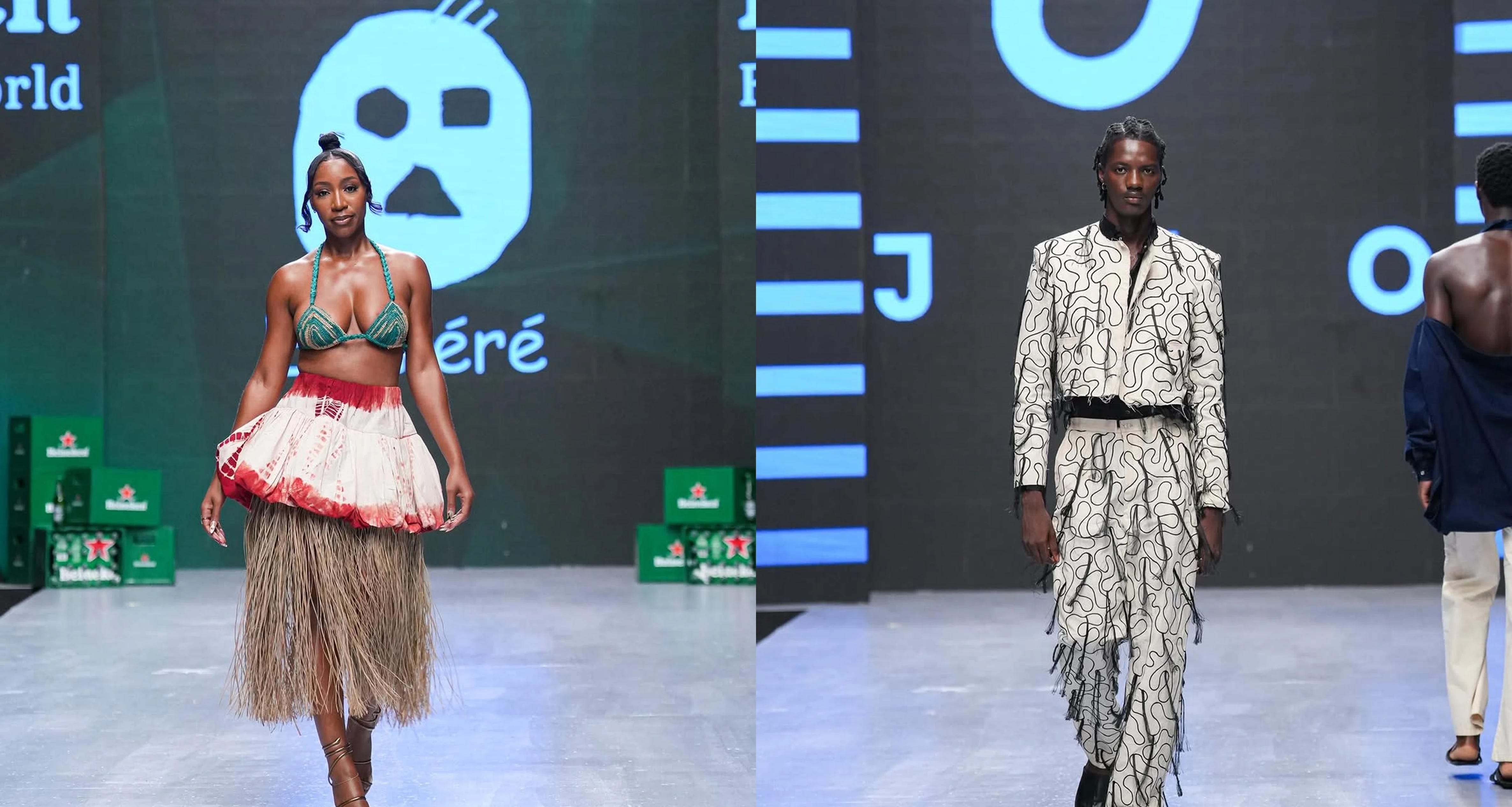
The Blueprint’s pillar on cultural heritage invokes indigenous craftsmanship as one of African fashion’s most distinctive assets. This is not rhetorical. It is economically significant and structurally under-supported.
The continent’s textile traditions, Kente weaving in Ghana, Aso-oke weaving in Nigeria, Kanga printing in East Africa, Bogolan mud cloth in Mali, hand-dyeing traditions across the Sahel, are not nostalgic artifacts. They are living craft industries that produce textile knowledge and aesthetic innovation that global fashion has been mining for decades, mostly without adequate attribution, compensation, or legal recognition.
Chanel and Giambattista Valli faced sustained criticism in 2025 for repackaging Algerian traditional attire as “Mediterranean chic” without credit or compensation. Louis Vuitton had previously been called out for turning Basotho blankets into luxury fashion items. Tory Burch faced accusations of culturally appropriating North African embroidery traditions for pieces sold at hundreds of pounds without any reference to origin communities. In Kenya and Nigeria, Maasai and Yoruba groups have begun filing collective IP claims to protect traditional textiles from being co-opted as festival wear by brands that neither involve nor compensate them.
What these cases have in common is the same structural dynamic the Blueprint is trying to address. African cultural knowledge generates value. The majority of that value is currently captured by entities that did not create it and are not legally required to share it.
The Blueprint’s intellectual property pillar responds to this directly, calling for protections that ensure African designers and cultural communities own and benefit from what they originate. The Fashion Law Africa Summit, established specifically to provide IP education and legal tools for African fashion creatives entering international markets, has been making the same argument from the legal infrastructure side.
The argument is right. The enforcement infrastructure does not yet match the ambition. Most African countries lack the combination of IP registration accessibility, trademark enforcement capacity, and legal support infrastructure that would make IP protection practically meaningful for a small independent designer in Lagos or Accra.
UNESCO’s Director-General has noted that policymakers must empower designers with legal protections and invest in the small and medium enterprises that constitute 90% of Africa’s fashion businesses. Those SMEs are not currently well-served by the IP systems that exist.
The Designer’s Position in the Chain
A Lagos-based independent designer presents a collection at Lagos Fashion Week. They source fabric from a vendor who imports it, because local fabric production at the scale and quality they need does not yet exist in Nigeria at competitive cost. They work with local tailors and artisans whose skills are among the most technically accomplished on the continent. They build a collection that is genuinely, culturally, aesthetically African. It shows on the runway. It gets photographed. It gets covered internationally.
Then the economics of what comes next.
Retail distribution in Nigeria is still largely fragmented, with limited national multi-brand fashion retail infrastructure. E-commerce is growing, Nigeria’s online fashion sales reached approximately $43 million monthly in 2025, but the logistics infrastructure to support reliable nationwide delivery is still developing. International distribution requires agents, distributors, and retail partnerships that most African independent designers access through relationships they are still building rather than infrastructure that exists for them.
Meanwhile, the fabric they sourced as an import generated a margin for a trading company that sourced it from Asia. The international coverage their collection generated drives awareness of African fashion as an aesthetic movement, which benefits the broader category including brands that appropriate African aesthetics without crediting their sources. And the next season, the process starts again.
The Blueprint envisions a fashion system where this designer’s cultural knowledge, craft relationships, and design intelligence generate value that stays with them, their artisan collaborators, and their community. The current structure does not support that vision. It is not actively hostile to it, but it is also not built for it.
The Ownership Question the Manifesto Has to Answer
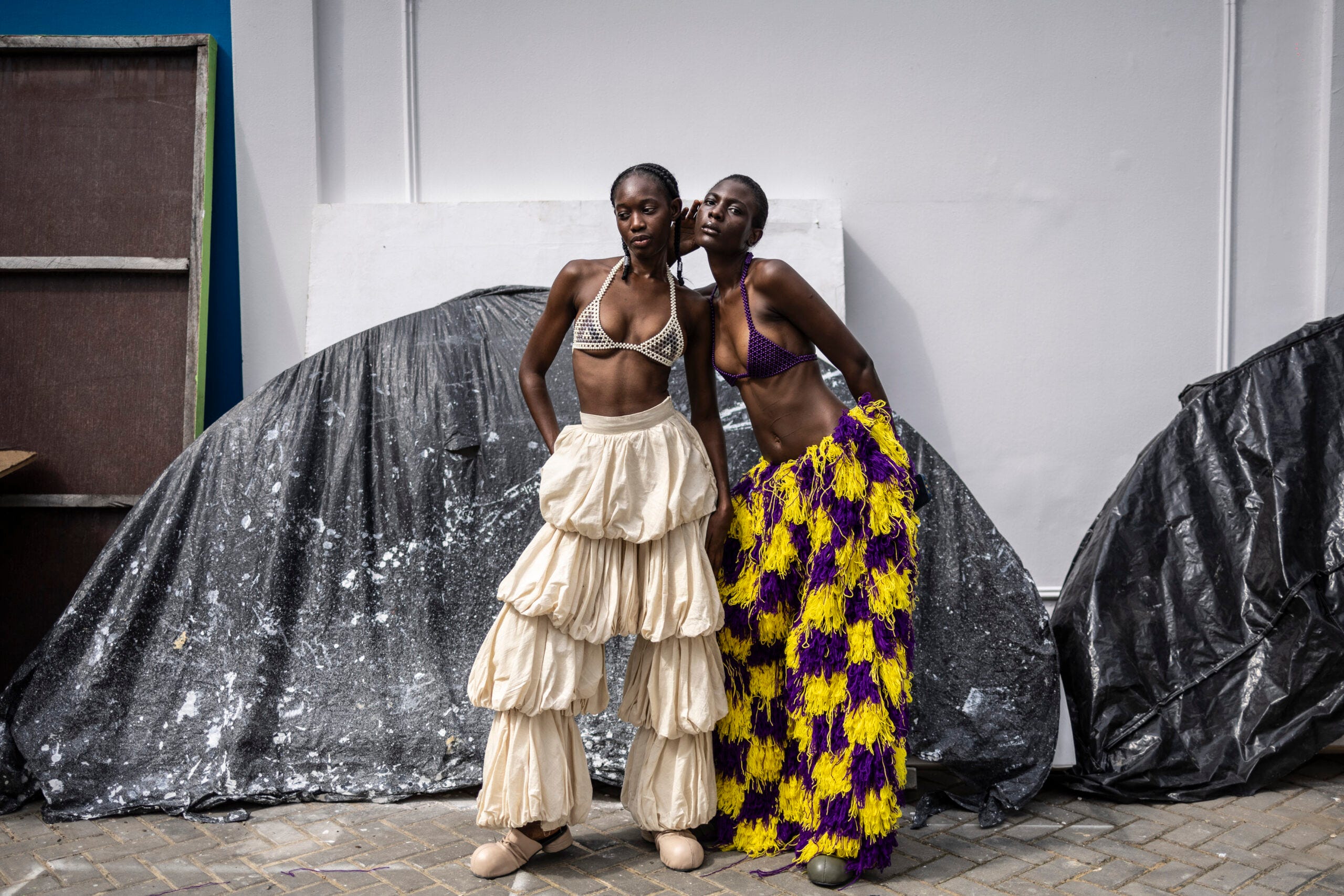
The Blueprint’s most radical pillar, inclusive prosperity, calls for fashion supply chains that actively distribute economic benefit to all participants. Farmers. Weavers. Tailors. Artisans. Not just designers and not just brands.
Testing that against the current structure produces a gap.
The Afreximbank’s African Trade Report 2026 confirmed that despite marginal improvements, Africa continues to export raw materials and import value-added goods across most productive sectors including textiles. The initiatives that exist to close this gap are real but early. ARISE IIP secured a $450 million credit facility from Afreximbank in 2025 to accelerate industrial parks supporting textile and apparel manufacturing. Nigeria’s planned integrated garment hub at IPR, designed to process 1,000 tons of cotton daily, has been in groundbreaking phase. The GDIZ in Benin, which has built a vertically integrated textile park using locally sourced cotton, exported over 80,000 units to Europe in 2024, proof that integrated supply chains on African soil are achievable.
But achievable at industrial park scale, with nine-figure investment, is not the same as achievable for the 90% of African fashion businesses that are small and medium enterprises.
The Blueprint needs both scales to succeed. It needs the industrial infrastructure that would allow African cotton to become African fabric at competitive cost. And it needs the legal, financial, and distribution infrastructure that would allow independent African designers to build businesses that compound rather than reset each season.
What the Manifesto Is, and What It Is Not
The Blueprint for a Regenerative Fashion Future is a genuine and important intervention in how African fashion understands itself economically, not just aesthetically.
It articulates something that has been true for decades but rarely stated this directly at this scale: African fashion has been generating value that the structures around it do not retain for African stakeholders. The cotton leaves. The cultural references travel without attribution. The craft knowledge gets incorporated into global collections without compensation. The runway images build a global narrative around African creativity that benefits the category more than it benefits the creators inside it.
Naming that structure clearly, building a coalition around an alternative framework, and launching it at global visibility during Climate Action Week in London is not a small achievement. The Earthshot Prize it won in 2025 means the manifesto has institutional credibility behind it. The fact that Lagos Fashion Week runs October 28 to November 1, 2026 with the Blueprint as its animating framework means the manifesto will face its most important test this year: whether it changes what the industry around the runway does, not just what it says.
But a manifesto is a declaration of intent. The supply chain is a declaration of fact.
Right now, the facts are these. Africa produces the cotton and ships most of it away. Africa creates the cultural knowledge that global fashion mines and captures minimal legal protection for doing so. Africa’s independent designers build collections in a distribution infrastructure that does not yet scale their reach the way it scales for brands based in markets with deeper logistics and retail networks.
The Blueprint for a Regenerative Fashion Future is the most ambitious articulation of what African fashion could be that the continent’s fashion ecosystem has produced.
The distance between that vision and the ownership structure of the current supply chain is the work of a generation, not a manifesto.
Both things can be true simultaneously.
The manifesto matters precisely because it names the gap. The gap matters precisely because naming it is not yet the same as closing it.

Written by Layo
Lead Editorial Writer, Creative Brief Africa
Outside of her editorial work, she writes Curious Health, a newsletter focused on everyday health questions, explored with clarity and care.