


Every major platform is making the same bet.
X redesigned its video player around full-screen vertical.
LinkedIn reported a 36 percent jump in video uploads and began building a vertical feed.
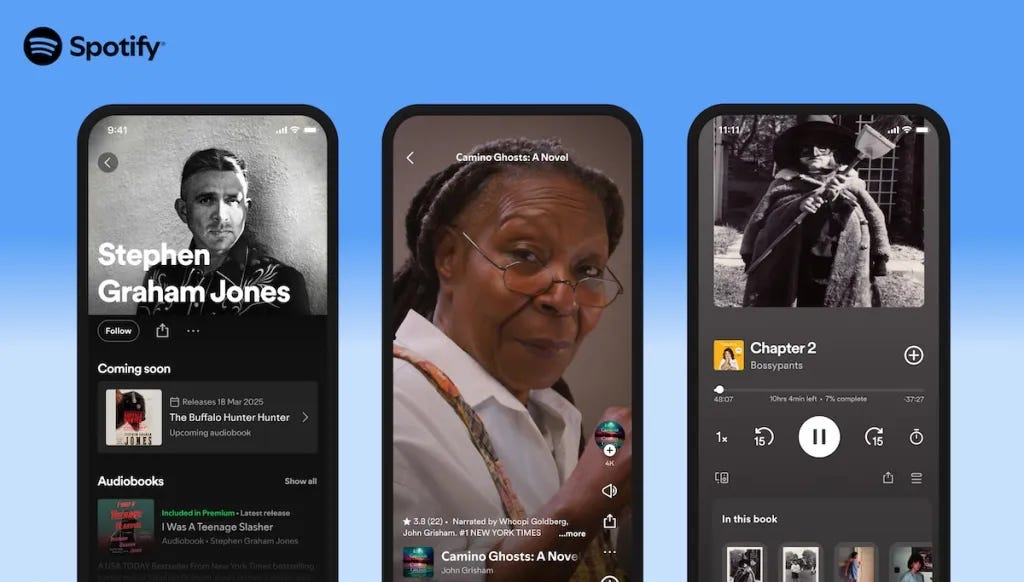
Spotify is testing swipe-based discovery inside its app.
Disney+ introduced a vertical feed.
YouTube repositioned Shorts as central to its long-term strategy.
This is not experimentation. It is convergence.
The vertical scroll has become infrastructure. The short-form hook has become the organizing principle of digital media. Every platform, regardless of its origin, is restructuring around one behavior, fast, immersive, algorithmically optimized consumption.
At the center of that shift sits an economy expanding at extraordinary speed.
The short-form video market was valued at roughly $35 billion in 2024. It is projected to surpass $289 billion by 2032, growing at nearly 30 percent annually. Instagram Reels is on track to generate over $50 billion in advertising revenue. TikTok Shop reportedly moved $19 billion in product globally in a single quarter of 2025.
Short-form video is no longer a feature inside social media. It is social media. Increasingly, it is retail.
Africa is not absent from this economy. It is deeply embedded in it.
The problem is where it sits in the value chain.
What the Format Demands
Short-form video does not simply distribute creativity. It reshapes it.
The format rewards immediacy over depth, speed over nuance, emotional punch over sustained argument. Algorithms do not evaluate artistic intent. They measure retention, completion rate, rewatches, engagement velocity.
The metric becomes the master.
Musicians optimize for the 15-second hook that might soundtrack a viral dance. Filmmakers recompose for the vertical frame. Comedians front-load the punchline. Writers compress layered thinking into swipeable slides.
The container exerts pressure on the content. And creators comply because reach, visibility, and relevance depend on it.
That compliance is rational. The machine produces real money.
The critical question is who captures it.
Commerce Collapsed the Distance
Short-form video has done something previous media revolutions did not. It collapsed the distance between attention and transaction.
Historically, media followed a sequence. Create. Distribute. Accumulate audience. Sell advertising around that audience. The creative act sat at the beginning of the chain. Revenue sat further downstream.
Now entertainment and purchase coexist inside the same scroll.
A creator demonstrates a skincare product, tags it, and earns commission in real time. A fashion influencer showcases a look and viewers check out without leaving the app. Data tracks every second of engagement, every click, every conversion, feeding the next recommendation.
The creator becomes performer, marketer, retailer, and brand partner simultaneously.
The value generated is enormous.
For African creators, the share captured is not.
The Extraction Pattern
On the surface, Africa appears central to short-form culture.
Nigeria alone has an estimated 34 million monthly TikTok users. South Africa exceeds 17 million. The platform is among the most used across the continent, second only to messaging services in several markets.
African sounds, dances, humor, and aesthetics travel globally. Afrobeats dominates international charts. Slang born in Lagos finds its way into London timelines. Creative energy flows outward.
But monetization mechanisms tell a different story.
TikTok’s Creator Rewards Program operates in select markets including the United States, United Kingdom, Germany, France, Japan, Brazil, Mexico, and South Korea.
No African country is currently included.
A creator in Nigeria can generate millions of views and receive no direct performance payout from the platform hosting those views. The advertiser pays. The platform earns. The creator relies on brand deals or indirect revenue.
The asymmetry is structural.
YouTube monetization exists across parts of Africa, yet CPM rates are significantly lower than in North America or Western Europe. Spotify payouts reflect regional subscription pricing, meaning lower per-stream earnings in African markets. Meta only extended in-stream ad monetization to Nigerian and Ghanaian Instagram creators in mid-2024, long after Western markets had access.
The digital architecture was built around high-income markets first. Inclusion and equitable compensation have not been synonymous.
Analytics Without Access
In 2025, TikTok launched TkTok for Artists in Nigeria, offering musicians advanced analytics dashboards, audience insights, and campaign planning tools.
It was positioned as an investment in African creativity.
Yet analytics expansion did not coincide with broader payout inclusion.
Data improved. Direct revenue eligibility did not.
Platforms are willing to deepen engagement with African creators. They have been slower to deepen economic participation.
This is not hostility. It is prioritization. Platforms allocate resources where advertiser demand is strongest, payment systems are seamless, and regulatory risk is predictable.
African markets score high on cultural impact and user growth. They score lower on advertiser yield and integrated payout infrastructure.
That gap produces extraction.
African creators generate cultural raw material that drives global engagement on platforms valued in the hundreds of billions. Revenue generated from that engagement disproportionately flows elsewhere.
The pattern echoes earlier eras. Afrobeats became a global commercial force before royalty structures fairly reflected its geographic origins. Culture travels faster than compensation.
The Infrastructure Constraint
The gap is not creative capacity. It is infrastructure.
Social commerce ecosystems like TikTok Shop operate smoothly where payment processors, logistics networks, and consumer credit systems are mature. A tagged product leads to seamless checkout and automatic commission.
In many African markets, the rails are uneven.
Global processors such as Stripe have limited availability across the continent. PayPal access is inconsistent. E-commerce logistics remain fragmented. Consumer credit penetration is comparatively low.
At the same time, African fintech innovation is substantial. Flutterwave, Paystack, and M-Pesa have built robust digital payment ecosystems in multiple markets.
The missing piece is large-scale integration between these systems and global platform payout frameworks.
Until that integration becomes seamless, exclusion remains easier than adaptation.

The Numbers That Matter
The projected value of the short-form video market by 2032 stands at $289 billion.
Africa’s creator economy was estimated at roughly $3 billion in 2024.
The distance between those figures is not explained by talent, audience size, or cultural relevance. It reflects monetization density and infrastructure alignment.
Africa holds one of the youngest populations globally, with a median age under 20. Mobile-first behavior defines consumption patterns. Attention supply is accelerating.
Economic capture has not accelerated at the same pace.
The Strategic Shift Ahead
Rebalancing will require three structural shifts.
First, payment integration at scale. Full interoperability between African fintech systems and platform payout mechanisms would remove a key barrier.
Second, advertiser market development. Stronger domestic digital advertising investment would raise CPM rates and shift platform incentives.
Third, coordinated digital policy. Fragmented national appeals carry limited leverage. Regional frameworks could reshape negotiations.
Meanwhile, African creators are already building alternatives. Direct sales through platforms like Selar. Cross-platform monetization strategies. Community subscriptions independent of algorithmic payouts. Live commerce improvisations.
These are signals of resilience.
But resilience should not replace equity.
The short-form economy is generating extraordinary wealth. African culture is materially contributing to the attention that fuels it.
The imbalance is not inevitable. It is structural.
The attention is African.
The money can be, too.

A guest post by
A curious mind exploring the crossroads of creativity and insight.