


The Met Gala exists inside one of the most developed fashion ecosystems in the world.
The institutions are already stable.
Luxury fashion houses.
Global magazines.
Museum systems.
Fashion conglomerates.
Celebrity PR structures.
Multi-billion-dollar advertising ecosystems.
The event amplifies power that already exists.
The AMVCA operates differently.
Because Nollywood, and the broader African entertainment industry around it, is still actively constructing many of its systems while simultaneously scaling global visibility.
That means the award ceremony is doing more than celebrating film and television.
It is helping formalise the industry itself.
That is why conversations around the AMVCA now extend far beyond acting categories and acceptance speeches.
The event has become a concentrated gathering point for multiple layers of Africa’s creative economy:
film,
fashion,
beauty,
digital creators,
streaming platforms,
brand sponsorships,
internet culture,
and youth attention.
The ceremony is no longer simply reflecting the industry.
It is actively helping organise it.
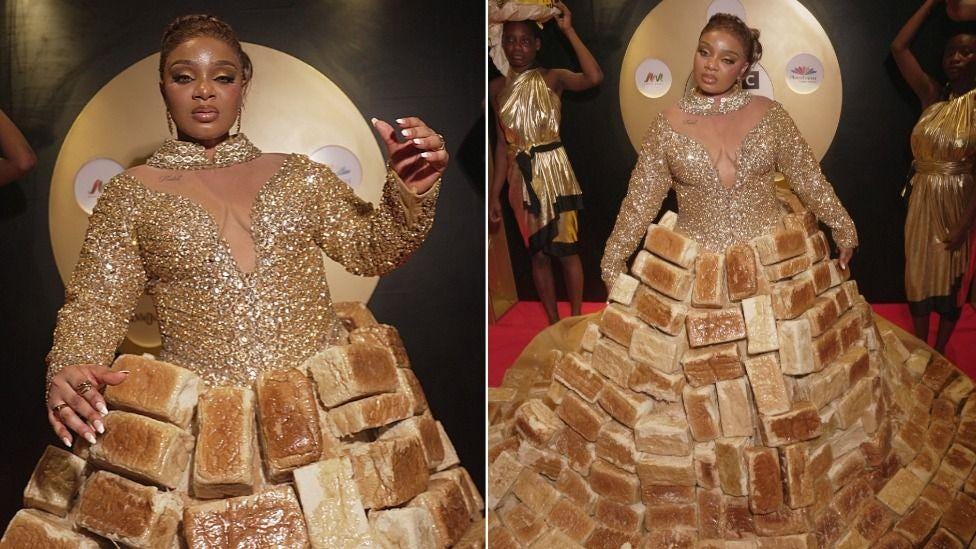
Fashion at the AMVCA Is Performing a Different Job
One of the clearest parallels between the AMVCA and the Met Gala is fashion.
Every year, African designers, stylists, makeup artists, photographers, and glam teams treat the AMVCA as one of the most important visibility moments on the continent’s entertainment calendar.
And understandably so.
The circulation power is enormous.
A single appearance can generate:
thousands of reposts,
new client inquiries,
brand collaborations,
international attention,
and weeks of social media conversation.
But fashion at the AMVCA operates differently from fashion at the Met Gala.
At the Met Gala, fashion is the central institution.
At the AMVCA, fashion functions as an entry point into a much broader entertainment economy.
That distinction matters.
The AMVCA is not fundamentally a fashion event.
Yet fashion has attached itself aggressively to the ceremony because attention has concentrated there.
In other words, the red carpet has become valuable because the entertainment ecosystem around it keeps expanding.
This is why AMVCA fashion conversations now feel larger every year.
Designers are no longer simply dressing celebrities for aesthetic impact.
They are participating in an attention economy where visibility itself has become commercial currency.
And increasingly, that visibility travels faster online than the awards themselves.
The AMVCA Is Blurring Entertainment Boundaries Faster Than Traditional Award Systems
One of the most interesting things happening around the AMVCA is how quickly entertainment categories are collapsing into one another.
At traditional Western institutions, there are still relatively clear separations between:
film celebrity,
internet celebrity,
fashion celebrity,
television celebrity,
and digital creator culture.
The African entertainment ecosystem is evolving differently.
At the AMVCA, a filmmaker, a streaming actor, a TikTok creator, a skit comedian, a reality television personality, and a fashion influencer can all exist within the same visibility ecosystem simultaneously.
And that convergence is not accidental.
Africa’s modern entertainment infrastructure matured during the internet era.
Which means digital culture was never truly separate from mainstream entertainment growth.
The rise of categories like Best Digital Content Creator reflects that reality clearly.
Internet-native creators are no longer operating at the edges of the entertainment industry.
They are becoming embedded within its institutional structures.
That shift is significant because it shows how African entertainment is evolving into a hybrid ecosystem rather than a strictly traditional one.
The AMVCA is increasingly functioning as one of the few places where all those layers now intersect publicly.
Sponsorships Reveal the Real Economic Story
The most revealing difference between the Met Gala and the AMVCA may actually be sponsorship logic.
The Met Gala largely monetises exclusivity.
Luxury brands align themselves with status, prestige, and elite cultural positioning.
The AMVCA operates inside a different commercial reality.
Its sponsors are often telecom companies, streaming platforms, beverage brands, fintech companies, and mass-market consumer businesses.
Why?
Because the AMVCA is not simply selling aspiration.
It is selling access to concentrated cultural relevance.
That distinction is critical.
Africa’s attention economy is fragmented across platforms, regions, languages, and audiences. Very few moments still gather collective cultural attention at scale.
The AMVCA is becoming one of those moments.
And brands understand the value of that concentration.
This is why sponsorships around the ceremony are expanding beyond traditional visibility campaigns into:
talent development,
creator partnerships,
filmmaker grants,
digital activations,
streaming integrations,
and long-term entertainment positioning.
The event itself is becoming infrastructure.
Not just for entertainment visibility.
For commercial alignment.
The Ceremony Is Quietly Becoming a Soft Power Engine
The Met Gala exports Western luxury culture.
The AMVCA exports something else.
African aesthetics.
African storytelling.
African celebrity culture.
African fashion language.
African internet humour.
African beauty standards.
African digital culture.
And importantly, this export is happening in real time.
Every clip shared online.
Every viral fashion moment.
Every acceptance speech.
Every red carpet interview.
Every behind-the-scenes interaction.
All of it contributes to how African entertainment is perceived globally.
That matters because soft power is not simply about visibility.
It is about influence becoming commercially valuable.
The AMVCA is increasingly helping package African creativity into something internationally legible, streamable, and economically scalable.
Not just through films.
Through the entire ecosystem surrounding them.
The Real Significance of the AMVCA Is Structural
This year’s ceremony produced all the expected headlines.
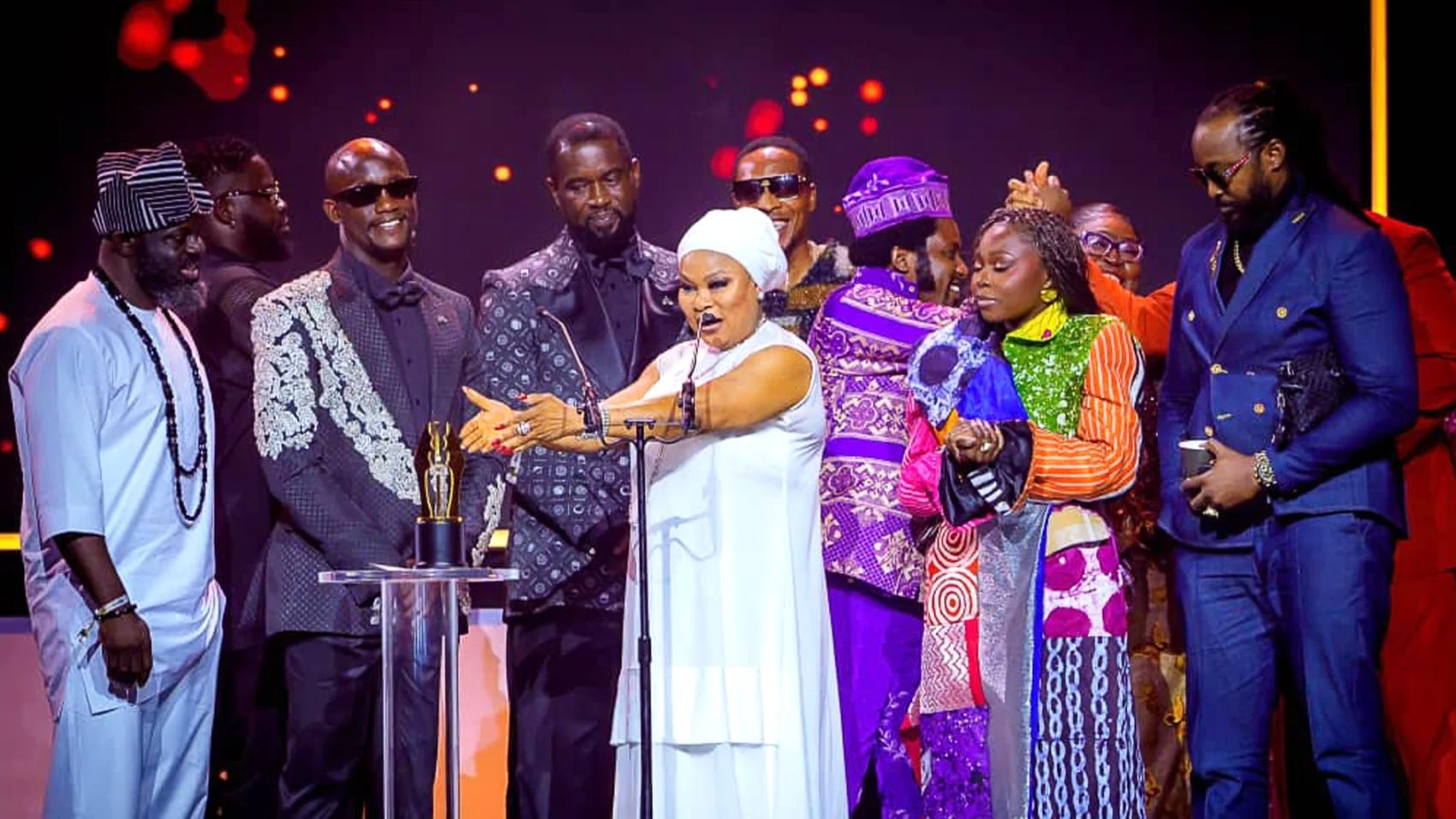
My Father’s Shadow swept all five of its nominated categories.
Linda Ejiofor secured both Best Actress and Best Supporting Actress.
Uzor Arukwe won Best Actor.
Bucci Franklin took home Best Supporting Actor.
Uche Montana claimed the Trailblazer Award.
Sola Sobowale and Kanayo O. Kanayo received Industry Merit recognition.
The internet celebrated.
Debated.
Complained.
Reposted.
Analysed.
But the bigger story may not be who won.
It may be what the AMVCA is slowly becoming underneath the spotlight.
Because unlike the Met Gala, which reflects the confidence of an already-established cultural machine, the AMVCA reveals an industry still building its systems while simultaneously trying to scale its global influence.
And maybe that is what makes the ceremony so important right now.
Not simply because it celebrates African entertainment.
But because it exposes the architecture of a creative economy learning how to organise attention, legitimacy, commerce, and cultural power all at once.

Written by Layo
Lead Editorial Writer, Creative Brief Africa
Outside of her editorial work, she writes Curious Health, a newsletter focused on everyday health questions, explored with clarity and care.
Those concerned points are nailed in this comment. The structure, design thinking and being strategic is very important in this regard.
What a good read.
One thing I am glad Multichoice did from day of deciding to give Africa an event that everyone on the continent will be on the lookout for almost every year is something to be proud of.
The masterstroke structure that was built around the event is ao powerful that now the news of what each attendees are wearing spreads faster and farther than ever before.
I believe this is something that will become better as the years goes by. Most times, I wish The Headied award toll same line as everyone looks towards Grammy every year, we should have something tangible too, sadly it's more becoming irrelevant.
Africa is getting this right and I'm so happy about this.
Thank you Layo.