


For most of the past three years, Africa’s streaming conversation had a simple shape.
Netflix versus Showmax. Global giant against homegrown challenger. In 2023, Showmax briefly overtook Netflix in subscriber count across the continent, the moment that made the rivalry feel genuinely competitive. Then the losses accelerated. The Peacock platform rebuild cost more than projected. Revenue fell from $61.6 million to $45.2 million as the spend went up. By the time Canal+ shut it down, Showmax had become a cautionary tale about what happens when a regional platform tries to compete with Netflix on Netflix’s terms.
Now Netflix is the unchallenged subscription streaming leader across sub-Saharan Africa, projected to grow from 6.2 million to 9.6 million subscribers by 2031.
But the subscriber map underneath that growth is more complicated than a single number suggests.
South Africa leads the continent with approximately 1.3 million Netflix subscribers. Nigeria, despite being Africa’s largest population and most commercially significant creative market, sits at roughly 1.2 million, growing toward 1.9 million by 2031 according to the 3Vision Video Markets Tracker. The gap between the two countries is real but narrower than older estimates suggested. What the subscriber numbers alone do not capture is the revenue gap, which is significantly wider.
Nigeria’s subscriber growth keeps getting squeezed by naira devaluation. A Nigerian subscriber paying in naira contributes less dollar-denominated revenue than a South African subscriber paying in rand, even when both are paying the same local price. Subscriber growth in Nigeria does not translate proportionally into revenue growth the way it does in South Africa. Netflix is adding Nigerian users. It is not earning from them at the same rate.
Why South Africa Pulled Ahead
The subscriber gap between South Africa and Nigeria is not primarily a story about appetite for streaming content.
Nigerian audiences have demonstrated enormous appetite for streaming. Nollywood titles regularly top African Netflix charts. The appetite is documented and genuine.
The gap is a story about infrastructure.
South Africa has higher broadband penetration, greater smart-TV ownership, and a more mature OTT advertising ecosystem than any other sub-Saharan African market. These conditions do not just make streaming more accessible. They make the economics of streaming work differently. A South African household with reliable broadband and a smart TV connected to a billing system that processes payments seamlessly is a fundamentally different streaming customer than a Nigerian household navigating data costs, intermittent connectivity, and a payment infrastructure that Netflix has historically had difficulty processing efficiently.
The Q1 2026 South African streaming market data adds a detail that most coverage has skipped entirely.
In early 2026, the South African market was not simply Netflix versus whatever remained of Showmax. Netflix held 26% market share. Amazon Prime Video held 25%. In third place, with 17 to 18% market share, was Mubi, an art-house platform that does not come close to matching that share in any other tracked global market.
That Mubi number is genuinely unusual. It says something specific about South African streaming culture that a niche platform built around curated cinema and auteur film is holding nearly a fifth of the market in a country where Netflix and Amazon are simultaneously fighting hard. South Africa’s streaming audience is not just large. It is sophisticated in ways the subscriber headline does not fully capture.
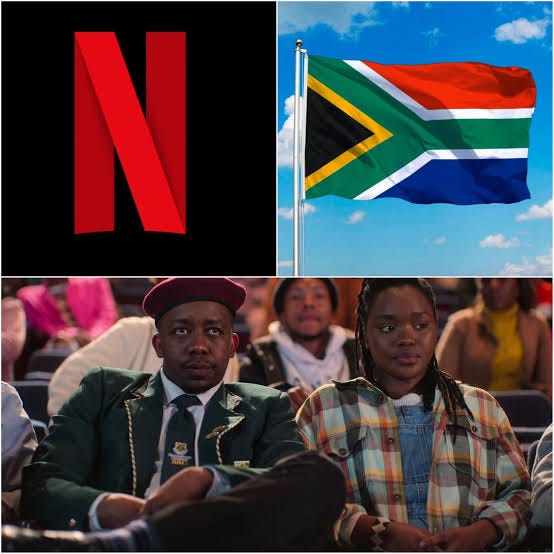
Nigeria Is Playing a Different Game
Here is the part of this story that gets consistently missed in coverage that leads with subscriber gaps.
Nigeria’s real streaming growth story in 2026 is not subscription video-on-demand at all.
YouTube AVOD revenue, advertising-supported free streaming, is now outpacing Netflix subscription revenue in Nigeria entirely. The 3Vision data makes this clear. Nigerian audiences are consuming enormous volumes of streaming content. They are just consuming it primarily through free, ad-supported platforms rather than paid subscriptions.
That is not a failure of the Nigerian market. It is a rational response to the conditions of the Nigerian market. When data costs are high, when household income is under pressure from inflation and currency devaluation, and when the content you want to watch is available for free on YouTube, paying a monthly subscription fee is a harder sell.
The implication for the African creative economy is significant.
Nigerian creators who build on YouTube are building in the market structure their audiences actually use. The revenue model is advertising rather than subscription, the CPM rates are lower than Western equivalents, and the monetisation infrastructure excludes Africa in ways this newsletter has documented. But the audience is there, it is active, and it is growing.
The strategic question for Nigerian content creators and production companies is not how to compete with Netflix on subscription terms. It is how to build commercial models that capture value from an audience that has clearly decided it prefers free.
What Showmax’s Death Actually Means
The Showmax story is not simply a business failure story.
It is a stress test result.
A platform with eleven years of local content investment, significant brand recognition across sub-Saharan Africa, a 44% increase in paying subscribers in its final year, and the backing of a major international media group in Canal+ could not sustain itself against Netflix’s competition. It burned $522 million before Canal+ pulled the plug.
South Africa’s Competition Commission is investigating the shutdown. The concern is not just about Showmax specifically. It is about what Canal+’s decision-making pattern since acquiring MultiChoice signals for the broader African media ecosystem. A French company acquiring Africa’s dominant pay-TV platform and immediately shutting down its most ambitious local streaming investment raises questions that go beyond one platform’s financial performance.
For any future African-owned streaming platform considering the subscription model, the Showmax result is a data point that cannot be explained away. If a platform with MultiChoice’s distribution infrastructure, content library, and balance sheet behind it could not reach sustainability, the bar for a new African challenger to the subscription streaming market is extremely high.
The more viable path, as Nigeria’s YouTube AVOD numbers suggest, may not be competing with Netflix on subscription terms at all.
It may be building the advertising infrastructure, the content ecosystem, and the creator monetisation pathways that serve the African audiences who have already voted with their attention for free, ad-supported content.
That is a different business model. It is also a more honest response to what African streaming audiences are actually doing.
The Structural Question
Netflix’s biggest African fanbase by subscription is in South Africa.
Netflix’s biggest African content pipeline, measured by volume of productions and cultural output, has historically come from Nigeria.
Those two facts sitting in the same sentence describe Africa’s streaming problem precisely.
The market infrastructure that makes paid streaming commercially viable is most developed in South Africa. The creative infrastructure that produces the content those subscribers want to watch is most developed in Nigeria. And the platform connecting those two things stopped commissioning Nigerian originals in late 2024, shifting to licensing films that have already proven themselves in Nigerian cinemas.
Meanwhile, the only African-owned platform that tried to build the bridge between content production and subscription distribution just closed.
What comes next requires a cleaner read of what each African market is actually doing, not what the global streaming playbook assumes it should be doing.
South Africa has a subscription streaming market. Nigeria has a free streaming culture and a theatrical market growing faster than anyone projected. Both are real. Both require different infrastructure. And both deserve a creative economy strategy built around what they actually are rather than what Netflix’s global model assumes they should become.

Written by Layo
Lead Editorial Writer, Creative Brief Africa
Outside of her editorial work, she writes Curious Health, a newsletter focused on everyday health questions, explored with clarity and care.