


Lagos Fashion Week closed on Sunday, November 1. On Thursday, November 5, CANEX WKND opens at the Wole Soyinka Centre for Culture and Creative Arts, the first time Nigeria has hosted it.
Two events, one city, four days apart. One was built to be seen. The other is built to be paid at. The question worth asking this week is what the first set up for the second.
What happened at Lagos Fashion Week
The week ran from October 28 to November 1 under the theme “CRAFTED: Heritage. Innovation. Circular Futures.” Organisers Style House Files announced more than 50 labels and an offsite finale. Heineken was title sponsor, joined by NIVEA, MTN, the Bank of Industry, the Nigerian Exchange Group and Africa Finance Corporation, among others. Runway shows were staged in the tents at the Federal Palace Hotel on Victoria Island.
The runway
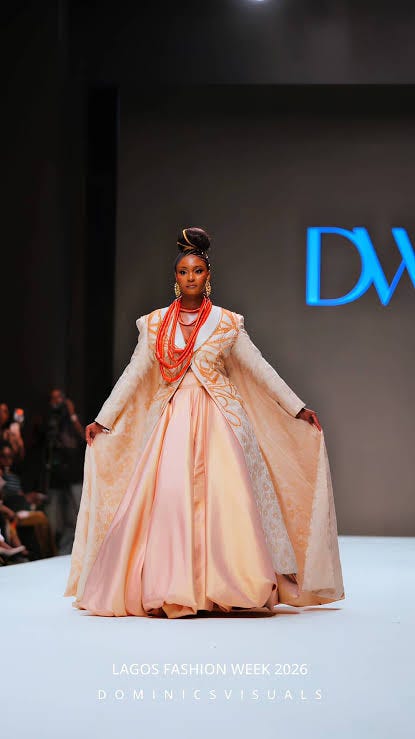
The theme did real work on the runway. Designers treated heritage as material for new design, not reproduction. Akwete, Aso Oke, Adire, Kente, barkcloth, cowrie details and raffia all appeared, pushed through deconstruction, sheer fabrics, hand-printing and textile manipulation. Crochet and knitwear showed up as specialist craft. One label turned old football jerseys into dresses. Another collaboration, between Emmy Kasbit and ALARA, reworked Akwete weaving.
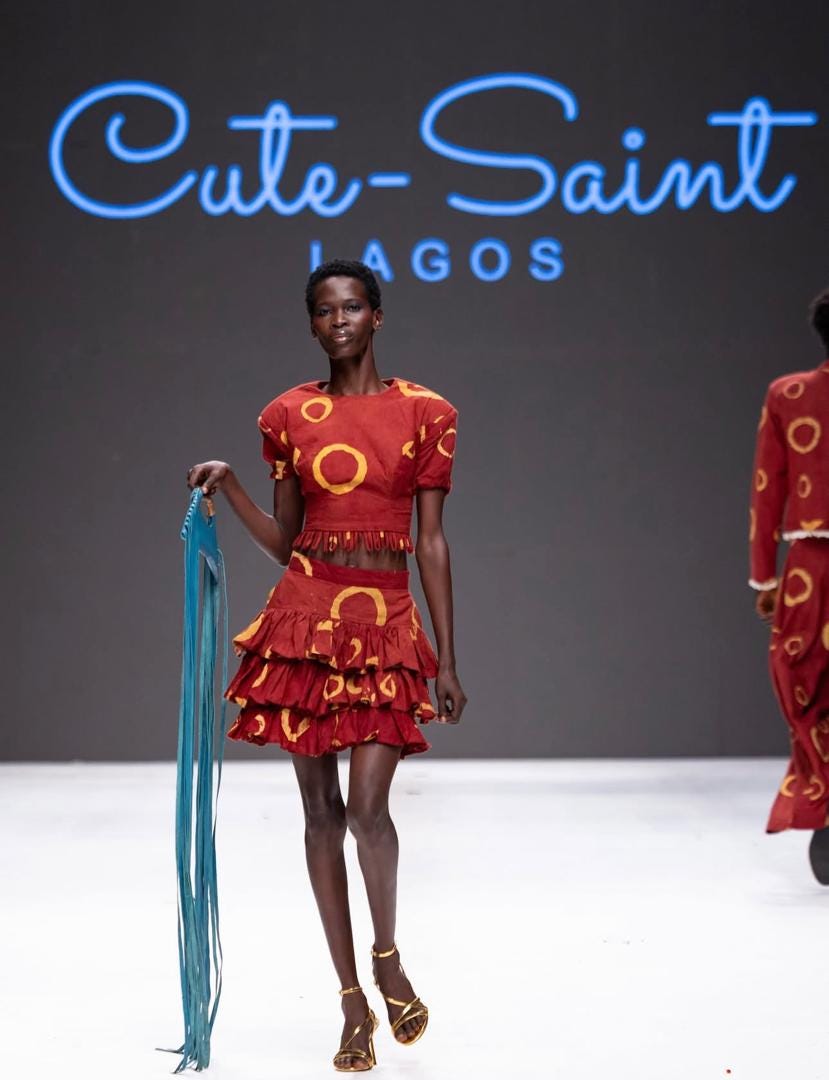
Day 2 carried 19 shows, and one trend dominated it. Fringe appeared in nearly half of the collections, according to Marie Claire Nigeria’s recap, alongside red as a statement colour, earth tones, menswear that played with cropped cuts and textured finishes such as crochet and feathers. Labels like Cute Saint, Hertunba, Oshobor and Imprint South Africa were among those using them.
The pan-African thread
The week was wider than Lagos. Ghana’s Cute Saint returned after an absence since 2018, and Morocco’s Sahrazad came back. Other non-Nigerian names on the schedule included Bakusoraya from Benin, IGC Fashion from Uganda, Jermaine Bleu from Ghana, Fiu Negru from Angola and Imprint South Africa. For a fashion week that calls itself African, that list is what separates a national showcase from a continental one. It is also the audience CANEX is built for.
The business programme
This was the most developed business programme the week has offered, and it was specific.
Day 1 opened the Fashion Business Series with a panel titled “Crafted: By Whom, For Whom and at What Cost?”, on who benefits from the knowledge of the artisans behind African fashion. Aisha Ayensu, founder of Christie Brown, stressed the need for sustainable, long-term relationships with craftspeople. A session titled “Beyond the Runway: Are You Making Money or Just Making Sales?” followed, with Akindele Phillips of We Practice Africa telling designers to build a business that looks successful online and is also successful in real life. His practical advice was unglamorous: keep accurate financial records. Another session, “Capital That Fits,” covered tailored financing for Nigeria’s fashion industry, with speakers from Kuramo Capital Management and the Bank of Industry.
Day 2 turned to overproduction and to intellectual property. A session on commercialising IP in circular fashion dealt with manufacturing limits and stronger contracts to protect original designs. Participants also challenged the idea that overconsumption is an African problem, pointing to global overproduction and imported low-cost clothing.
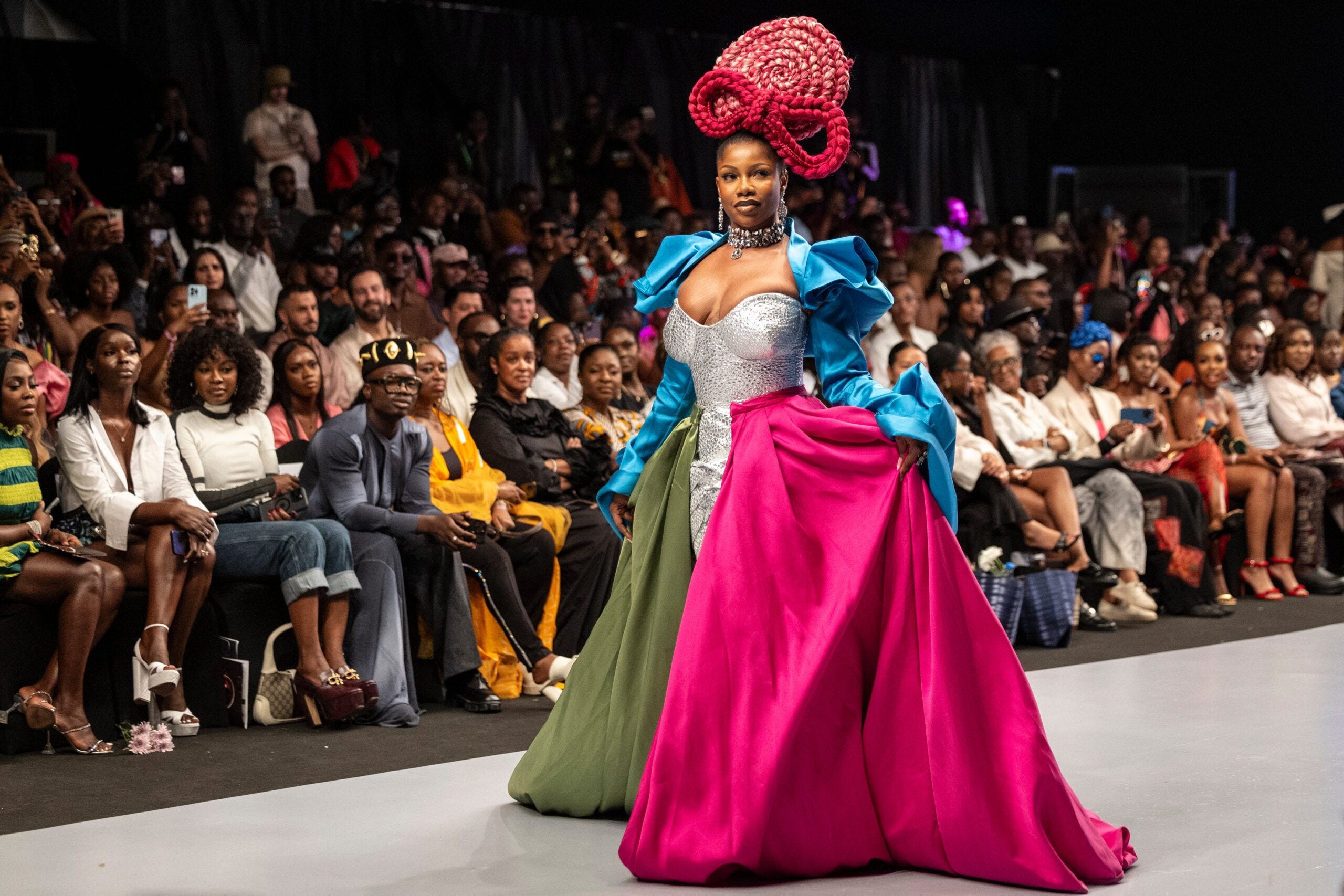
Day 3 put money at the centre. Africa Finance Corporation, the week’s lead sponsor, convened a session on financing a sustainable African fashion industry. It was moderated by Yinka Adegoke and drew speakers from the International Finance Corporation and AFC Capital Partners. The same day, founder Omoyemi Akerele received an award from the US Consul General recognising 15 years of building a platform that connects Nigerian designers with international buyers.
Day 4 was about scale. A panel on scaling with invention covered capital, capacity and growth, including production management and international wholesale logistics. Sterling Bank’s Abiola Adelana stressed character and integrity as the basis of long-term business. A second session, on turning buzz into business, pushed brands to track customer data and returns. The third was the most concrete of the week. Olamoniso Nduka of luxury retailer Polo Avenue laid out what a multi-brand retailer needs from a label: standardised line sheets, reliable and scalable production, and clearly defined wholesale margins.
Underneath all of this sits a point Akerele made to Semafor during the week. African fashion, she argued, has an infrastructure problem, not a creativity problem. The programme backed her up. The topics that kept recurring, such as unreliable electricity, limited manufacturing capacity, workforce development and design protection, are infrastructure topics.
The close
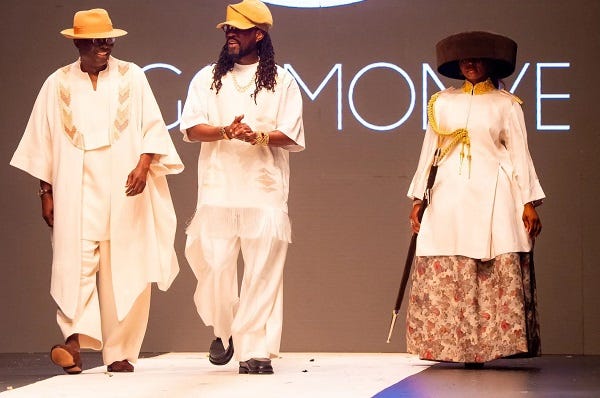
The on-site runway programme ended on Saturday with a moment that drew headlines. Lagos State Governor Babajide Sanwo-Olu made a surprise appearance on the runway, walking for menswear designer Ugo Monye. The offsite finale followed on Sunday, November 1, at cultural spaces across Lagos, with Lisa Folawiyo, Andrea Iyamah, Emmy Kasbit and IAMISIGO named on the line-up.
The governor’s walk is a good symbol of where fashion’s public support currently sits, which is at the level of attention. The harder things, power, finance, production facilities, skills, export support and legal protection, are what the business sessions kept naming as missing.
What CANEX WKND is
CANEX WKND is the flagship weekend of Afreximbank’s Creative Africa Nexus. The 2026 edition runs from November 5 to 8, at the Wole Soyinka Centre in the National Theatre complex in Iganmu. Nigeria, the African Union Commission and the AfCFTA Secretariat are partners. Entry is free, with registration required. Afreximbank also describes the Lagos edition as a test run for the fifth Intra-African Trade Fair, which Nigeria hosts in November 2027.
It is not a fashion event. It spans fashion, film, music, literature, visual arts, gastronomy and sport. Its overall theme this year is “One People, United in Culture, Creating for the World: From FESTAC ‘77 to CANEX’27.” But the commercial machinery is clear, and fashion has a defined place in it.
The programme for designers. On Thursday, November 5, the fashion track includes a masterclass on building profitable fashion brands and a session on the textile value chain titled “From Fibre to Future.” Creative pitch sessions, where small businesses pitch to investors, run alongside a finance and intellectual property track. The CANEX Deal Room, where creative projects pitch directly to financiers and investors, runs from November 5 to 7. On Friday, November 6, the CANEX Fashion Show and Awards Night takes place at 19:00, alongside the 2026 CANEX Awards. A CANEX Luxury Fashion Xchange runs on an invite-only basis, and a fashion installation called “Threads of a Nation” sits in the exhibition area. The exhibition marketplace is open all four days.
The money behind it. Afreximbank has committed $2 billion to Africa’s creative industries for 2024 to 2027, according to BusinessDay’s reporting. That figure is worth attributing carefully, because it has appeared in other coverage at different sizes. Afreximbank’s Kanayo Awani said the event provides an important platform for converting Africa’s creative talent into commercial opportunity. Nigeria’s trade minister, Jumoke Oduwole, described creative industries as an important source of enterprise, employment and exports.
Put simply, Lagos Fashion Week gives a designer an audience. CANEX promises a counterparty.
The scrutiny: one event reports in dollars, the other does not
Here is the contrast that matters.
CANEX reports its results in dollars. The 2024 edition in Algiers was reported as having facilitated and agreed more than $540 million in deals, with nearly 4,000 participants from 81 countries. That figure comes from the organiser’s own results and appears in the event’s announcements, so treat it as a claim, not an audit. It also says “deals,” which is not the same as cash. A deal can be a letter of intent, a pipeline or a financing facility. But it is a number, and a number can be argued with.
Lagos Fashion Week has published no buyer or sales numbers for 2026 so far. The coverage is rich in looks, trends, sponsors and panel summaries. It is silent on how many buyers attended, what orders were written or which designers left with new stockists. Even the sources that cover the business programme in detail give no buyer count and no sales figure.
That silence is not for lack of buyers. A showroom run by ALARA hosted several labels for buyers and press during the week, and Akerele’s award recognised the platform’s role in connecting designers with international buyers. Orders were almost certainly written. They just have not been counted in public.
This is not a scandal. Showcase weeks have always run on reputation, and many orders are placed quietly in showrooms afterwards. But the gap has a cost. A designer deciding whether to fund a presentation cannot see a return. A lender weighing a facility cannot see a track record. And a week that spends four days discussing capital, scale and retail readiness invites the question of why it does not measure its own commercial outcome.
There is a caution on the other side too. A large dollar figure with no breakdown can hide how little reaches a small label. If $540 million is spread across film, music, food, fashion and infrastructure, the amount that lands in a fashion designer’s account could be a very small share. The total tells you the event is busy. It does not tell you the sector is better off.
So the practical question is this: what should a fashion designer expect to leave Lagos with?
A realistic answer has layers. Introductions that become conversations. Meetings with retailers and buyers who can explain what they actually stock. Exposure to financing, from trade finance to working-capital lines. For some, a pilot order. What a designer should not expect is a changed business in four days. Fashion is a cash-flow industry. A label with a stockist order and no way to fund production has a problem, not a win.
This is where the two events connect. On Day 4, Lagos Fashion Week told designers exactly what retailers require: line sheets, production capacity and wholesale margins. CANEX’s deal room and fashion programme are where those requirements get tested. A label that attended the first week’s retail-readiness session and arrives at the second with a standard line sheet and a costed production plan is in a different position from one that arrives with a lookbook.
What to watch this week
Three outcomes will show whether the handoff worked. All three can be measured.
1. Orders reported by designers, not just organisers. How many fashion exhibitors leave with a written order, who the buyers were and roughly what the orders are worth. A count of designers who closed at least one order would be more useful than one committed total.
2. A breakdown of any dollar figure. If CANEX announces a total, look for the split across fashion, film, music and other sectors, and for how much is committed versus closed. Only a fashion-specific figure answers the question this week raises.
3. Financing that reaches a producer. Lagos Fashion Week’s Day 3 session and CANEX’s finance track and Deal Room circle the same gap: capital for manufacturing and scale. Watch for a named facility, a named lender and terms a small label could use. A panel statement is not a product.
If all three come back with detail, Lagos will have done something unusual. It will have turned two weeks of attention into a record of results.
If they come back with one large number and no breakdown, the pattern repeats. A busy showcase, a bigger announcement, and a sector no closer to knowing what works.