


Every few months, a minister stands behind a podium and says it.
The creative economy is the future.
The creative economy is youth employment.
The creative economy is soft power.
The creative economy is GDP growth.
The applause comes easily.
The budget rarely does.
Across much of Africa, the creative economy is praised rhetorically and neglected fiscally. It appears in speeches, panels, and strategy decks. It rarely appears as a serious line item in national budgets.
And that contradiction tells us everything.
If something is a national asset, it must be funded like one.
Oil is funded.
Agriculture is funded.
Infrastructure is funded.
Defense is funded.
Creativity is congratulated.
That is not strategy. That is symbolism.
The Numbers Governments Don’t Like to Quote
The creative economy is not theoretical.
Nigeria’s creative sector has been estimated to contribute between 2 to 4 percent of GDP depending on methodology. South Africa’s cultural and creative industries contribute billions annually and support hundreds of thousands of jobs. Kenya, Ghana, Senegal, Egypt, and Morocco are all seeing explosive growth in music, film, digital content, fashion, gaming, and publishing.
Streaming platforms are investing.
Global labels are signing.
International festivals are scouting.
African content is traveling.
And yet, when national budgets are published, ministries of culture and creative industries often receive fractions of one percent of total expenditure.
In many countries:
Creative ministries operate with limited capital expenditure.
There are no sovereign-backed creative development funds.
No export guarantee schemes for cultural products.
No structured creative financing banks.
Minimal tax incentives for production.
Weak intellectual property enforcement infrastructure.
Governments celebrate creators on red carpets while leaving them structurally undercapitalized.
That is not alignment. That is optics.

A National Asset Without Capital Is Not an Asset
When a government calls oil a national asset, it invests in extraction infrastructure, refineries, pipelines, export logistics, regulatory frameworks, and fiscal stabilization funds.
When a government calls agriculture a national asset, it funds irrigation, research institutes, fertilizer subsidies, insurance schemes, and commodity boards.
When creativity is called a national asset, what is funded?
Festivals.
Awards.
Occasional grants.
Short-term empowerment schemes.
Those are not industrial policies. They are events.
The difference between rhetoric and policy is capital allocation.
Until creativity receives long-term, institutional capital, it remains culturally celebrated and economically fragile.
The Institutional Gap: Lessons From Korea
South Korea did not “discover” K-pop accidentally.
It industrialized it.
Following the Asian financial crisis in the late 1990s, Korea made a strategic decision to invest in cultural exports as economic diversification. The government funded training academies, export promotion agencies, global distribution strategies, and intellectual property systems.
The result:
Korean entertainment became a structured export industry.
Agencies were vertically integrated.
Cultural content became a coordinated soft power strategy.
Global distribution pipelines were supported by diplomatic and economic policy.
K-pop was not just music. It was policy.
The state treated culture as an export commodity worthy of institutional backing.
Africa, by contrast, produces global cultural waves without equivalent state architecture behind them.
Afrobeats travels.
Nollywood travels.
Amapiano travels.
African fashion travels.
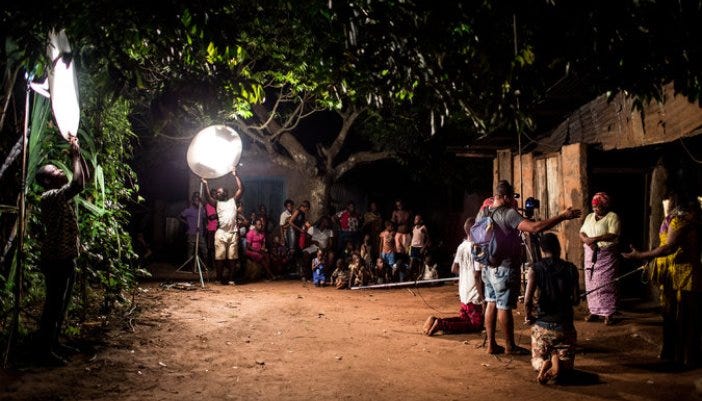
But they travel largely through private hustle, brand partnerships, diaspora networks, and foreign capital.
Africa exports culture. It does not consistently fund its cultural infrastructure.
Why the Budget Conversation Matters
Budgets are moral documents.
They reveal priorities without needing speeches.
If creative industries are serious economic drivers, they should appear in:
National industrial development plans
Export financing frameworks
Tax incentive structures
Intellectual property modernization budgets
Dedicated creative infrastructure projects
Skills and talent development pipelines
Instead, many creative sectors remain informal, underbanked, and excluded from structured credit systems.
Commercial banks rarely understand creative risk models.
Development finance institutions often overlook content businesses.
Public procurement rarely includes creative services at scale.
So creators bootstrap.
Studios self-finance.
Production companies rely on advance payments.
Growth stalls at mid-scale.
And then governments wonder why the sector struggles with scale.
Recognition Without Reform
There is a growing appetite to “recognize” the creative economy.
Recognition is easy.
Reform is expensive.
Recognition involves speeches, summits, task forces.
Reform requires:
Legal modernization
Budget reallocation
Institutional restructuring
Long-term capital deployment
Cross-ministerial coordination
Recognition makes headlines.
Reform changes outcomes.
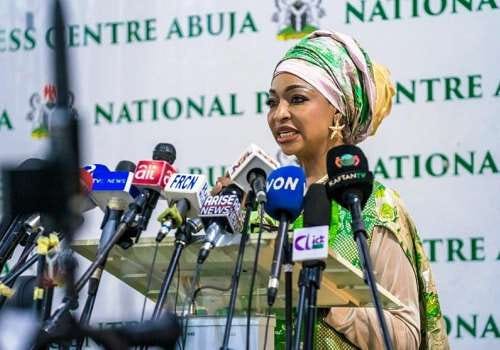
If the creative economy is truly strategic, then it must move from cultural ministry silos into economic planning frameworks. It must sit at the table with trade, finance, and industrial development.
Otherwise, it remains decorative.
The Political Hesitation
Part of the hesitation is perception.
Creativity is still treated as lifestyle, not infrastructure.
Music is seen as entertainment.
Film is seen as glamour.
Fashion is seen as aesthetics.
But creativity is also:
Employment.
Export revenue.
Intellectual property.
Tourism.
Technology.
National branding.
Diaspora diplomacy.
The failure is not in output. It is in framing.
When creativity is understood as a growth engine rather than a cultural accessory, the budget conversation becomes unavoidable.
What Real Budget Inclusion Would Look Like
If African governments truly recognized the creative economy as a national asset, we would see:
Dedicated creative industry development funds backed by sovereign guarantees.
Tax rebates for film, gaming, and digital production.
Export financing facilities for music and media companies.
National creative infrastructure projects, studios, post-production hubs, training academies.
Intellectual property courts with enforcement capacity.
Creative business incubators tied to state-backed financing.
Data and measurement frameworks embedded in national statistics agencies.
Not one-off grants.
Not youth empowerment rhetoric.
Systemic integration.
The Cost of Delay
The world is not waiting.
Global streaming platforms are restructuring distribution.
AI is reshaping content production.
Ownership is consolidating.
Cultural exports are becoming geopolitical tools.
If Africa continues to treat creativity as informal brilliance rather than formal industry, it risks remaining a source of raw cultural material rather than a controller of cultural capital.
The continent will keep producing stars.
But ownership, publishing, licensing, and platform equity will sit elsewhere.
That is the real budget consequence.
The Question That Should Be Asked in Every Parliament
If the creative economy is a national asset:
What percentage of GDP is reinvested into it?
What percentage of the national budget is allocated to it?
What institutional reforms have been enacted to support it?
What export targets have been set?
What financing instruments exist for scale?
If those questions cannot be answered clearly, then the recognition is performative.
National assets are funded.
They are protected.
They are scaled.
Everything else is branding.
And Africa has already proven it does not lack creative power.
The only question left is whether governments are ready to fund it like they mean it.

A guest post by
A curious mind exploring the crossroads of creativity and insight.
I think it’s a perception issue. Majority of our politicians and government officials are yet to buy into the creative economy movement and may be hesitant to invest.
But we can’t wait that long and keep telling these excuses when the world (African countries inclusive) are investing and prioritizing their creative economy.