


The modern creative economy likes to tell itself a flattering story.
That platforms democratised access.
That gatekeepers disappeared.
That creators now control their destiny.
But history tells a different story.
The creative economy did not begin with platforms. It was engineered decades earlier through broadcasting systems that determined how culture was distributed, monetised, and remembered.
What platforms have done is not to replace that system, but to digitise and scale it globally.
To understand where value flows today, you have to go back to where it first concentrated.
Broadcasting Was the First Scalable Creative Infrastructure
In the early 20th century, creative work had a fundamental problem.
It did not scale.
A musician could perform in a hall.
An actor could perform on a stage.
A storyteller could reach a local audience.
But reach was limited by geography.
Broadcasting changed that permanently.
When radio networks like NBC in the United States began national transmissions in the 1920s, something shifted.
Content was no longer local.
It became simultaneous and national.
For the first time:
one performance could reach millions
one song could define a generation
one voice could shape public opinion
This was not just a media evolution.
It was the birth of scalable cultural distribution.
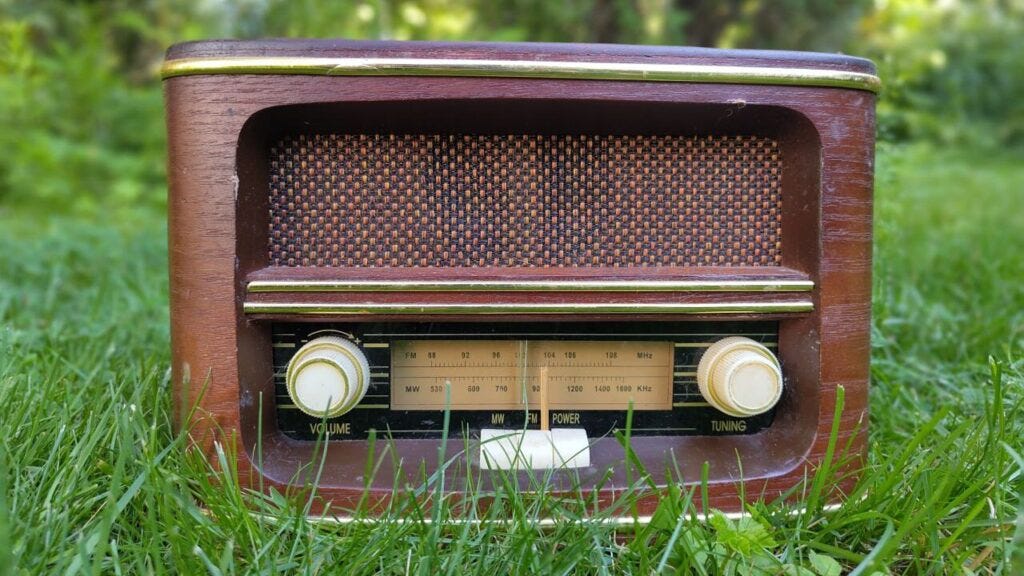
Radio Built the Music Industry as We Know It
Before radio, music monetisation relied heavily on:
live performances
sheet music sales
Radio flipped that model.
By the 1950s, airplay had become the primary driver of music popularity.
Stations curated what audiences heard.
Record labels competed for rotation.
This is where the economics of modern music began to take shape.
Payola scandals in the U.S. in the late 1950s revealed something critical.
Labels were secretly paying DJs to play certain records.
Not because the songs were better.
But because airplay created hits.
Distribution determined success.
That logic has not changed.
Television Created the Modern Celebrity Economy
If radio built music, television industrialised fame.
By the 1970s and 1980s, networks controlled:
national programming schedules
advertising inventory
audience attention at scale
Shows were not just entertainment.
They were economic engines.
Take The Cosby Show.
At its peak, it reached over 30 million viewers per episode in the United States.
That level of concentrated attention:
drove advertising revenue
created household names
influenced culture globally
The same applied to music television.
MTV did not just play videos.
It determined:
which artists became global stars
what genres crossed borders
how youth culture evolved
Artists like Michael Jackson and Madonna did not just succeed because of talent.
They succeeded because broadcasting systems amplified them at scale.
Africa Had Its Own Broadcasting Power Centers
This is not just a Western story.
Broadcasting played the same structural role across Africa.
Radio stations like Federal Radio Corporation of Nigeria and TV networks such as Nigerian Television Authority were central to:
music discovery
cultural dissemination
national identity formation
Before streaming platforms, Nigerian artists depended on:
radio rotation
TV appearances
physical distribution
to build recognition.
The same applied across Kenya, Ghana, and South Africa.
Broadcasting was the primary gateway to scale.

The Economics Were Always Clear
Broadcasting worked because it solved one problem exceptionally well:
audience aggregation.
It gathered millions of people in one place at the same time.
That made monetisation simple.
Advertisers paid for access.
Networks controlled pricing.
The model was predictable:
Content → Audience → Advertising → Revenue
Creators were part of this chain.
But they did not control it.
Platforms Did Not Disrupt This Model. They Perfected It
When platforms like YouTube and Spotify emerged, they introduced new mechanics.
on-demand consumption
global reach
low barriers to entry
But structurally, they did the same thing broadcasting did.
They aggregated attention.
Only this time:
continuously
globally
with data
Instead of programming schedules, they used algorithms.
Instead of mass audiences watching the same thing, they created micro-audiences at scale.
But the economic logic remained identical.
The Key Shift: From Scarcity to Abundance
Broadcasting operated in scarcity.
Limited channels.
Limited airtime.
Platforms operate in abundance.
Unlimited uploads.
Infinite content.
This changes one critical thing:
competition for attention intensifies dramatically.
In broadcasting, being selected was the challenge.
In platforms, being seen is the challenge.
Yet Value Still Concentrates
Despite the abundance, outcomes look familiar.
A small number of creators capture:
most views
most streams
most revenue
This is not accidental.
It reflects what economists call power law distribution.
The same dynamic existed in broadcasting:
a few hit shows
a few dominant artists
Platforms did not remove this.
They scaled it.
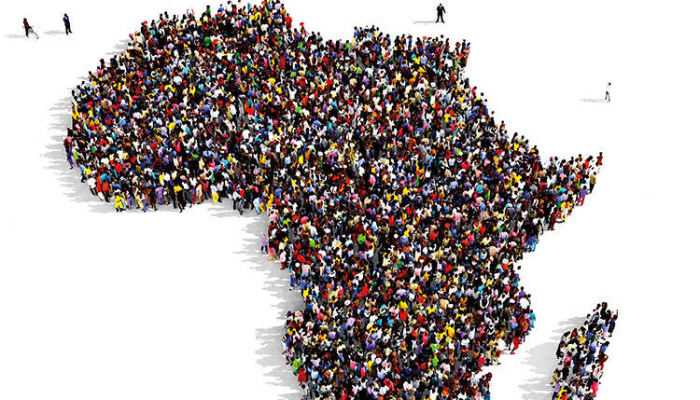
The African Gap: Distribution Without Ownership
Africa’s creative economy is expanding rapidly.
Afrobeats is global.
Nollywood is prolific.
Digital creators are rising.
But the infrastructure story is uneven.
Most distribution still happens on:
foreign-owned platforms
external monetisation systems
This creates a structural issue.
African creativity travels globally.
But the systems that monetise that creativity are often not locally controlled.
Broadcasting had similar issues, but platforms amplify them.
Because now distribution is not just national.
It is global.
The Data Tells the Story
Globally:
the media and entertainment industry is projected to reach over $3.5 trillion by 2029
streaming platforms account for a growing share of that revenue
In Africa:
the creative economy is valued in the hundreds of billions of dollars
but monetisation systems remain fragmented
This gap is not about talent.
It is about infrastructure.
The Real Continuity
When you strip away the technology, one thing becomes clear.
The creative economy has always depended on:
distribution systems
audience aggregation
monetisation frameworks
Broadcasting provided that in the 20th century.
Platforms provide that in the 21st.
The difference is not the existence of the system.
It is who controls it, and how it scales.
What This Means Going Forward
If African markets want to capture more value from creativity, the focus cannot only be on:
producing more content
growing audiences
It must include:
building distribution infrastructure
developing monetisation systems
strengthening IP frameworks
Because history shows this clearly.
Creativity alone does not build an economy.
Systems do.
Conclusion: The System Was Never Replaced
Broadcasting built the creative economy by solving scale.
Platforms extended that solution using technology.
But they did not fundamentally change the rules.
They changed the speed.
They changed the reach.
They changed the visibility of control.
The real question now is not whether platforms replaced broadcasting.
It is whether emerging markets, especially in Africa, will remain participants in this system, or begin to shape and own it.
Because if history is any guide, the answer to that question will determine not just who creates culture.
But who captures its value.

A guest post by
A curious mind exploring the crossroads of creativity and insight.
This is a good read.
It captures a lot of things and few of the important things that you made a post about few days back most especially when it comes to STRUCTURE around what we are creating as a continent. As they always say, who has the piper dictates the tune and we are already seeing that.
Today's post reminded me of the early 2000s when I grew up seeing vinyl records, video cassettes, emergence of CDs with Nigeria artists releasing songs in CDs, radios shows, and programs like Kennis Music show on AIT was one the ways many of us then got to know about some of the artists then, and like you said, what has always been missing is the WELL DEFINED STRUCTURE, and sadly we don't even have a central data channel that can help us project what creatives are churning out.
Now I can discover new artists with just a click on Spotify and all.
Thank you Layo for this.