


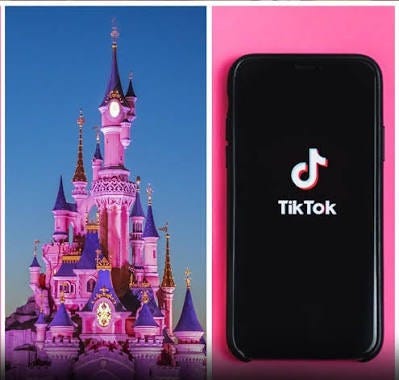
On August 5, Disney and TikTok announced what both companies called a first-of-its-kind global deal.
TikTok creators will get licensed access to assets from hundreds of Disney, Pixar, Marvel, Star Wars, and FX films and series. Videos made using that content will live on both TikTok and Verts, a new vertical video feed on Disney+. A tiered Disney Creator Ambassador Program will offer selected creators visibility, event access, and career development pathways. The pilot starts in the United States and then expands globally.
In the same week that announcement landed, TikTok’s Creator Rewards Program still covered zero African countries.
Hold both of those facts at once.
That is the story.
What the Deal Actually Is
Disney needed this more than TikTok did.
The company’s attempt to solve its short-form video problem through AI collapsed in March 2026 when OpenAI shut down its Sora video platform, unwinding a $1 billion licensing deal Disney had announced in December 2025. Verts, Disney’s vertical video feed designed to pull younger audiences back into the Disney+ app, was left without the content pipeline it had been built for.
TikTok, meanwhile, recorded 6.5 million daily film and television posts in the previous year. Its 1.9 billion monthly active users are already making fan content around Disney IP without permission. The deal formalises what was already happening, adds a distribution layer on Disney+, and gives both companies a way to extract commercial value from the enormous volume of fan creativity the platform generates anyway.
For Disney, the deal solves a distribution problem. Verts gets content. Younger users who live on TikTok discover Disney IP in their native environment.
For TikTok, the deal solves a legitimacy problem. The platform has been trying to move up the value chain from informal entertainment to premium content destination. A partnership with the world’s most recognisable entertainment IP portfolio does that work immediately.
For the creators who participate, the arrangement is less straightforwardly beneficial. Payment terms have not been disclosed. The Disney Creator Ambassador Program offers visibility and career development pathways, not confirmed revenue. Participating creators opt in to having their videos distributed on a platform they do not control, under terms that have not been made public, featuring IP they do not own.
But that is not the most important part of this story for an African audience.
The most important part is what happens to the For You Page when global IP of this scale enters it at volume.
How the For You Page Actually Works
TikTok’s algorithm is built around one goal: maximise watch time and engagement by showing the right content to the right person at the right time.
It does not care who made the video. It does not weight established creators over new ones, which is why an account with zero followers can go viral in a way that Instagram or Facebook’s social graphs make nearly impossible.
TikTok delivers roughly 6,268 average impressions per post, compared to Instagram’s 2,635. Engagement rates are five to eight times higher. The platform is better for new creator discovery precisely because follower count is not a ranking factor.
That algorithmic democratisation is real. And it is one of the reasons TikTok has been genuinely valuable for African creators building audiences from scratch.
But the algorithm is not neutral about content quality. Watch time and completion rate account for roughly 40 to 50 percent of the algorithm’s weight. The completion rate threshold for virality has risen to approximately 70% in 2026, up from 50% the year before. Shares and saves now outweigh likes. The system rewards depth of engagement over casual scrolling.
And here is where the Disney deal becomes structurally significant for African creators.
Marvel, Star Wars, and Pixar content does not have a discovery problem. It has a recognition problem in the opposite direction: every user already knows who these characters are. The parasocial relationship is pre-built. The emotional hooks are decades old. A clip of Tony Stark or a short fan-edit built around a scene from Inside Out arrives on a For You Page with a level of built-in engagement potential that an original creator building their own narrative universe from scratch cannot replicate.
When that content floods the platform in volume, what happens to the creators competing in the same attention window?
The Discovery Odds Are Already Stacked
Before the Disney deal, African creators on TikTok were already operating in a structurally disadvantaged position.
TikTok’s main Creator Rewards Program remains available only in the US, the UK, France, Germany, Japan, South Korea, and Brazil. Accounts created in Nigeria cannot receive the platform’s native view-based payouts regardless of audience size. One Nigerian creator built an audience of 1.4 million followers and still could not monetise through the platform. Another paid someone in the United Kingdom to create an account that would qualify for monetisation.
Only Morocco, Egypt, and South Africa are included in the 53 regions where TikTok’s Effect Creator Rewards scheme operates. Zero African countries are eligible for payouts through the Creator Rewards Program.
This is the baseline. African creators are already building audiences on a platform that does not pay them through its own mechanisms, in markets where CPM rates for advertising are significantly lower than Western equivalents, competing for attention without the brand infrastructure or platform investment that TikTok provides to creators in monetisation-eligible markets.
Now add licensed Disney IP entering the same attention pool.
The Disney content is not replacing African creator content. Users who engage with a Wakanda-themed fan video are not necessarily the same users who would have watched a Lagos street food series. Interest graphs do not work that cleanly. A user can engage with both, and TikTok’s algorithm will serve them more of what they engage with most deeply.
But the aggregate effect on discovery probability is not neutral.
TikTok is doubling down on discovery — making it easier for users to find hyper-relevant content, but harder for average content to break through. The platform in 2026 is increasingly an ecosystem where content that commands immediate, high-completion engagement gets distributed and content that does not gets buried. When globally recognised IP enters at scale, it sets a new baseline for what engagement looks like. Original creators, building worlds that audiences do not already know, are competing against the accumulated emotional investment of billions of people in characters they have spent decades with.
That is not a fair competition. And it was already an unfair competition before August 5.
The Structural Question Underneath the Deal
There is a version of the Disney-TikTok deal that is good for some creators.
A Kenyan animator who builds fan content around Black Panther mythology and gets picked up by the Disney Creator Ambassador Program gains access to Disney+ distribution, event invites, and a career development pathway that would otherwise require years of expensive relationship building. An African cosplay creator who has been making Marvel content without permission is now legally protected and potentially visible to a Disney marketing team that notices their work.
These are not trivial outcomes.
But the creators who benefit from this deal are, by definition, the ones whose work already speaks the language of globally established IP. The benefit flows to African creators who orient their creative identity around Disney’s universe, not to the ones building original African universes of their own.
Africa’s creative economy is attempting to build something different from a fan content ecosystem for global IP. It is trying to build original intellectual property that travels. Nollywood stories that earn on global platforms. Afrobeats artists who own their masters. Animators developing original African mythologies as commercially viable IP. Writers building newsletters and subcultures around distinctly African cultural moments.
That project depends on platforms where original content can find audiences without pre-built emotional recognition. It depends on algorithms that give a story about Lagos, Accra, or Nairobi a genuine chance to break through alongside a story about Wakanda.
Platform design and governance shape creator experiences in ways that go far beyond technical access. The Disney deal is a governance decision. It is TikTok choosing to invest its platform architecture, its discovery infrastructure, and its cross-platform distribution in content built around the world’s most recognised entertainment IP.
That investment has a cost. Not a financial one. An attention one.
The For You Page is not infinite. Every video that a user watches is a video that displaces another. Every engagement signal that a Disney-licensed video generates is a data point that trains the algorithm toward similar content. Every creator development pathway that routes through Disney’s IP universe is a pathway that routes away from original African storytelling infrastructure.
None of this is intentional. TikTok is not trying to suppress African creativity. Disney is not targeting African creators.
But outcomes do not require intent to be real.
What African Creators Actually Need From This Platform
African creators on TikTok have built something remarkable under conditions that the platform has not matched with commensurate investment.
The solution is not to refuse global IP partnerships. Disney-TikTok content will exist regardless of what African creators think about it, and some African creators will benefit from it directly.
The solution is for the structural inequities that predated this deal to be addressed with the same urgency the platform applies to deals of this scale.
TikTok’s Creator Rewards Program covers seven countries. None of them are in Africa. The platform has 150 million African users. African sounds travel through it globally. African cultural moments go viral on it regularly. And the creators who generate that cultural energy cannot get a direct deposit from the platform they are building on.
The Disney deal is a $1 billion problem on top of a $0 problem.
Before the platform that gave Marvel and Star Wars a dedicated creator program, a cross-platform distribution channel, and a tiered ambassador structure, it should have given African creators what it gives creators in Germany and South Korea.
A working monetisation programme.
That is not a complicated ask.
It is just not one TikTok has answered yet.

Written by Layo
Lead Editorial Writer, Creative Brief Africa
Outside of her editorial work, she writes Curious Health, a newsletter focused on everyday health questions, explored with clarity and care.
This was very insightful! Thank you for sharing!