


Podcasting in Africa grew because a microphone and a laptop were enough.
That was the point. Low barrier to entry. No studio. No broadcast licence. No network gatekeeping who got to speak. A creator in Nairobi, Lagos, Accra, or Cape Town could build an audience with a voice, an idea, and a Spotify for Creators account. For a continent where traditional media infrastructure has historically determined whose stories got told and whose did not, the audio format was something close to a structural equaliser.
Then the platforms decided video was the future.
And the cost of staying competitive just changed.
The Platform Race That Starts With Apple
On February 16, 2026, Apple announced a new video podcast experience for Apple Podcasts.
The update uses HTTP Live Streaming technology to let creators upload video versions of their episodes alongside audio, with users able to switch between the two seamlessly. For the first time, Apple is enabling dynamic video ad insertion, opening podcast creators to the broader video advertising market. Ad networks Acast, Amazon’s ART19, Omny Studio, SiriusXM, AdsWizz, and Simplecast all confirmed participation at launch.
Apple is not first. YouTube has been the dominant video podcast platform for years, hosting what it describes as the largest video podcast ecosystem in North America. Spotify has pushed video episodes through its Spotify for Creators infrastructure. Netflix signed an exclusive video podcast distribution deal with iHeartMedia in 2025. The platforms are not individually betting on video. They are collectively deciding that video is the new floor.
The practical meaning of that decision is simple.
A podcast without video is increasingly a podcast that certain discovery algorithms will not surface. Video episodes get recommended. Video content gets watch time data. Watch time data drives ad revenue and platform promotion. Audio-only shows are not disappearing but they are being quietly downgraded in the attention economy that the platforms control.
For creators with the resources to add video, this is an opportunity. For creators without those resources, it is a widening gap between what the platform rewards and what they can afford to produce.
What the Camera Actually Costs
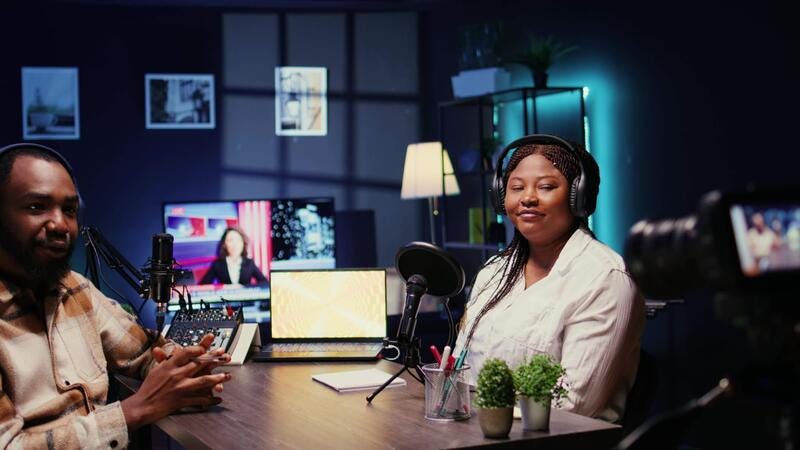
Adding video to a podcast is not just buying a camera.
It is the full production stack. A decent camera capable of producing the video quality that audiences conditioned by YouTube now expect costs between $300 and $1,500. Lighting equipment to avoid the flat, washed-out look that undermines credibility on video adds another $100 to $500. A microphone upgrade, because audio problems are even more visible when the audience can see your face, runs $100 to $300. Editing software for video is more complex and more expensive than audio-only tools. Storage costs increase significantly. A 30-minute video episode can run 2GB or more before compression.
Then there is the upload cost.
In Nigeria, a creator uploading a single video episode to YouTube at standard quality is moving between 1GB and 4GB of data through a network where data costs rose 43% in the first half of 2026. In Kenya, data costs have improved relative to income but remain a significant operational expense for creators without brand sponsorship to offset them. In South Africa, the infrastructure is more developed but the cost of maintaining broadcast-quality video production is comparable to European markets in a context where monetisation returns are not.
And the audience watching the video has the same problem in reverse.
Streaming a 30-minute video episode consumes 400MB to 1.5GB depending on resolution. In markets where most people ration data, video is a format that costs the audience to consume, in a way that audio historically has not. A listener who streams audio episodes on a budget data plan and watches video podcasts on WiFi when they can get it is a fundamentally different consumer than the YouTube audience the platforms are optimising for.
The video upgrade asks both the creator and the audience to spend more.
The Monetisation Layer That Is Not There
Even for African creators who can absorb the production costs, the path to monetising video podcasting runs into a structural wall that does not apply to creators elsewhere.
YouTube’s Partner Program is available in 12 African countries: Algeria, Egypt, Ghana, Kenya, Morocco, Nigeria, Senegal, South Africa, Tanzania, Tunisia, Uganda, and Zimbabwe.
54 countries on the continent. 12 in the programme.
A video podcaster in Cameroon, Angola, Ethiopia, Zambia, Rwanda, Mozambique, or any of the remaining 42 African countries cannot earn AdSense revenue from their YouTube content regardless of how many subscribers they have, how high their watch time is, or how much advertiser value their audience represents. They can invest in cameras, lighting, editing software, and data costs to produce video content at a standard the platform rewards, and still cannot access the monetisation infrastructure that makes that investment commercially viable.
Apple’s new video podcast integration introduces dynamic ad insertion for the first time. That is genuinely significant for creators in markets where Apple Podcasts has traction. The revenue upside is real. But Apple’s ad ecosystem is even more concentrated in Western markets than YouTube’s. A Lagos creator with a video podcast on Apple Podcasts will reach Apple’s discovery features. Whether the advertising demand for their audience translates into meaningful CPM rates is a separate, less optimistic question.
TikTok’s Creator Rewards Program covers zero African countries. The platform on which African audio trends travel furthest does not pay the people generating that travel.
The monetisation infrastructure for video content in African markets is 12 countries wide in a 54-country continent.
Who Wins This Race
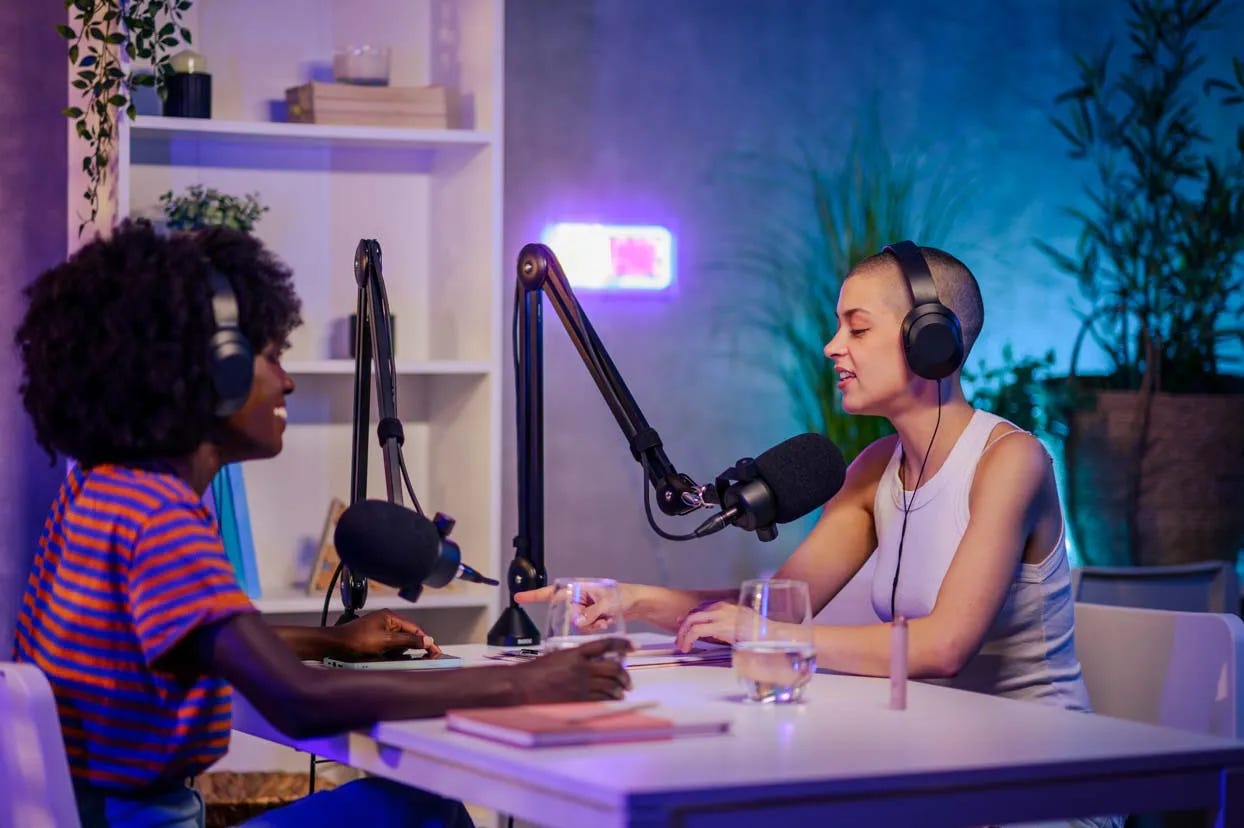
The platforms are building a video podcast world for creators who have studios.
The Joe Rogan model. The Diary of a CEO model. Broadcast-quality sets, professional lighting, multiple camera angles, dedicated editors, and the production infrastructure that brands associate with premium placement. That is the direction the platform recommendations are being tuned toward. It is also the direction that requires capital, team, and infrastructure that the vast majority of African podcasters do not have and cannot quickly build.
The Nigerian Podcast Index 2026 documented 604 shows, an 83% increase from the 329 shows indexed in 2025. The catalogue nearly doubled in a year. And yet only 44.4% of those shows are classified as active. 55.3% are on hiatus.
The report’s author, Tony Onwuchekwa, was direct about what the data means: “Creation has scaled. Sustainability has not kept pace. That is the central story the 2026 data tells. We now have a much larger catalogue, but more than half of indexed shows are on hiatus. Nigerian podcasting continues to generate starts far more readily than it sustains runs.”
Those are shows that went silent before video was the competitive standard.
Now imagine what the hiatus rate looks like when staying active requires not just consistent publishing but consistent video production.
The video push does not create the sustainability problem in African podcasting. It pressures a problem that was already there. A well-funded show with a brand deal, a production team, and a Lagos studio can add video and compete. A solo creator recording on a phone in Ibadan, Mombasa, or Kumasi faces a production cost increase that their current monetisation cannot cover.
The gap between those two situations was already widening. Video widens it faster.
The Counterpoint Worth Taking Seriously
The argument against pessimism starts with what built African podcasting in the first place.
It was not production quality. It was trust. Audience loyalty to African podcast voices has been built on the intimacy of audio, on hosts who sounded like the people listening to them, on conversations that felt real rather than produced. The Reuters Institute’s Digital News Report found that 66% of South African consumers listened to podcasts for at least one hour per week in 2025, the highest rate of any tracked market globally. Middle East and Africa recorded the fastest percentage growth in global podcast listenership at 21.2% year-on-year in 2026. That growth happened in audio.
Molly Jensen, CEO of Afripods, the pan-African podcast hosting platform headquartered in Nairobi, has been consistent in the argument that audience trust, not format, is the real asset African podcasters hold. A deeply loyal audio audience that trusts a host’s voice is not automatically going to leave for a video-first competitor. The relationship is the product.
AI tools are beginning to compress some of the production cost gap. Automated video editing tools, AI-generated captions and subtitles, video enhancement tools that improve low-light footage, and AI-assisted audio cleanup are all lowering the floor for what reasonably good video production requires. A creator with a decent smartphone, a ring light, and access to tools like Descript or CapCut can produce video that would have required a small production team five years ago.
That compression is real and it matters. It does not eliminate the data cost problem, the monetisation exclusion problem, or the resource gap between well-funded shows and solo creators. But it means the ceiling for what an individual African creator can produce without a team is higher than it was when the video push began.
The Number That Ends This
55.3% of indexed Nigerian podcasts are on hiatus.
That number exists before video became the competitive standard. It exists in a market where audio podcasting, the cheaper and more accessible format, was already too expensive in time, energy, and economic return for more than half of the creators who started.
Video raises the cost of staying active.
Not impossibly. Not for everyone. But measurably, and in ways that fall disproportionately on the creators with the least margin to absorb them. The solo host. The creator in a city without reliable WiFi. The show that has not yet found a brand deal. The podcaster in one of the 42 African countries that YouTube’s Partner Program has not reached.
African podcasting grew because the format was built for the conditions of the market.
The question now is whether the market is being rebuilt for conditions that only a fraction of African creators can meet.

Written by Layo
Lead Editorial Writer, Creative Brief Africa
Outside of her editorial work, she writes Curious Health, a newsletter focused on everyday health questions, explored with clarity and care.