


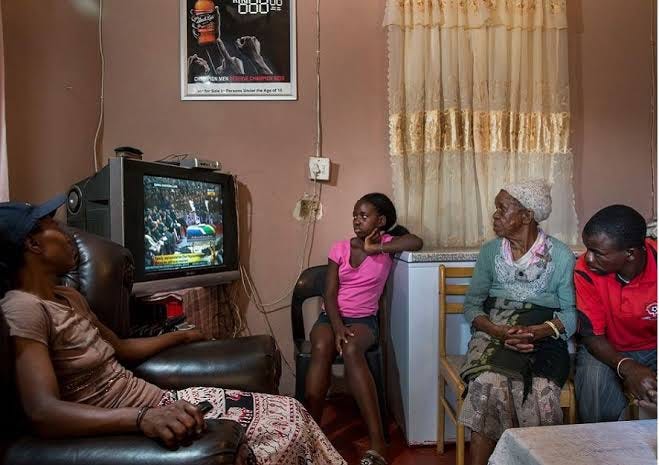
For decades, media regulation across Africa was built around a relatively stable idea of what media was.
It had a schedule.
It had a signal.
It had a tower.
It had a regulator.
Broadcasting was linear, geographically bounded, and relatively easy to define. Content moved through clearly identifiable channels, from licensed stations to audiences who consumed what was programmed, when it was programmed.
The rules made sense for that world.
But that world has changed.
Today, Africa’s media audience no longer waits for scheduled programming. It streams, scrolls, swipes, shares, downloads, reposts, clips, and consumes across platforms that do not fit neatly into any traditional regulatory category.
Attention has moved.
The law, in many cases, has not.
A recent industry survey by Broadcast Media Africa offers a revealing snapshot of this mismatch. Across the continent, digital media consumption is accelerating, yet regulatory systems remain structurally uneven. Only 13 percent of surveyed jurisdictions described their digital media regulatory frameworks as highly mature. Just 33 percent reported fully updated legal definitions of broadcasting.
That means much of Africa is attempting to govern a digital media economy using frameworks designed for a broadcast era that audiences have already left behind.
This is no longer simply a policy gap.
It is becoming an economic one.
The Architecture of an Earlier Media Era
Most African media laws were developed around infrastructure scarcity.
Spectrum was limited.
Broadcast frequencies had to be allocated.
Content had to be scheduled.
National regulators could clearly identify operators and enforce compliance within geographic borders.
It was a system built on control through physical infrastructure.
A broadcaster needed:
licensing
transmission infrastructure
physical operational presence
national compliance structures
This created a regulatory logic based on oversight of identifiable institutions.
But digital media disrupted each of those assumptions.
Platforms no longer need local transmission towers.
Content no longer follows schedules.
Distribution is no longer constrained by national borders.
And creators themselves have become media entities, often reaching audiences larger than traditional broadcasters without ever fitting into existing legal definitions.
The result is a regulatory architecture increasingly disconnected from how media now functions.
The audience moved from channels to platforms.
Regulation, in many places, is still trying to regulate channels.

The Enforcement Problem
Regulatory lag becomes most visible when enforcement enters the picture.
According to the Broadcast Media Africa survey, 50 percent of respondents described enforcement as weak or rare. Fourteen percent reported having no meaningful enforcement mechanisms at all.
More revealing is the asymmetry in who enforcement actually reaches.
Thirty-six percent of respondents reported no effective enforcement against foreign platforms.
At the same time, 21 percent said domestic entities face stricter enforcement than international digital operators.
This is one of the defining contradictions of Africa’s digital media landscape.
Local broadcasters, publishers, and media companies often operate under heavy compliance obligations.
Global platforms frequently do not.
This creates a structural imbalance.
African media businesses must navigate:
licensing requirements
content restrictions
taxation frameworks
local compliance standards
Meanwhile, international platforms capture audience attention, advertising revenue, and cultural influence while often operating beyond practical regulatory reach.
The issue is not simply fairness.
It is market distortion.
When regulation applies unevenly, competition itself becomes uneven.
And when that happens, local media ecosystems weaken.
The Platform Shift Regulation Has Not Fully Reckoned With
The deeper challenge is conceptual.
Many regulatory systems still approach digital platforms as extensions of traditional media.
They are not.
A television station distributes content.
A platform governs discovery.
That distinction matters.
Platforms do not merely host content.
They shape what gets seen, amplified, suppressed, monetised, and remembered.
Their influence is not defined by ownership of content alone, but by control of visibility.
This is a fundamentally different form of media power.
Traditional broadcasting regulation was designed to oversee distribution infrastructure.
Digital regulation must increasingly contend with algorithmic infrastructure.
That means asking entirely new questions.
Who is accountable when recommendation systems amplify harmful content?
How should platform moderation decisions be governed?
What obligations do global platforms have to local cultural industries?
How should African regulators approach systems that shape attention without physically operating within national borders?
These are not future questions.
They are present ones.
And many legal systems are still catching up.
AI Has Entered a Regulatory Vacuum
If digital platform regulation exposed the first major gap, artificial intelligence is exposing the next.
The survey shows that 58 percent of jurisdictions are still developing AI-related policy frameworks for media.
Twenty-five percent have not meaningfully considered AI regulation at all.
Only 8 percent have enacted specific AI media policies.
Perhaps most strikingly, zero surveyed jurisdictions reported mandatory AI content labelling requirements.
This matters because AI is no longer theoretical within media ecosystems.
It is already shaping:
content generation
editing workflows
synthetic voice production
news automation
recommendation systems
creative production pipelines
AI is entering African media systems faster than governance frameworks can define its boundaries.
That creates immediate risks.
The survey identifies online harassment, misinformation, hate speech, piracy, and deepfakes among the most pressing digital content threats.
Without regulatory clarity, these risks become harder to manage.
And for creators, media businesses, and audiences alike, uncertainty becomes its own form of instability.
Why This Matters Beyond Policy
It is easy to frame media regulation as a bureaucratic issue.
It is not.
It is infrastructure.
Just not the visible kind.
Regulatory systems shape:
market confidence
investment conditions
platform accountability
creator protections
audience trust
When those systems are weak or outdated, the consequences ripple across the entire media economy.
For creators, it can mean unclear ownership protections.
For local media companies, it can mean competing against structurally advantaged global players.
For investors, it creates uncertainty around market predictability.
For audiences, it increases exposure to misinformation, manipulation, and poorly governed digital spaces.
The cost of regulatory lag is rarely immediate collapse.
It is slower than that.
It shows up as leakage.
Value leakage.
Trust leakage.
Competitive leakage.
And over time, those leaks become structural weaknesses.
Africa’s Real Challenge Is Not Adoption
Africa has already demonstrated extraordinary digital adoption.
Audiences are active, mobile-first, and highly engaged.
Creators are building communities at remarkable speed.
Digital consumption is no longer the question.
Regulatory transition is.
The challenge is no longer getting people online.
It is building governance systems capable of understanding what online media has become.
That requires more than updating legal definitions.
It demands a broader shift in regulatory thinking.
One that moves from policing transmission to governing ecosystems.
One that understands creators as media actors.
One that recognises platforms as infrastructure.
One that anticipates technological change rather than reacting to it years later.
The Next Media Era Will Be Defined by Governance
Africa’s media future will not be shaped solely by who creates the most compelling content.
Nor by which platform captures the most users.
It will be shaped by whether the systems governing digital media evolve fast enough to match the realities audiences already inhabit.
Because audiences have already made their choice.
They moved to platforms.
To creators.
To algorithms.
To ecosystems far more fluid than the broadcast era ever imagined.
The real question now is whether regulation can move with them.
Because Africa’s media laws were built for television.
The audience moved on.
The systems that govern media will have to do the same.

Written by Layo
Lead Editorial Writer, Creative Brief Africa
Outside of her editorial work, she writes Curious Health, a newsletter focused on everyday health questions, explored with clarity and care.