


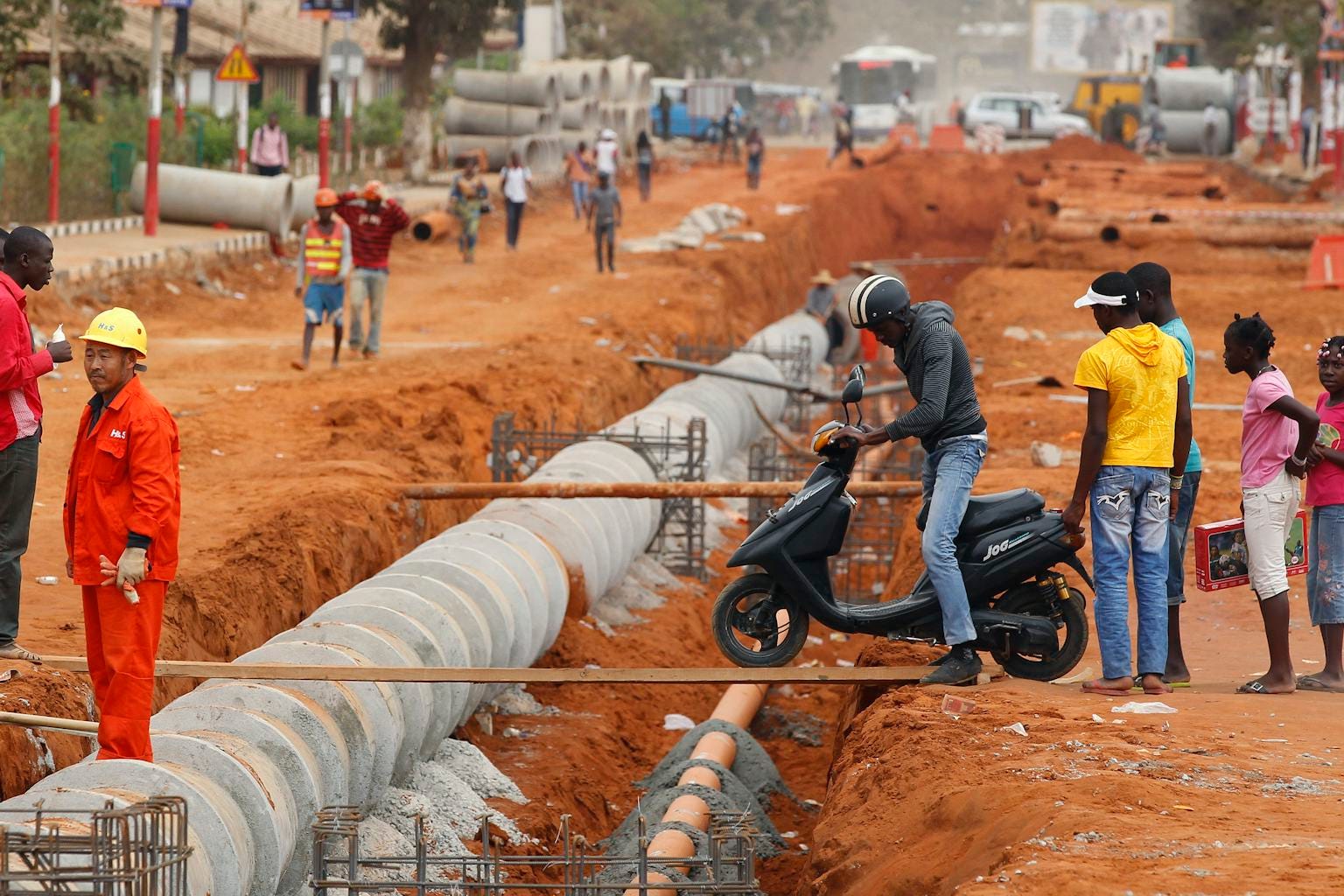
When discussions about Africa’s infrastructure challenges emerge, the conversation usually gravitates toward familiar images.
Roads.
Railways.
Ports.
Power plants.
Bridges.
But the infrastructure deficit confronting Africa today is no longer just an industrial challenge.
It is increasingly a creative economy challenge.
According to a recent report by S&P Global Ratings, Africa faces an annual infrastructure financing gap of between $30 billion and $70 billion. The continent requires roughly $130 billion to $170 billion annually to meet its infrastructure needs, yet financing commitments reached only around $100 billion in 2023.
The result is a persistent shortfall that continues to slow economic growth, trade integration, and industrial development.
What receives less attention, however, is how this same infrastructure gap increasingly shapes the future of Africa’s creative economy.
Because while music, film, fashion, gaming, creator businesses, digital media, and entertainment are often discussed as cultural sectors, they are increasingly infrastructure-dependent industries.
And without the systems that support them, creative growth eventually encounters hard limits.
The Creative Economy Runs on Infrastructure More Than Ever
Historically, creative industries could operate with relatively limited infrastructure.
A musician needed a recording studio.
A filmmaker needed cameras and editing equipment.
A fashion designer needed access to manufacturing and distribution.
Today’s creative economy operates differently.
Modern creative industries increasingly depend on digital infrastructure.
Streaming platforms.
Cloud computing.
High-speed internet.
Digital payment systems.
Content delivery networks.
Data centres.
Artificial intelligence infrastructure.
Cross-border financial systems.
Audience analytics.
E-commerce platforms.
The creator economy itself exists almost entirely because this infrastructure exists.
A YouTuber in Lagos depends on global broadband networks.
A podcaster in Nairobi depends on cloud storage systems.
A filmmaker in Johannesburg depends on reliable electricity, internet access, payment rails, and digital distribution platforms.
Creativity may begin with talent.
But scale increasingly depends on infrastructure.
The Hidden Cost of Unreliable Power
Perhaps nowhere is this challenge more visible than energy.
Africa continues to experience some of the world’s most significant electricity access and reliability challenges.
For creative businesses, unreliable electricity creates costs that are often invisible in economic reports.
Studios invest in generators.
Production companies budget for backup power.
Event organisers spend heavily on temporary energy solutions.
Content creators purchase batteries, inverters, and alternative energy systems.
Every additional cost reduces available capital for creativity itself.
Money that could be invested in talent, production quality, distribution, or business growth instead gets redirected toward compensating for infrastructure deficiencies.
The infrastructure gap quietly becomes a creativity tax.
Why Data Centres Matter to Creators
A decade ago, data centres were rarely part of creative economy conversations.
Today they are central to them.
Every streamed song.
Every uploaded video.
Every digital subscription.
Every creator platform.
Every AI model.
Every online course.
Every digital product.
All rely on data infrastructure.
Africa currently accounts for a small fraction of global data centre capacity despite representing nearly 20 percent of the world’s population.
That imbalance matters.
Because the future of creative industries increasingly depends on where data is stored, processed, distributed, and monetised.
As artificial intelligence becomes embedded into media production, content discovery, advertising, and audience targeting, countries that lack digital infrastructure risk losing more than technological competitiveness.
They risk losing economic value generated from their own cultural output.
The Infrastructure Behind Streaming Success
Africa’s music success story often appears effortless from the outside.
Afrobeats dominates global playlists.
African artists headline international festivals.
Streaming numbers continue to rise.
Yet every stream relies on infrastructure.
Reliable connectivity.
Affordable data.
Digital payments.
Licensing systems.
Cloud services.
Cross-border financial networks.
Without these systems, audiences cannot access content efficiently and creators cannot monetize effectively.
The same applies to film.
The rapid growth of streaming platforms across Africa depends not only on content production but also on broadband expansion and digital payment adoption.
Infrastructure determines who can participate in the digital entertainment economy and who remains excluded.
Events Need Infrastructure Too
The continent’s growing festival economy also depends heavily on infrastructure.
Governments increasingly recognise the value of cultural events.
Lagos recently announced support for more than 200 creative programmes.
Kenya has pursued major cultural initiatives including efforts linked to the Grammy Awards.
Rwanda continues to position Kigali as a destination for conferences and international gatherings.
But cultural events do not exist independently of infrastructure.
Visitors need airports.
Hotels.
Reliable transportation.
Internet access.
Payment systems.
Public spaces.
Security systems.
Energy supply.
The success of creative tourism increasingly depends on investments that extend far beyond culture ministries.
Cities competing for cultural relevance are ultimately competing on infrastructure as much as programming.
Why Financial Infrastructure Matters Just as Much
The S&P report identifies another major problem.
Many African financial systems remain unable to channel long-term capital efficiently into infrastructure projects.
The same challenge affects creative industries.
Across much of Africa, creators still struggle to access financing.
Creative businesses often remain underbanked.
Intellectual property is rarely treated as collateral.
Royalty streams are difficult to finance.
Film catalogues are rarely securitised.
Music rights remain under-monetised.
Creative startups frequently operate without access to growth capital.
In many ways, Africa’s creative economy suffers from the same financing problem as its infrastructure sector.
The assets exist.
The systems required to finance them remain underdeveloped.
The Creative Economy Cannot Scale Without Systems
This is perhaps the most important lesson emerging across Africa.
Talent is not the continent’s biggest challenge.
Africa has already proven its creative potential.
Its music influences global charts.
Its films reach international audiences.
Its creators command millions of followers.
Its designers increasingly shape global aesthetics.
The question is no longer whether Africa can produce creativity.
The question is whether Africa can build the infrastructure required to scale creativity into long-term economic value.
That means:
better energy systems,
stronger broadband networks,
deeper capital markets,
more data centres,
better payment infrastructure,
improved logistics,
modern event facilities,
and financial systems capable of investing in creative businesses at scale.
The Real Infrastructure Debate
Africa’s infrastructure gap is often discussed as an industrial challenge.
But increasingly it is a cultural one too.
Because the next phase of Africa’s creative economy will not be determined solely by talent, visibility, or global recognition.
It will be determined by systems.
The continent already has creators capable of competing globally.
What it needs now is the infrastructure capable of supporting them.
The $70 billion infrastructure gap is not simply slowing roads, ports, and power plants.
It may also be slowing the future growth of one of Africa’s most promising economic sectors.
And as creative industries become more digital, more global, and more dependent on technology, the distinction between infrastructure policy and creative economy policy may become increasingly difficult to separate.
The future of African creativity will depend not only on what creators build.
But also on the systems that make building possible.

Written by Layo
Lead Editorial Writer, Creative Brief Africa
Outside of her editorial work, she writes Curious Health, a newsletter focused on everyday health questions, explored with clarity and care.