


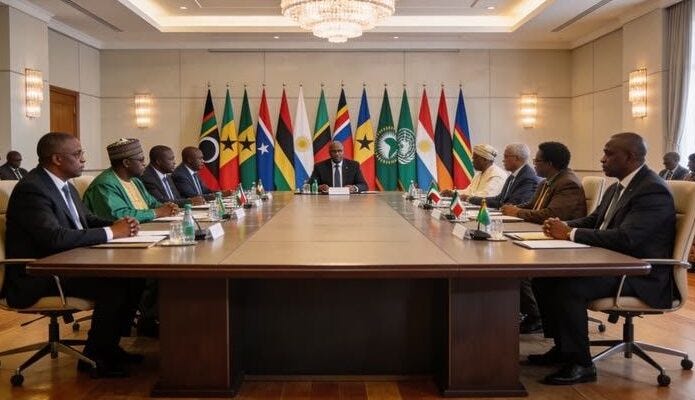
On October 1, three ministers sat down with Meta in Abidjan.
The meeting was in the Commerce Minister’s office. Digital Transition Minister Djibril Ouattara was there. So was Culture Minister Françoise Remarck, who said on her way out that “the news is good.” Then she wrote on her Facebook page that Ivorian creators, who are seen and heard, should share in the returns of their work.
The subject was whether Ivorian creators can be paid by the platform that carries their audience.
Nothing has launched. As of mid-October there is no date and no published eligibility rules. But the meeting is the latest chapter in a pattern nearly four years old. It raises a question the creator economy has not yet had to answer: what happens to the countries that cannot get a minister into the room?
This Is a Playbook, Not a First
In December 2022, Kenya’s President William Ruto said he had spoken directly to Meta about monetising content. A year later he announced that Meta had committed to expanding monetisation in Kenya, after a pilot with eligible creators and negotiations led by the government. In March 2024, Nick Clegg, then Meta’s president of global affairs, said qualifying Kenyan creators would earn from June.
Nigeria followed the same script. On March 21, 2024, Clegg led a delegation to State House in Abuja and told President Bola Tinubu that Nigerian creators would be able to monetise on Instagram from June. In the same meeting he thanked Tinubu for an executive order that allowed a Meta-backed subsea cable to land in Nigeria.
On June 27, Meta approved Facebook monetisation for creators in Nigeria and Ghana. Both had been excluded unless their page was managed from an eligible country. Egypt and South Africa were already on the list.
The sequence is consistent. A head of state. A visiting Meta executive. An announcement. A rollout months later.
What is new in 2026 is the queue.
Côte d’Ivoire: Eight Months and a Task Force
Work with the audiovisual regulator, HACA, began in February. At the government’s request, Meta ran technical tests of its monetisation programme in the country. The project was launched under direct presidential impetus, runs through an interministerial task force, and sits inside the 2026 to 2030 national development plan, which names the creative economy as a priority.
On October 5, Ouattara said the tests were conclusive and that regulatory conditions still had to be finalised before official deployment. “Creating content is a profession,” he said. He added that the government would adapt its regulatory framework if needed.
The same day, a Meta delegation led by its Africa public policy director briefed HACA’s president and said monetisation would be activated shortly. Broadcast Media Africa noted that this is a signal, not an authorisation.
Count the Ivorian side of the table: three ministries and a regulator. Meta’s side was a public policy team.
Zambia: Three Companies, One Ask
Zambia is earlier in the process. At the third Digital Economy Roundtable in May, the Ministry of Technology and Science announced a dedicated workstream on content creation and gaming. Its purpose is to support monetisation on Meta, TikTok and YouTube. The ministry’s readout of a later session listed three benefits: jobs, foreign exchange and growth.
Reports on October 12 said the ministries of Technology and Science and of Youth, Sport and Arts, backed by President Hakainde Hichilema, are now engaging Meta, TikTok and Google. They are also compiling information on who Zambia’s creators are. That reporting rests on a single outlet and stresses that this is a process, not a promise.
The stakes are concrete. Zambia is not among the 12 African countries in YouTube’s Partner Programme. TikTok’s per-view Creator Rewards is open in eight countries, none of them African.
Note the ministry’s own list of benefits includes foreign exchange. A creator paid by a foreign platform is, in effect, an exporter.
Why Meta, and Why Here
Facebook is where these audiences live. NapoleonCat’s count of people reachable through Meta’s ad tools puts Côte d’Ivoire at 9.9 million Facebook users in September, about a third of the population. Instagram has roughly 970,000. Zambia has 5.2 million Facebook users, 23% of the population, against about 675,000 on Instagram.
For comparison, Nigeria had more than 50 million Facebook users in May 2024, and Ghana more than 10 million.
So Meta is the main lever in both markets. By global standards, neither market is large.
What Access Buys
Access is not income. Facebook’s monetisation programme is currently invitation-only, according to summaries of Meta’s help pages. When Kenya’s tools launched, in-stream ads required at least 5,000 followers and 60,000 watch minutes over two months.
Six in ten African creators earn under $100 a month, according to the Communiqué and TM Global creator report. A country list opening does not move that number. It moves who is allowed to try.
The Price Is a Tax Form
Kenya shows what comes after the announcement.
The Finance Act 2023 set a withholding tax on digital content monetisation: 5% for residents and 20% for non-residents. Treasury had proposed 15%, then cut it after pushback. Collection has since moved to the platforms themselves.
Meta told Kenyan creators it would deduct 5% from all payouts from January 1, 2026. Google followed. From September 2026 earnings, paid in October, it withholds 5% of YouTube earnings. It required Kenyan creators to submit a tax PIN by October 1, with payments frozen for those who did not. Google also reports each creator’s gross payments, tax withheld, PIN and address to the Kenya Revenue Authority every month. Kenya’s Digital Content Creators Association has asked Treasury to pause collection until creators are consulted.
Meta and Google, the two platforms that share ad revenue directly with Kenyan creators, now double as the tax authority’s collection agents.
That is the part of the playbook nobody puts in a press release. A creator paid through a platform is the most visible creator a tax authority can have.
Other states are approaching the same logic from the registration side. In February 2024, Nigeria’s Corporate Affairs Commission told creators with large followings to register their businesses and said compliance checks would follow. Ghana’s revenue authority announced stricter enforcement on residents’ foreign income, which hits creators paid by international platforms.
Ouattara has already said regulatory conditions are the last step. The Ivorian terms are not public. If they resemble Kenya’s, monetisation will arrive with registration and withholding attached.
That is not automatically bad. Kenyan creator Njugush told the creator report that without formal, consistent income, creators typically fail a bank’s assessment. Visible income can open doors. But creators should know the trade before the launch, not after.
What Leverage Looks Like
States have more than a carrot. In July 2024, Nigeria’s competition regulator fined Meta $220 million. A tribunal upheld the fine in April 2025. Meta threatened to pull Facebook and Instagram from the country. A separate $32.8 million data-protection dispute was settled out of court in November 2025, on terms not made public.
Meta’s executives were in Abuja in March 2024 with a monetisation announcement and a thank-you for a cable. Four months later the regulator issued its order. A platform deals with a state across a whole portfolio, and creator pay is one item on it.
A market of 50 million Facebook users, a regulator with teeth and a president who takes the meeting is a very different position from a market of five million with a ministry team and a petition.
Who Gets a Seat
Look at who started these talks. In Kenya, the president. In Nigeria, a presidential meeting. In Côte d’Ivoire, a project launched under direct presidential impetus. In Zambia, renewed presidential support. Every case so far starts at the top.
That is how diplomacy works, and it has a cost. Access follows political attention, and political attention is not distributed by creator count. YouTube’s Partner Programme still leaves out 42 of Africa’s 54 countries. A creator in one of them has no minister to petition. They have a help centre.
Bilateral deals also mean every country negotiates alone. One analyst in Financial Afrik says the Ivorian experience could be a model for countries including Senegal, Cameroon, Benin, Togo and the DRC. That is a queue of countries negotiating one deal at a time, each with its own tax terms. None of the reporting I found on Côte d’Ivoire or Zambia mentions a joint approach.
What to Watch
Three tests will show whether Abidjan is a template or a one-off.
Does Côte d’Ivoire get a launch date? Kenya’s path, from Ruto’s first public mention to tools going live, took roughly 20 months. Abidjan is eight months in.
What is in the regulatory conditions? The Financial Afrik analyst wants local payout routes, a tax regime built for creators and a way to appeal demonetisation. Those would be worth copying. Registration and withholding with nothing in return would not.
Who is next, and who decides? If Meta’s next country is chosen by market size, the smaller ones wait. If it is chosen by whichever president calls first, creators should be lobbying their own.
For years, creators asked platforms for access, and many are still asking. Meta’s announcements for Kenya and Nigeria both came out of meetings with heads of state. Côte d’Ivoire and Zambia are betting the same door still opens.
It might. But if monetisation reaches the countries with the best negotiators first, everyone else will be waiting for a country list to change. The continent’s creator economy will have a new gatekeeper: the diplomatic calendar.

Written by Layo
Lead Editorial Writer, Creative Brief Africa
Outside of her editorial work, she writes Curious Health, a newsletter focused on everyday health questions, explored with clarity and care.