


In global fashion, archives are rarely treated as sentimental repositories of the past. They function as economic infrastructure. Luxury houses use archives to authenticate provenance, defend intellectual property, anchor brand narratives, justify pricing, and signal long-term value to investors. An archive is not nostalgia. It is proof.
African fashion, despite possessing some of the world’s most complex textile systems and design knowledge, has historically existed outside this logic. Not because the knowledge is absent, but because it has remained undocumented, uncodified, and therefore commercially invisible within global market systems.
This absence is not cultural. It is structural.
The myth of cultural deficiency
African fashion has long operated through oral transmission, apprenticeship, and community memory. Techniques are passed through hands, not manuals. Design philosophies live in rituals, not registries. This has created resilient creative systems that have survived colonial disruption, industrial neglect, and global marginalisation.
However, global fashion markets do not price resilience. They price documentation.
Markets privilege what can be recorded, owned, traced, and defended. When African fashion enters these markets without archives, it does so stripped of authorship. Patterns circulate without attribution. Silhouettes are absorbed without context. Materials are referenced without compensation.
What remains visible is aesthetic influence, not economic participation.
This is why African fashion is often celebrated yet undervalued. Visible yet peripheral. Influential yet undercapitalised.
The cost of undocumented knowledge
In the global fashion economy, value is inseparable from proof. Brands that can demonstrate lineage, technique, and continuity command higher prices, attract institutional partnerships, and sustain relevance across cycles.
Archives provide that proof.
When textile histories, construction techniques, and design philosophies remain undocumented, they become vulnerable to extraction. Once extracted, they are difficult to reclaim. Without evidence of origin, there is no basis for intellectual property claims, licensing structures, or long-term brand equity.
This is not simply a cultural loss. It is a commercial failure.
African fashion does not lack originality. It lacks the systems that convert originality into defensible value.
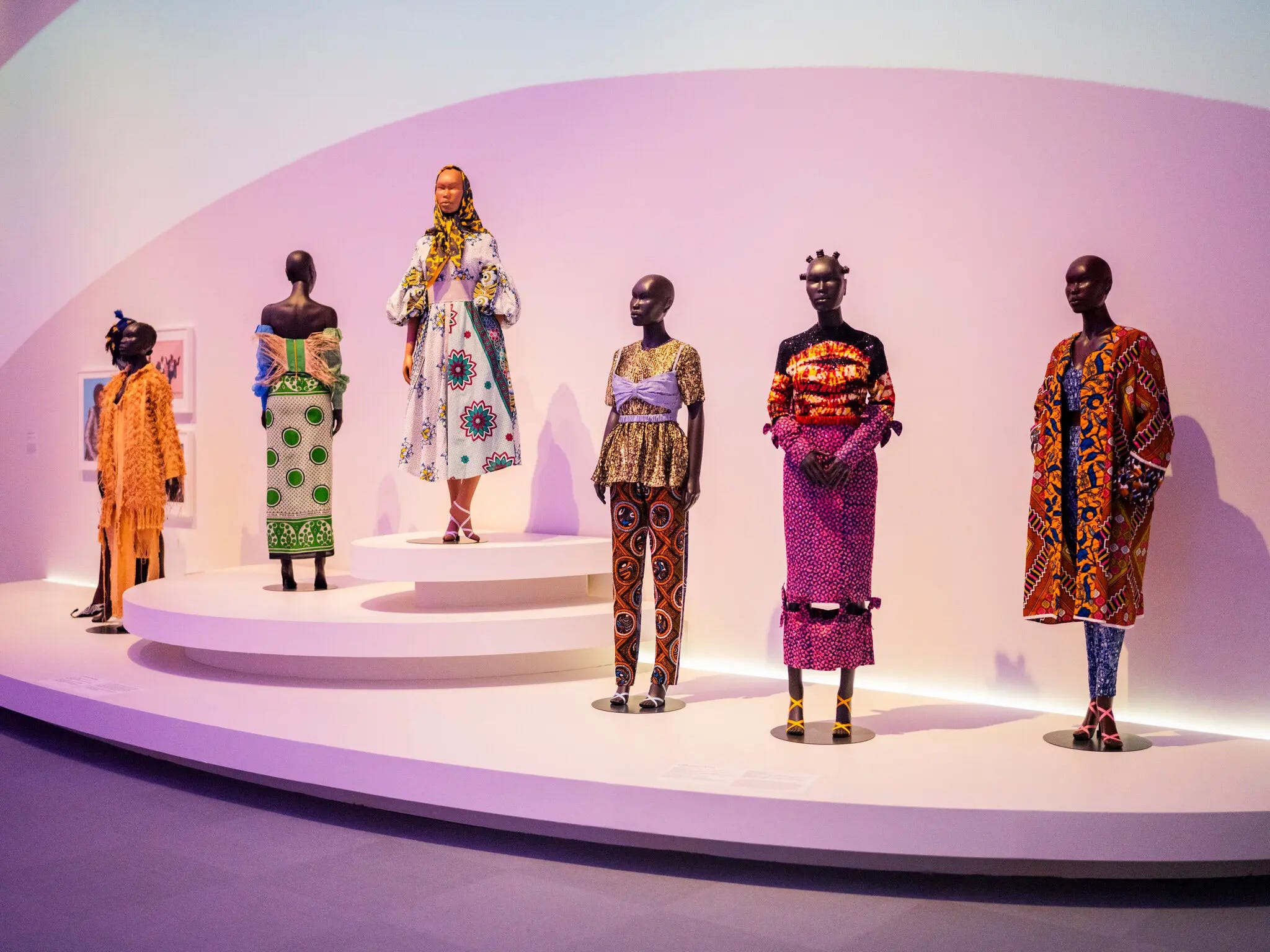
How archives function in global fashion
In established fashion markets, archives underpin almost every layer of commercial strategy.
They support licensing agreements by establishing ownership. They justify premium pricing by demonstrating continuity. They enable museum collaborations that reinforce legitimacy. They inform design teams without diluting identity. They provide legal backing when disputes arise.
Most importantly, they anchor valuation.
When investors assess fashion houses, they look beyond seasonal performance. They evaluate assets. In creative industries, those assets are often intangible. Heritage, authorship, intellectual property, and cultural authority.
Archives transform these intangibles into legible value.
African fashion, by contrast, is often forced to perform within systems built on documentation while lacking the institutional support to document itself on its own terms.
From preservation to production
Archives are frequently framed as static or nostalgic. This framing is misleading.
Archives are production tools.
When knowledge is documented, it becomes teachable. When it is teachable, it becomes scalable. When it is scalable, it can be integrated into modern manufacturing without erasure.
Documented techniques allow artisanship to move beyond individual lifespans. They support skills development by ensuring that methods do not disappear when practitioners age out of the system. They allow manufacturers to incorporate traditional processes responsibly, rather than flattening them into aesthetic shortcuts.
This bridge between heritage and industry is essential for competitiveness.
Innovation does not require cultural amnesia. It requires structure.

Intellectual property and cultural sovereignty
One of the most immediate economic benefits of archives lies in intellectual property.
Global luxury markets increasingly rely on provenance, certification, and traceability. These frameworks determine who gets paid, who gets credited, and who retains control.
African fashion, despite its depth, is often excluded from these frameworks because documentation is missing.
Archives provide the foundation for IP claims, geographic indicators, and authenticated narratives. They shift African fashion from being a source of inspiration to a recognised origin with legal and commercial standing.
This matters beyond individual designers. It affects entire value chains. Stronger IP frameworks encourage local manufacturing. They support fair compensation. They attract investment aligned with long-term growth rather than short-term extraction.
Cultural sovereignty, in this context, is economic sovereignty.
Archives as investment signals
From an investor perspective, archives signal maturity.
They indicate that an industry understands its assets and has mechanisms to protect and leverage them. In creative economies, where intangible value often outweighs physical infrastructure, this clarity is critical.
An archival infrastructure reduces perceived risk. It reassures investors that cultural capital is being managed intentionally. It strengthens negotiating power in global partnerships. It shifts African fashion from dependency on external validation to self-defined value.
This is not about gatekeeping culture. It is about governance.
Why the absence persists
If archives are so clearly valuable, why has African fashion remained under-archived?
The answer lies in historical underinvestment, fragmented institutional support, and the long-standing separation between culture and commerce. Archiving has often been framed as academic or philanthropic work rather than industrial strategy.
Designers are expected to build brands, manage production, and compete globally while also shouldering the burden of documentation alone. This is unsustainable.
Archival infrastructure cannot rely solely on individual effort. It requires collective investment. Public institutions, private capital, industry bodies, and cultural organisations all have roles to play.
Without this support, documentation remains sporadic, uneven, and inaccessible.
Reframing the future of African fashion
As African fashion gains global attention, the central question is no longer whether it deserves recognition. The question is whether it can retain value.
Archives play a central role in that transition.
They convert memory into structure. Heritage into leverage. Culture into capital.
Without them, African fashion risks remaining visible but peripheral. Influential but undercapitalised. Celebrated without ownership.
The future of African fashion will not be secured by aesthetics alone. It will be built through systems that recognise knowledge as an asset and invest accordingly.
Archives are not about looking backward. They are about ensuring that African fashion moves forward with authorship, authority, and economic agency intact.
Until that infrastructure exists, the industry will continue to export influence while importing validation.
And that is not a cultural problem.
It is a business one.

A guest post by
A curious mind exploring the crossroads of creativity and insight.