


For decades, African films appeared on the global festival circuit like rare meteor sightings.
A breakthrough at Cannes.
A surprise selection in Berlin.
An occasional Sundance discovery.
Each moment was treated as exceptional. A single director breaking through, a lone film carrying the continent’s cinematic voice for a season before the industry’s attention moved elsewhere.
That pattern is now breaking.
Over the past five years, African auteur cinema has moved from sporadic festival appearances to something far more consequential, a consistent presence within the global arthouse ecosystem.
Films like On Becoming a Guinea Fowl and My Father’s Shadow are not isolated successes. They are signals of structural change.
African filmmakers are no longer appearing at major festivals as rare discoveries. They are arriving as part of an expanding global pipeline supported by new financing networks, international distributors, and streaming platforms reshaping the economics of auteur cinema.
The shift raises a critical question for the continent’s creative industries.
What changed?
The Old Pattern: Festival Visibility Without Industry Structure
Historically, African cinema operated within a paradox.
The continent produced extraordinary filmmakers, yet their work rarely translated into sustained industry infrastructure.
Directors like Ousmane Sembène, Djibril Diop Mambéty, and later Abderrahmane Sissako established Africa’s reputation within global arthouse cinema.
Their films screened at Cannes and Berlin. Critics celebrated their storytelling.
But those breakthroughs rarely created stable production pipelines.
Each film required a complex process of international grants, European co-production funding, and festival exposure. The system produced masterpieces, but it remained fragile and episodic.
In other words, African auteur cinema existed primarily through individual brilliance rather than industrial continuity.
Directors could break through. Entire ecosystems rarely followed.
The New Pattern: Auteurs Inside a Global Distribution Network
Today the landscape looks different.
A new generation of filmmakers is entering the global circuit with stronger structural support from international distributors and streaming platforms.
Companies like MUBI have become key players in this transformation.
Originally founded as a streaming service dedicated to arthouse cinema, MUBI has evolved into a global distributor and co-financier of independent films. The platform now actively acquires festival titles and participates in production financing.
For filmmakers from regions historically underserved by Hollywood, this new distribution layer matters enormously.
Instead of relying solely on festival acclaim to find buyers, directors can now enter pre-existing global pipelines designed for auteur cinema.
This structural shift has expanded the number of African films capable of reaching international audiences.
Case Study: On Becoming a Guinea Fowl
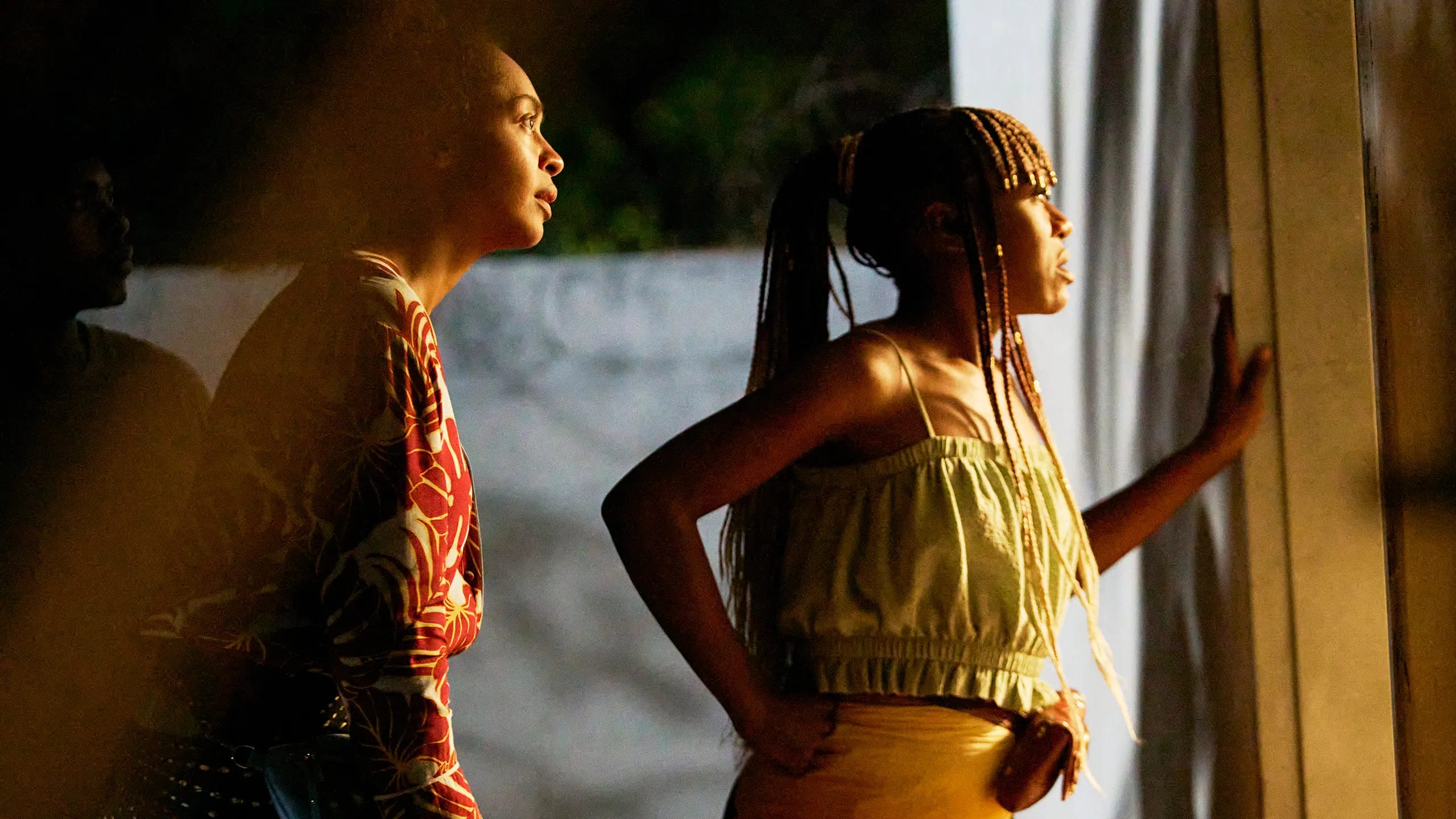
The c, directed by Rungano Nyoni, represents this new ecosystem in action.
Nyoni first gained international attention with I Am Not a Witch, which premiered at Cannes and won the BAFTA for Outstanding Debut by a British Writer, Director or Producer.
Her new project enters the global film circuit not as a surprise discovery but as the work of a director already embedded in international production networks.
The film’s presence on the festival circuit reflects a broader pattern. African filmmakers who previously struggled to secure second or third projects are now able to maintain sustained careers within global arthouse cinema.
That continuity is essential.
Auteur filmmaking is rarely about one breakthrough film. It requires long term creative evolution across multiple projects.
Case Study: My Father’s Shadow
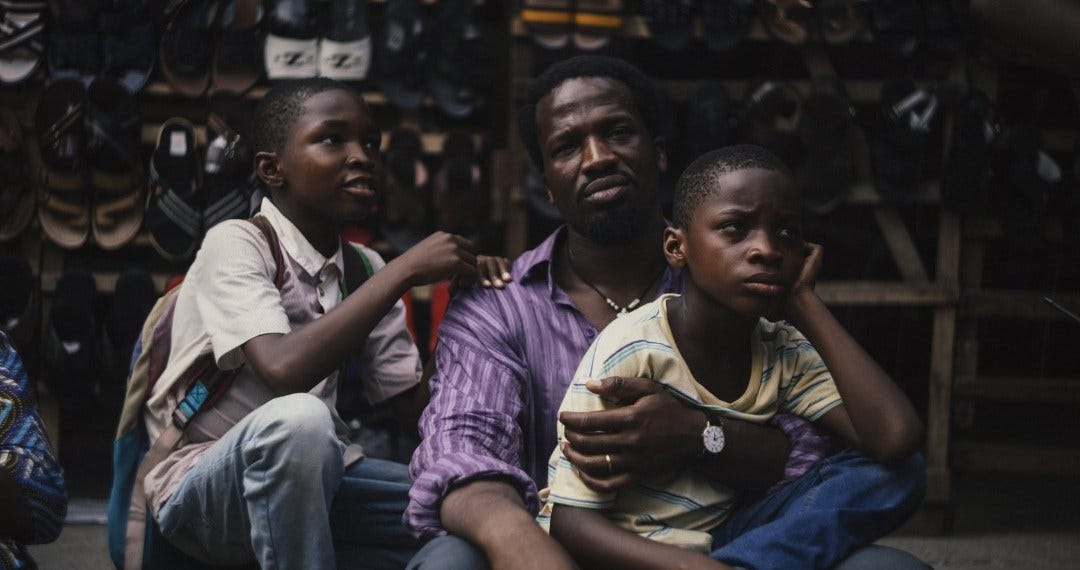
A similar dynamic surrounds My Father’s Shadow, directed by Akinola Davies Jr..
Davies emerged from the short film and visual arts world, building international recognition through projects that blended documentary aesthetics with narrative storytelling.
The move into feature filmmaking reflects a broader pathway now emerging for African directors.
Many filmmakers are no longer entering cinema through traditional national film industries. Instead they are arriving from adjacent creative fields including:
Fashion film
Art installations
Music video direction
Documentary filmmaking
These cross-disciplinary entry points have created a generation of directors already connected to global creative networks before making their first feature films.
The Role of Global Arthouse Distributors
Another major structural shift involves the rise of global arthouse distributors capable of turning festival films into international events.
Companies like NEON have played a major role in this ecosystem.
NEON built its reputation by acquiring bold international films and turning them into awards season contenders, including titles like Parasite, which became the first non-English language film to win the Academy Award for Best Picture.
For filmmakers outside Hollywood, companies like NEON provide something critical.
They provide global amplification.
Instead of disappearing after festival premieres, films can now move through carefully designed theatrical campaigns, streaming releases, and awards circuits that extend their cultural lifespan.
If African auteur cinema previously struggled with distribution bottlenecks, this new system provides a pathway toward sustained global visibility.
Film Schools, Labs, and the New Talent Pipeline
Another structural factor behind the rise of African auteur cinema is the expansion of international film labs and development programs.
Organizations like the Sundance Institute, Berlinale Talents, and the Torino Film Lab have increasingly supported filmmakers from Africa through mentorship, funding, and international exposure.
These programs do more than finance projects.
They integrate filmmakers into global professional networks.
Directors meet producers. Producers connect with distributors. Projects develop relationships with international sales agents.
Over time, these networks begin to function as career infrastructure, allowing filmmakers to build sustainable bodies of work rather than one-off projects.
The Streaming Effect
Streaming platforms have also reshaped the economics of global cinema.
While Hollywood studios increasingly prioritize franchise films and blockbuster spectacles, streaming platforms have created space for smaller, artistically ambitious projects.
For African filmmakers, this shift has opened new possibilities.
Instead of relying exclusively on national theatrical markets, films can now reach global audiences through digital distribution.
Platforms focused on curated cinema, particularly those oriented toward independent filmmaking, have become key allies for directors working outside traditional industry centers.
The result is an expanding ecosystem where festival films can move directly into international circulation.
The Rise of the African Film Diaspora
Another overlooked factor in the rise of African auteur cinema is the growing influence of the diaspora.
Many emerging filmmakers operate between multiple cultural contexts.
Directors may be born in Africa, educated in Europe or North America, and produce films through transnational collaborations.
This hybridity has allowed African stories to access funding structures in multiple regions simultaneously.
Diaspora filmmakers often understand how to navigate international co-production systems while maintaining cultural authenticity in their storytelling.
In practical terms, this means African cinema now operates within global creative circuits rather than isolated national industries.
Why This Moment Matters
The growing presence of African films at Cannes, Berlin, and Sundance is not simply about cultural representation.
It reflects the emergence of a more stable ecosystem for auteur cinema.
Directors are securing second and third projects.
Distributors are building pipelines for African films.
International festivals are recognizing the continent as a consistent source of bold cinematic voices.
These developments mark a shift from visibility to structural participation in the global film economy.
For Africa’s broader creative industries, the implications are significant.
Film functions as both a cultural and economic sector. When African filmmakers succeed internationally, they generate new demand for talent across multiple disciplines.
Cinematographers.
Editors.
Production designers.
Composers.
Writers.
In other words, every successful film contributes to the expansion of the creative labor market.
The Next Challenge: Building Local Infrastructure
Despite these global successes, one major challenge remains unresolved.
Local infrastructure.
Many African filmmakers still rely heavily on international funding and distribution systems. While global partnerships are valuable, sustainable film industries ultimately require strong domestic ecosystems.
Studios.
Production funds.
Distribution networks.
Film education systems.
Without these institutions, African cinema risks remaining dependent on external markets.
The goal for the next phase of the industry should not simply be global recognition. It should be industrial maturity.
From Exception to Ecosystem
For decades, African auteur cinema existed as an exception within global film culture.
A brilliant director emerging from the margins. A festival discovery celebrated briefly before disappearing from international screens.
Today that narrative is changing.
A new generation of filmmakers is entering the global arthouse ecosystem with stronger support structures, international distribution partnerships, and transnational production networks.
Films like On Becoming a Guinea Fowl and My Father’s Shadow represent more than individual artistic achievements.
They are evidence that African cinema is becoming structurally embedded in the global film economy.
The question now is not whether African auteurs can break through.
The question is how the continent’s creative industries will build the infrastructure needed to sustain them.
Because the era of African cinema as a rare festival discovery is ending.
What comes next is something far more powerful.
A fully realized African presence in global auteur filmmaking.

A guest post by
A curious mind exploring the crossroads of creativity and insight.