


Kenya’s creative sector is worth KES 500 billion.
It contributes over 5% of national GDP. It is growing 60% faster than traditional industries. More than 70% of creative professionals in East Africa operate within the informal economy, with no access to commercial credit, IP protection, or formal market structures.
That last number is the one that drives the formalisation conversation. If the creative economy is this large and this fast-growing, the argument goes, imagine what it could do with formal structures around it.
It is a reasonable argument. It is also an incomplete one.
Because the question is not simply whether Africa’s creative economy should be formalised.
The question is: formalised by whom, into what, and on whose terms?
What Formalisation Actually Means
The word sounds procedural. Neutral. Technical.
It is none of those things.
When a government says it wants to formalise the creative economy, it means it wants to bring more of it into systems that governments regulate, tax, license, measure, and administer. That has consequences that do not always travel in the same direction.
Kenya is the clearest current example of how complicated this gets.
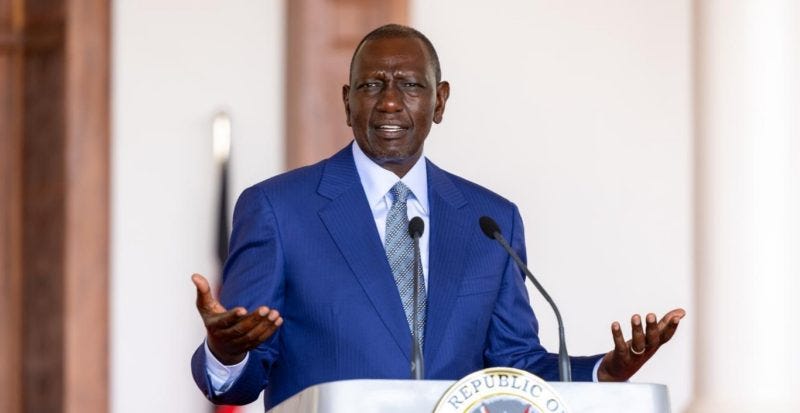
President Ruto advanced the Creative Economy Bill 2026 with a direct promise: Nairobi would become the sub-Saharan capital of film and content creation. The Bill replaces outdated colonial-era laws. It establishes a Kenya Audio-Visual and Cinema Commission to promote the industry and a Kenya Audio-Visual Regulatory Authority to oversee content classification and licensing. It introduces a Kenya School of Film and Creative Arts and a Creative Industry Development Fund. It promises tax breaks and IP protection for young innovators.
This is what formalisation looks like in its aspirational form.
Then the Creative Economy Working Group submitted a consolidated memorandum to the State Department. Stakeholders reviewed the draft. And a different picture emerged.
The Bill, the Working Group found, is “heavily weighted toward institutional control rather than economic enablement.”
Section 26 of the Bill empowers the Kenya Audio-Visual Regulatory Authority to issue content takedown orders. Not for piracy. For content deemed unclassified, content that “contravenes any law,” content restricted on “cultural considerations” or “public interest” grounds. These are categories vague enough to cover almost anything a government might want to remove.
The Bill does not require prior notice before a takedown. It does not require written reasons. It does not require a counter-notice process. In the digital economy, where a viral window lasts 24 to 48 hours, removing content first and allowing appeals later can cause permanent financial harm to a creator even when they eventually win.
The Register of Creatives drew criticism. Registration requirements introduce administrative costs. The prescribed payments for official searches create a barrier for people trying to verify their own rights. Traditional IP registration processes designed for books and patents do not work for someone producing daily content on YouTube or TikTok.
The Creative Industry Council Board established by the Bill has dedicated seats for film, music, fashion, and literary arts. It has no guaranteed seat for digital content creators, despite the fact that digital content is driving more copyright creation and consumption than any other category in Kenya’s creative sector.
And then there is Kenya’s Finance Bill 2026, which arrived alongside the Creative Economy Bill.
The Finance Bill substantially rewrites the definition of royalty income in Kenya’s Income Tax Act to explicitly include payments for the use of any copyright in a literary, artistic, or scientific work, as well as films and tapes for broadcasting. This widens the tax net for musicians earning from streaming platforms, filmmakers licensing to broadcasters, photographers selling images online, and influencers monetising content through international platforms.
It also proposes a 25% excise duty on imported mobile phones.
Kenya recorded 78.3 million mobile phones by December 2025. For most Kenyan creators, a smartphone is not a luxury. It is a camera, an editing suite, a marketing platform, and a distribution channel simultaneously. Making smartphones more expensive does not formalise the creative economy. It raises the cost of entry into it.
Two pieces of legislation, both described as supporting the creative economy, arriving in the same legislative session. One promises structure. The other taxes the primary tool creators use to work.
That is not a contradiction. It is a description of what formalisation looks like when the institutions doing the formalising have competing interests.
Why Creators Choose Informality
The standard framing around informal creative economies treats informality as a problem of awareness or aspiration. Creatives do not understand how to register. They do not see the benefits. They need education and incentives to bring them in.
This framing is often wrong.
A survey of micro and small enterprises across Lagos and Kano found that the most pressing barriers to formalisation were not lack of awareness. They were weak enforcement of tax laws, low trust in government, limited awareness of registration benefits, and complex bureaucratic procedures. Not ignorance of the system. Rational calculation of whether the system was worth entering.
In Nigeria’s creative sector specifically, 70% of practitioners lack structured contracts, health insurance, or pension plans. The informal sector accounts for more than 85% of employment across the broader economy. 93% of Nigerian workers operate informally in some form. These are not people who have failed to understand formalisation. They are people who have priced it and found it expensive relative to what it offers.
The State of Nigeria’s Creative Economy 2026 report, surveying 377 Nigerian creatives, found that the primary constraint facing the industry is not a lack of talent. Payment processing and foreign-exchange barriers ranked as the number-one obstacle to exporting creative work. Less than 20% of respondents earn their primary income from international markets, despite producing work that travels globally.
A photographer operating informally in Lagos may not be doing so because she lacks business sophistication. She may be avoiding registration costs, complicated bureaucracy, taxes she cannot predict, regulatory uncertainty, expensive professional services, and weak contract enforcement. All of which are real, documented features of the formal system she is being asked to enter.
Informal does not mean undeveloped.
Sometimes it means the formal system has failed to become useful enough to justify the cost of entering it.
The Three Interests That Do Not Automatically Align
There are three groups who want Africa’s creative economy formalised, and they want different things.
Creators want freedom. They want to work, earn, experiment, and move quickly. They want IP protection that actually works, access to credit that accounts for irregular income, and contracts that are enforceable without expensive lawyers. What they do not want is another layer of licensing, registration, and administrative burden that costs money and delivers nothing back.
Governments want visibility. They want the sector measured, taxed, regulated, and incorporated into economic planning. A KES 500 billion creative economy that is 70% informal contributes less to the tax base than its size warrants, is harder to cite in policy documents, and is more difficult to claim credit for. Formalisation makes the sector legible to government.
Investors want structure. They need identifiable businesses, financial records, predictable revenues, and enforceable intellectual property. Without these, creative businesses are difficult to invest in at scale. The Afreximbank Pan-African Film Fund targeting $1 billion for African creative industries requires the businesses it invests in to have the kind of formal structure that most African creative enterprises currently do not.
These three interests can align. But they do not do so automatically.
A creative economy that is formalised primarily to serve government revenue targets, with new regulatory bodies, content controls, and expanded tax definitions, but without the affordable credit, functioning collecting societies, contract enforcement, and export support that make formality worth it for creators, is not a creative economy policy. It is an extraction mechanism wearing one.
The South Korean Counter-Question
Africa’s creative economy conversations frequently invoke South Korea as the model.
The Hallyu wave, K-Drama, K-Pop. A government decided to invest in culture as industrial policy. State support, export promotion, infrastructure investment, and deliberately built formal structures around an already-talented creative sector. The result was a creative economy that now generates $12.5 billion in annual exports and commands genuine global cultural influence.
Kenya’s creative sector is growing 60% faster than traditional industries. Data from WITIA 2026 in Nairobi positions it at an inflection point comparable to where South Korea was before Hallyu broke globally.
But the South Korean government’s investment in formalising its creative industries was not primarily about licensing bodies and content classification authorities. It was about building the infrastructure that makes formality worthwhile. Tax incentives for production. Export promotion agencies. State investment in training institutions. Credit mechanisms for creative businesses. Collecting societies that actually distributed royalties. Agreements with global distribution partners.
What Africa’s creative economies are often being offered instead is the administrative architecture of formalisation without the economic infrastructure that makes it valuable.
Kenya’s Music Copyright Society has had its disbursement of royalties to artists fall to 58.9% of collected revenue, well below the 70% standard established by the Kenya Copyright Board itself. MCSK was deregistered by the Copyright Board in 2011. Artists filed suit against it in 2015. The collecting society that is supposed to be the financial backbone of music formalisation has, for years, not reliably delivered the royalties it collected.
Total African collecting society collections across the continent reached €90 million in 2025. That is 0.7% of global collections. The institutions being asked to receive formalised creative economies are not yet operating at a scale that matches the scale of the creative activity they are meant to administer.
The Distinction That Actually Matters
The goal of formalisation cannot simply be to make African creatives formal.
The goal has to be building formal systems that make it worthwhile for African creatives to become formal.
The distinction is enormous. And it is the one that most policy conversations skip past.
A formal system that offers a creator affordable credit when banks currently will not lend to businesses with irregular income is worth entering. A formal system that enforces IP so that a photographer’s work cannot be used without payment is worth entering. A formal system that negotiates with global streaming platforms for fair royalty rates and then efficiently distributes those royalties is worth entering.
A formal system that adds registration costs, creates a new regulatory body with takedown powers, expands the tax definition of royalty income, and proposes duties on the smartphones creators work with, while providing no new enforcement mechanism for contracts or any new route to affordable credit, is a cost without a corresponding benefit.
Kenya’s creative sector stakeholders saw this clearly enough to submit a consolidated memorandum telling the government exactly what was wrong with its own bill before it passed.
That is not hostility to formalisation. It is a precise demand for formalisation that actually works.
The continent’s creative economy does not need more institutions. It needs the institutions it already has to do what they are supposed to do. Collect royalties and distribute them. Enforce IP rights when they are violated. Make credit available to businesses whose income does not look like a salaried employee’s. Negotiate with global platforms from a position of coordinated leverage rather than individual vulnerability.
Africa wants to formalise its creative economy.
The harder question is whether the systems being built to do that formalising are ready for the job.
Based on what Kenya’s creatives found when they read the bill carefully, the answer is not yet.

Written by Layo
Lead Editorial Writer, Creative Brief Africa
Outside of her editorial work, she writes Curious Health, a newsletter focused on everyday health questions, explored with clarity and care.