


When a film project from Africa appears at the Marché du Film during the Cannes Film Festival, the immediate instinct is to frame it as another visibility milestone.
Another African project entering a global room.
Another opportunity for the continent to be seen.
Another reminder that African storytelling continues to command international curiosity.
And on the surface, that is exactly what the upcoming presentation of Oraya at Cannes appears to be.
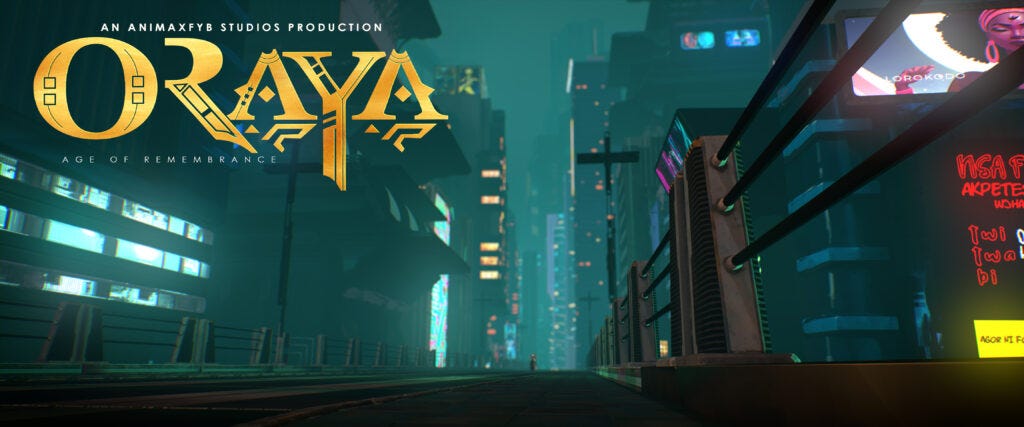
The 90-minute animated feature from AnimaxFYB Studios, set in a futuristic Ghana and positioned for a global audience, will be presented as part of the Focus on Africa Conference within the market’s official programme.
That alone is noteworthy.
But the real significance of Oraya is not its presence at Cannes.
It is what the project is being positioned as.
“This is not just a film, it is African-owned IP designed to grow beyond a single release,” Executive Producer Ruth Ojougboh said ahead of the presentation.
That single line says more about where parts of Africa’s creative economy may be heading than the Cannes appearance itself.
Because for years, much of Africa’s global creative ambition has been centred on exporting stories.
What projects like Oraya suggest is something more ambitious.
Africa is beginning to think beyond content.
It is beginning to think in assets.
And that is a structural shift.
African Storytelling Has Historically Been Built Project by Project
For decades, African film and television have largely operated within a project-by-project production logic.
A film is funded.
A film is produced.
A film is released.
Then the cycle begins again.
Even when projects succeed commercially or culturally, they rarely evolve into broader intellectual property ecosystems.
Stories often remain exactly what they were initially conceived as, standalone works.
This has never been a creativity problem.
Africa has no shortage of stories with franchise potential.
The continent’s storytelling traditions, mythologies, speculative futures, historical archives, and contemporary cultural movements offer some of the richest source material in the global creative economy.
The challenge has been structural.
Building intellectual property requires systems that extend far beyond production itself.
It requires:
long-term financing models
rights management sophistication
licensing infrastructure
brand development strategy
distribution partnerships
commercial expansion planning
Most African creative ecosystems are still maturing in precisely these areas.
As a result, storytelling has often been treated as output rather than infrastructure.
The emphasis has been on getting the film made.
Less attention has gone into building what happens after the film exists.
That distinction matters.
Because in global creative industries, the greatest long-term value is rarely captured by the initial release.
It is captured by what that release becomes.
Why Animation Changes the Economics Entirely
This is where animation introduces a fundamentally different opportunity.
Animation does not operate under the same commercial assumptions as live-action film.
Its economics are slower upfront but broader over time.
An animated feature is not simply a film.
It is often the foundation layer of an expandable universe.
A successful animated property can extend into:
series adaptations
gaming
publishing
merchandise
licensing agreements
character-driven brand extensions
educational products
theme experiences
digital spin-offs
Its commercial life can stretch decades beyond initial release.
This is why some of the world’s most valuable entertainment assets have emerged through animation.
Not because animation is inherently more profitable.
But because it is structurally better suited to repeatable intellectual property expansion.
Characters endure.
Worlds expand.
Audiences compound.
The shelf life is longer.
The monetisation pathways are wider.
For African creators, this matters enormously.
Live-action storytelling often depends heavily on immediate distribution success.
Animation allows for long-term asset-building.
It creates opportunities to build creative properties that appreciate over time rather than simply perform in isolated release windows.
That is a very different economic proposition.
And it signals a much more mature way of thinking about creative production.
The Meaning of “African-Owned IP”
The phrase appears often in creative industry conversations.
But it is frequently used loosely.
Ownership in this context means far more than simply producing a film locally.
It means retaining control over the underlying commercial architecture of the work.
That includes:
character rights
adaptation rights
distribution leverage
franchise extensions
licensing structures
commercial derivatives
future platform negotiations
In practical terms, African-owned IP means African creators and studios controlling not just the story itself, but the long-term economic life of that story.
That distinction is critical.
Because many creative economies participate in production without fully owning value capture.
A region may supply talent, creative labour, and cultural inspiration while external systems retain the highest-value rights.
This pattern is familiar across multiple sectors.
Ownership interrupts that pattern.
It changes who benefits when a story scales.
It changes who negotiates future deals.
It changes who captures downstream value.
And perhaps most importantly, it changes how creative ambition is structured from the beginning.
Once ownership becomes central, creators start asking different questions.
Not simply:
Can this film get made?
But:
Can this world expand?
Can these characters travel?
Can this property sustain multiple commercial lives?
That shift from production thinking to asset thinking is what makes projects like Oraya strategically significant.
Why Cannes Matters Differently in This Context
The Marché du Film is not simply a showcase.
It is a marketplace.
That distinction matters.
Festivals are often about visibility.
Markets are about transactions.
Partnerships.
Financing.
Distribution rights.
Commercial alignment.
For African projects, global market participation has historically carried symbolic importance.
It signalled recognition.
Validation.
Presence.
But if Africa’s creative industries are entering these spaces with intellectual property strategies rather than isolated film pitches, then the nature of participation changes.
The continent is no longer simply presenting stories for attention.
It is presenting assets for negotiation.
That is a more powerful position.
Visibility matters.
But ownership matters more.
A globally visible project without retained value capture remains culturally important but economically limited.
A globally visible project structured for long-term ownership becomes something else entirely.
It becomes infrastructure.
Why This Matters for Africa’s Creative Economy
Africa’s creative economy is often discussed through the language of cultural exports.
Music breaking global charts.
Films entering international festivals.
Artists collaborating across borders.
These moments matter.
But cultural export alone does not automatically translate into economic transformation.
For creative industries to mature, they must move from visibility to asset creation.
That means building systems where creative work generates repeatable, compounding commercial value.
This is where intellectual property becomes essential.
Strong IP ecosystems create:
licensing markets
investment confidence
secondary revenue systems
commercial durability
cross-industry partnerships
They create economic depth.
And depth is what many African creative sectors still need.
The long-term opportunity is not simply to produce more globally recognised work.
It is to produce work structured to generate long-term economic participation.
That is a very different ambition.
And it is one that projects like Oraya begin to hint at.
The Bigger Question
For years, the dominant question surrounding African storytelling has been whether global audiences are ready.
That question is becoming less relevant.
The evidence is increasingly clear.
Global audiences are paying attention.
African stories are already crossing borders.
The more urgent question now is what happens next.
Who owns the worlds being built?
Who controls their expansion?
Who captures their long-term value?
Because the future of Africa’s creative economy will not be defined solely by its ability to create stories that travel.
It will be defined by its ability to build systems that retain ownership once those stories arrive.
That is what makes Oraya worth paying attention to.
Not because it is heading to Cannes.
But because it reflects a deeper possibility.
That Africa may finally be moving from pitching content to building intellectual property.
And that shift could reshape the economics of creative ownership across the continent.

Written by Layo
Lead Editorial Writer, Creative Brief Africa
Outside of her editorial work, she writes Curious Health, a newsletter focused on everyday health questions, explored with clarity and care.
This is a welcome development in the long run. Looking at the animated franchise of the Marvel Comics and DC Comics, they have been able to own their own stories. I believe this is a move in a right direction, creating a larger than life work for years to come. I hope there won't be a bottleneck to stifle this movement.
With the right structure in place, the sky will be the beginning for the creative industry in Africa.
Thank you Layo