


Across Lagos, Nairobi, Accra, Johannesburg, and Cape Town, anime is no longer niche.
You see it in the cosplay meetups held in malls and university halls.
You hear it in conversations about Naruto arcs, One Piece timelines, and Attack on Titan endings.
You scroll past it daily on TikTok, where African creators reenact scenes, remix soundtracks, and build entire online identities around Japanese IP.
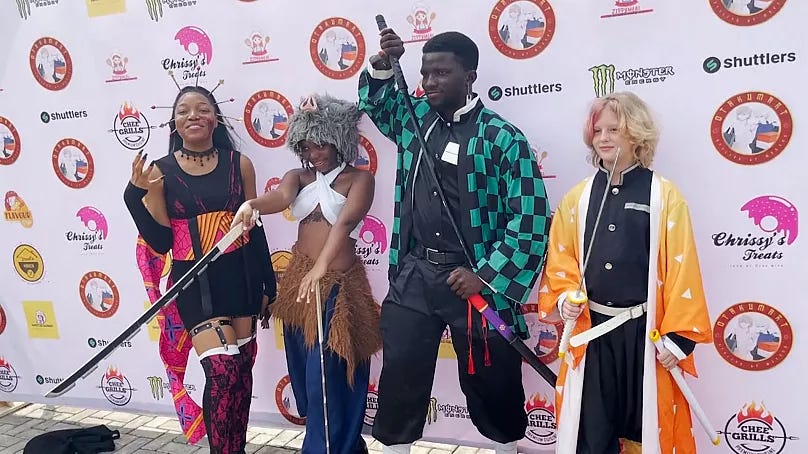
In 2024, nearly 1,000 fans gathered in Lagos for the Eko Anime Festival, not sponsored by a studio, not tied to a production slate, not attached to a pipeline of future work, but powered entirely by fandom. It was a celebration of love for a medium Africans did not create, do not own, and cannot profit from beyond community events and content creation.
That contradiction sits at the heart of Africa’s relationship with anime.
Africa is one of anime’s most emotionally invested audiences.
But Africa is not a producer economy within the anime industry.
And that gap is not accidental.
Africa’s anime relationship began outside the market
Anime did not enter Africa through official distribution channels.
It arrived informally.
Through VHS tapes passed between friends.
Through bootleg DVDs sold in traffic.
Through cable television blocks in the late 1990s and early 2000s.
Through internet cafés, torrents, and later streaming sites.
By the time platforms like Netflix and Crunchyroll began counting African viewership, African audiences had already spent decades building taste, literacy, and emotional loyalty to the medium.
This matters, because it explains why Africa’s anime fandom is deep but economically disconnected.
African audiences learned to love anime without being invited into its business.
A global industry built elsewhere, monetised everywhere
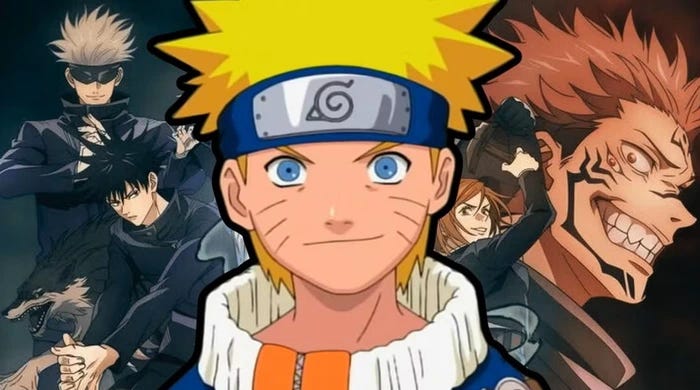
By 2025, the global anime market was valued at approximately $37.5 billion, with projections pushing it past $90 billion by 2031. International revenues now outpace domestic Japanese earnings, according to industry data from the Association of Japanese Animations.
Anime is no longer a national cultural product.
It is a global IP machine.
Streaming platforms sit at the centre of this expansion. Netflix reported that over 100 million households globally watched anime content in 2023. Crunchyroll surpassed 15 million paid subscribers, positioning itself as a dominant distribution gatekeeper.
But here’s the structural truth.
While Africa contributes to viewership numbers, engagement metrics, and cultural relevance, it does not meaningfully participate in:
IP ownership
Studio production
Licensing negotiations
Merchandising supply chains
Adaptation rights
Financing decisions
Africa consumes anime.
It does not produce anime at scale, nor does it co-own the franchises it helps sustain.
Platforms extract value, fandom circulates passion
Streaming platforms have solved access.
They have not solved participation.
For African audiences, anime exists primarily as:
Content to watch
Characters to cosplay
Sounds to remix
Stories to quote
The economic upside flows elsewhere.
Merchandise revenue, which often surpasses animation revenue itself, is controlled by Japanese studios and global licensors. Video games, apparel, collectibles, and licensing deals generate billions, yet African markets mostly interact with these products as import destinations, not manufacturing or IP partners.
African creators contribute labour in the form of:
Fan art
Cosplay
Social content
Community building
But not in the form of equity.
This mirrors patterns Creative Brief Africa has repeatedly interrogated across other industries.
Festivals without studios, communities without pipelines
The Eko Anime Festival in Lagos is a perfect case study.
It proves demand.
It proves scale.
It proves cultural penetration.
What it does not prove is industrial readiness.
There are no animation studios attached to the festival.
No commissioning editors scouting projects.
No production funds announcing slates.
No incubation labs translating fandom into formal creative labour.
The festival exists as a cultural endpoint, not a starting node.
Africa has anime events, not anime ecosystems.
And without studios, training pipelines, financing structures, and IP frameworks, fandom remains socially powerful but economically inert.
The structural barriers are not creative, they are industrial
This absence is often framed as a talent issue.
It is not.
African creatives already work across animation, illustration, game design, and visual storytelling. What’s missing is not imagination, but infrastructure.
The global anime industry itself struggles with production capacity. Japanese studios face labour shortages, low animator wages, and tight schedules. In theory, this should create an opening for global collaboration.
In practice, production remains geographically concentrated due to:
Established studio systems
IP control structures
Financing models tied to Japanese production committees
Risk aversion around outsourcing core creative work
Africa, lacking a formal animation industry of comparable scale, remains outside these pipelines.
The result is paradoxical.
Africa is ready as an audience, but invisible as a production partner.
Fandom without financing is a familiar African story
This pattern is not unique to anime.
Fashion offers a parallel.
Africa exports designers but imports clothes.
Film offers another.
Africa produces stories, but distribution, financing, and platforms are externally controlled.
Music, even at its peak, still wrestles with catalog ownership and platform dependence.
Anime simply exposes the pattern more clearly.
Africa often enters global creative industries as:
Cultural inspiration
Consumption market
Visibility amplifier
But exits them without ownership.
Why this matters now, not later
Anime is entering a new phase.
Webtoon and manhwa adaptations are expanding the definition of what qualifies as anime-originated IP. AI tools are reshaping production workflows. Global studios are actively seeking scalable production solutions.
Africa is not structurally positioned to benefit from these shifts.
Without deliberate intervention, Africa risks repeating a familiar trajectory:
Massive audience growth
Cultural influence
Zero upstream control
Anime’s success in Africa proves African audiences are not culturally conservative, not creatively limited, and not disconnected from global storytelling.
What it does not prove is that Africa has built systems to convert taste into industry.
The uncomfortable question Creative Brief Africa must ask
If Africa can sustain one of the most passionate anime fanbases outside East Asia, why does it still lack animation studios capable of exporting IP at scale?
Why do festivals exist without production slates?
Why does fandom grow faster than financing?
Why are African creators visible online but absent from deal rooms?
These are not anime questions.
They are structural questions about Africa’s position in the global creative economy.
Anime simply makes them impossible to ignore.
The risk of remaining only an audience
Audiences matter.
But audiences alone do not build industries.
If Africa remains positioned as a consumer market rather than a producer economy within anime, the long-term outcome is clear.
Value will continue to flow outward.
Cultural energy will continue to be harvested without ownership.
And Africa’s creative labour will remain informal, precarious, and disconnected from scale.
Anime’s popularity is not the opportunity.
The opportunity lies in what Africa does with that popularity next.
The unfinished conversation
Anime has already answered one question decisively.
African audiences are here. They are invested. They are fluent in global storytelling.
The unanswered question is harder.
Will Africa continue to love anime without owning any part of its future, or will it finally build the infrastructure required to move from fandom to production?
That decision will define whether Africa remains one of anime’s loudest audiences, or becomes a quiet but powerful force inside its value chain.
And that choice, as always, has very little to do with taste, and everything to do with systems.

A guest post by
A curious mind exploring the crossroads of creativity and insight.