


Abiodun Odu spent months on a five-minute film.
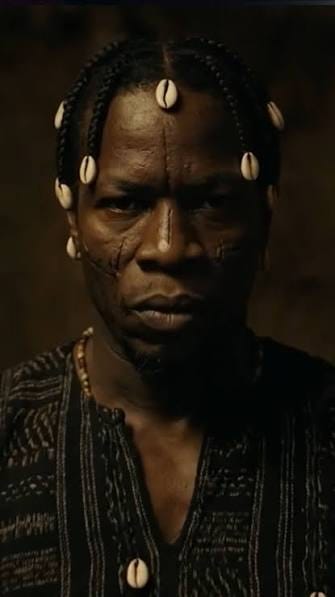
Ajaka Lori Okun tells the story of a Yoruba prince who travels to the edge of the sea to fetch water that will save his dying father. Every frame was AI-generated. Over 200 video sequences. More than 600 written prompts. Odu assembled it himself on an iPad after long days on traditional Nollywood sets.
Around the same time, somewhere on the same internet, a channel was publishing dozens of AI-generated videos a week. No story. No cultural grounding. No creative authorship beyond the prompt that told the tool what to generate. High volume. Low effort. Built entirely to harvest ad revenue from an algorithm that rewards watch time.
In January 2026, YouTube terminated 16 channels of that second type in a single enforcement wave. Combined, they had 35 million subscribers, 4.7 billion lifetime views, and an estimated $10 million in annual revenue. Gone overnight.
Odu’s film still exists.
That is not a coincidence. It is the most important economic signal the African creator economy has received this year.
The Tools Are the Same. The Moat Is Not.
The thing that keeps getting missed in every conversation about AI and African creativity is this: the tools do not discriminate. A creator in Accra and a content farm in an unnamed location have access to the same generation software, the same prompt engineering techniques, the same distribution platforms. The cost of entry is nearly identical.
What is not identical is what each of them can make with those tools.
Mysterious Tech Studio and Yoruba actress Tanwa Hameed spent three months producing Mystery of Osu Land, a three-hour Yoruba-language sci-fi feature in which approximately 80% of the visuals were AI-generated. They crashed their streaming platform’s servers on launch day because demand exceeded what the infrastructure could handle. The filmmakers’ own description of the project captures the economic logic precisely: they were documenting a pipeline that would allow African filmmakers to make ambitious stories at lower cost while retaining the cultural specificity that makes those stories irreplaceable.
A content farm cannot replicate that. Not because it lacks the tools. Because it lacks the cultural knowledge, the language, the mythological grounding, and the specific human authorship that make the work what it is.
Odu himself named the gap directly: AI characters can speak English fluently, he said, and convey generic emotion. What they cannot yet do is speak Yoruba with cultural and emotional authenticity. The language carries weight that the models have not been trained to carry, because the data to train them does not yet exist at the required depth.
That gap is not a limitation to overcome. For African creators working in their own languages and traditions, it is the economic moat.
The Platform Pays Little. The Math Only Works One Way.
To understand why slop exists in African markets specifically, you have to understand the economics underneath it.
YouTube’s Partner Program is available in 12 African countries. The remaining 42 have no access to direct monetisation regardless of view count or content quality. Even within the 12 eligible countries, AdSense CPM rates for African audiences are significantly lower than Western equivalents. A creator in Nairobi or Dakar earning from a million views earns a fraction of what a comparable creator in New York or Amsterdam earns from the same number of views on identical content.
Into this environment arrive AI tools that cost very little and can produce content at volume. The rational response to thin payout rates is volume. The rational response to high manual production costs is automation. The math points in one direction. A Kenyan creator described this logic to New York magazine without apology: he uses AI to generate engagement-bait images at scale because when the platform pays little per view, volume is the only lever available.
He is not wrong about the math. The platform is.
But the platform is not changing its payout rates. It is running enforcement. The January 2026 terminations were followed by a broader purge that removed over 130,000 channels by mid-2026. YouTube is not solving the incentive problem. It is removing the creators who responded to it most visibly.
The creators caught in that enforcement are disproportionately the ones who had no other viable economic path. The channels that survive are the ones with something the platform cannot get from a template.
What Cannot Be Replicated
In Ethiopia, Hub of Africa Fashion Week centered Ethiopian manufacturing in its 2026 programme not just as logistics but as cultural infrastructure. The argument was that Ethiopian textile traditions, the weaving techniques, the dyeing methods, the specific aesthetic vocabulary of different regional craft communities, represent knowledge that no algorithm trained primarily on Western fashion data can access or replicate.
In Ghana, Free The Youth built enough cultural credibility through Accra streetwear to earn two Jordan Brand collaborations in 2026, conceived, produced, and launched entirely from Ghana. No fashion week platform. No international intermediary. Jordan came to Accra because the cultural authority was located there and could not be manufactured from outside it.
In South Africa, Maxhosa Africa’s Paris Fashion Week debut in September 2026 was built on Xhosa geometric patterns developed over sixteen years of work rooted in a specific cultural tradition. When Zara copied those patterns in 2018, it removed the copies from stores after legal pressure. It could not remove what made the originals valuable, which was the authorship, the cultural provenance, and the sixteen years of accumulated credibility that Laduma Ngxokolo had built around them.
These are not isolated examples. They are evidence of the same underlying principle operating across creative categories and countries.
Cultural specificity is not a niche advantage in the age of AI. It is the primary advantage. The more powerful the generation tools become at producing generic content, the more valuable the content that cannot be generated generically becomes. African creators working in their own languages, drawing from their own traditions, and building work that requires their specific cultural presence to exist are building in the one direction that platform enforcement cannot reach.
Who Is Training the Models
The harder economic question is the one that sits underneath all of this.
African creative work is being used to train AI models. Music. Visual art. Writing. Film. Language recordings. The Nollywood catalogue. The Afrobeats back catalogue. The visual and oral traditions of dozens of African communities. Copyright laws in most African jurisdictions do not yet directly regulate the use of copyrighted works in AI training datasets, meaning this happens in a legal environment that offers creators very limited protection.
Reddit disclosed $203 million in data licensing arrangements in its IPO filing. Shutterstock reported $203 million in revenue from a segment that includes AI training data. These are markets that have been priced. African creative content is inside them by default, not by negotiation.
The models learn from African creative work. They improve. They become better at generating content that resembles African styles, African languages, African aesthetics. The creators who supplied the raw material for that improvement receive nothing. The gap between what the models can produce and what requires genuine cultural authorship narrows over time. The moat gets smaller.
South Africa’s Constitutional Court upheld proposed fair-use provisions in June 2026. Kenya is developing frameworks to address data exploitation. These are the beginnings of a legal response. They are not yet protection in practice for the working creator in Kampala or Abidjan whose content is in a training dataset they never agreed to.
The question this creates is urgent: African creative institutions, collecting societies, and policy bodies need to build the infrastructure to participate in the licensed AI training data market on negotiated terms before that window closes. Not as a defensive measure but as a revenue opportunity. The data has value. Reddit proved that at $203 million. The institutions that represent African creators should be negotiating that value rather than discovering it has already been extracted.
The Close
Odu’s 600 prompts were not just a production cost.
They were an investment in creative authorship that an AI tool, on its own, cannot replicate. The Yoruba mythology. The specific emotional weight of the language. The cultural decisions about how the story should move and what it should feel like to watch.
That investment survived YouTube’s largest enforcement action in platform history.
The content farms with 35 million subscribers and 4.7 billion views did not.
The economic lesson is not that African creators should avoid AI. It is that the creators who use AI to lower the cost of making something only they could make are building something durable. The creators who use AI to make what anyone could make, because the platforms pay too little to afford anything else, are building something the platform will eventually remove.
Changing that second group’s incentives is not a creative problem. It is a platform infrastructure problem. The payout rates, the monetisation access gaps, the training data ownership vacuum. These are the conditions that produce slop. Enforcement removes the symptom. It does not fix the condition.
Until it does, the most reliable economic strategy available to African creators is the one that has always been available.
Make the thing only you can make.
The algorithm cannot generate that.
And increasingly, the platform will pay a premium for it.

Written by Layo
Lead Editorial Writer, Creative Brief Africa
Outside of her editorial work, she writes Curious Health, a newsletter focused on everyday health questions, explored with clarity and care.
600 prompts for five minutes is the opposite of slop economics. same tools as the content farms, completely different reason to care