


The 69th Grammy Awards nominations, announced on November 16, 2026, include nine African artists across five categories, and every one of them is from West Africa: Nigeria, Benin or Ghana. All five entries in Best African Music Performance come from that corner of the continent. The ceremony is on February 7, 2027, in Los Angeles. The pattern says more about how the ballot is built than about talent.
Who is nominated for Best African Music Performance at the 2027 Grammys?
The five entries are Asake’s “Gratitude”, Angélique Kidjo and Ayra Starr’s “Aye Kan (Are You Coming Back?)”, King Ayisoba with Rocky Dawuni’s “No Tradition, No Africa”, Tems’s “Big Daddy”, and Wizkid and Asake’s “Jogodo”. Nigerian acts also hold three of the five Best Global Music Album slots and appear on four of the five African-category songs. Kidjo is from Benin, and Ayisoba and Dawuni are Ghanaian.
Davido is on the list too. His album Oriadé is nominated for Best Global Music Album, and it is his only 2027 nomination, according to Grammy.com, which makes six in his career. The songs his team entered for the African category did not make it.
The list is broader than “Afrobeats” suggests. It is also narrower than “African” promises.

How do Grammy nominations work?
A nomination starts as paperwork. Only voting and professional Recording Academy members and registered media companies can submit recordings, and this year’s entry window ran from July 7 to August 21. The winners are then chosen by peer vote, not by a jury.
So a record reaches the ballot because someone with an Academy account, or a company registered with it, decided to put it in. In this cycle, that work was visible. Davido’s team reportedly entered Oriadé and several songs across categories. Tyla’s album and tracks were reportedly entered across more than ten categories.
Campaigns like that take time, specialist knowledge and a team that understands a US industry’s calendar. They do not guarantee anything. Tyla ran the wider campaign, has won this category twice, and is not in the African category this year. The machinery matters, but it is only one part of the story.
Who votes on the African category?
The Academy appears to know the map has holes. Its president, Panos Panay, said in Nairobi in September that plans were underway to enrol more African members. The Academy also wants an Africa Recording Academy headquarters, which Kenya is bidding to host alongside Nigeria and South Africa. Kenyan mentee artists are due to travel to the US next month. Kenyan press reports say the relationship is still in its early stages and that Kenya will not be hosting the Grammys themselves.
Set that beside this week’s list. The region bidding hardest for the Academy’s African base has no nominee in the Academy’s African category. Last year’s list included Uganda’s Eddy Kenzo. This year’s has no one from East, Southern, North or Central Africa.
A category named for a continent is voted by members, and members have to be recruited. That is slow work, and it shows on a ballot a year or two later.
What counts as African music at the Grammys?
The category’s own wording sets the standard. The Academy created it to recognise “recordings that utilize unique local expressions from across the African continent.” That is a continental promise.
The criticism came early. After the first nominations, Black Enterprise noted that the field included nominees from only two countries. After February’s ceremony, a Nigerian analyst in Pulse argued that voters are probably swayed by a song’s success in the US more than its African identity, and that the Academy must answer a basic question: “What is considered to be African music?”
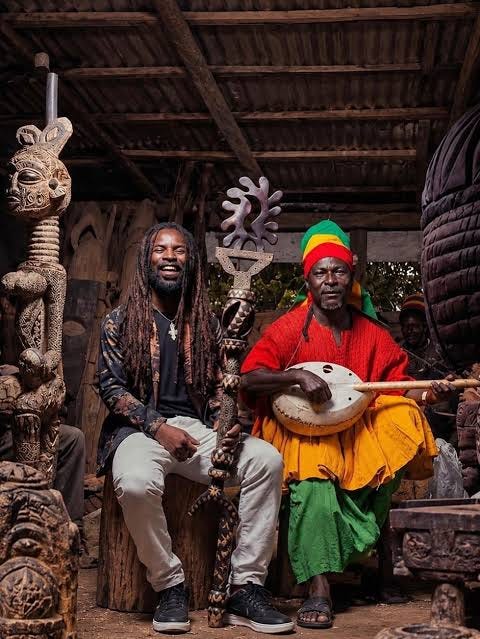
This year’s list contains the entry that matches the Academy’s own wording most literally. King Ayisoba is a kologo musician whose music draws heavily on the sounds of northern Ghana, and this is his first Grammy nomination. The song comes from his seventh album, Pure Confusion, and is Dawuni’s fifth Grammy nomination. The title, “No Tradition, No Africa”, reads like a position statement. It now sits in a field with the biggest names in Afropop.
Who has won Best African Music Performance?
Tyla won in 2024, Tems in 2025, and Tyla again in 2026. That is three trophies and two winners: South Africa twice and Nigeria once.
February’s result produced the backlash this list answers in part. Burna Boy, Davido, Omah Lay, Ayra Starr and Wizkid were nominated and none of them won. The singer Teni posted, “They don rob my helper o… GRAMMY why???” The South African media personality Somizi Mhlongo replied that the category “was not the Best Afrobeats Performance. It was the Best African Music Performance.”
Both sides were arguing about the same thing: whose music the word “African” is allowed to mean. This year’s list moves the argument. Nigeria is back in force, but every nominee is West African, so whatever happens on February 7, the winner of the African category will be too.
What to watch
Final-round voting runs from December 10 to January 7.
The winner matters less than the infrastructure behind the list. Watch whether the Academy’s push for African members shows up in who gets entered, and whether next year’s category has a name from somewhere new. The Grammys can only count the African music that someone submitted and someone heard. The next question for the continent is who builds that part.

Written by Layo
Lead Editorial Writer, Creative Brief Africa
Outside of her editorial work, she writes Curious Health, a newsletter focused on everyday health questions, explored with clarity and care.